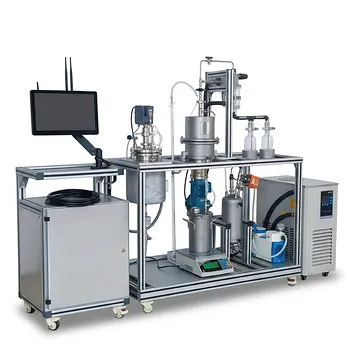
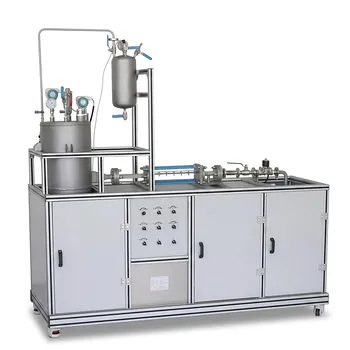
The straightforward answer is: laser-induced fluorescence (LIF) process photometers can be integrated directly into bioreactors and fermentation vessels as non-invasive, real-time analytical probes, and the operational benefits of LED light sources include higher signal-to-noise ratios, simpler optical design, and dynamic power control that adapts to fluctuating process conditions.
While LIF provides the sensitivity to track critical biomarkers like tryptophan and NADPH during fermentation, it's the shift to LED excitation that transforms these photometers from complex lab instruments into rugged, adaptable pilot-plant tools. The real advantage is the combination of narrow-band, filter-free emission and real-time drive-current control—which lets operators optimize signal quality on the fly for both research and training without the cost and fragility of laser or grating-based systems.
What LIF Process Photometers Unlock in a Bioprocess Pilot Plant
The core value of LIF monitoring is its ability to track what’s actually happening inside a bioreactor, in real time, without pulling a sample.
In pilot plants where conditions change rapidly and the cost of a failed fermentation is high, this feedback loop is essential.
Instead of relying on offline assays that lag by hours, you get continuous data on molecular dynamics, biomass, and product formation.
Tracking the Right Fluorophores for Real-Time Insight
Any LIF integration strategy starts with identifying the target autofluorophores or engineered markers that correlate with your process parameters.
Intrinsic fluorophores like tryptophan, pyridoxine, riboflavin, and NADPH give a direct, non-invasive window into cellular metabolism and biomass concentration during the growth phase.
Alternatively, Green Fluorescent Protein (GFP) can be used as a quantitative fusion marker to track foreign protein production in E. coli.
The choice dictates the excitation and emission wavelengths, which in turn determines instrument configuration.
Single-channel photometers with one excitation-emission pair are suitable for monitoring a single fluorophore in a fairly clean matrix, but most real bioreactor broths contain multiple fluorophores and interfering species.
For these complex media, multichannel filter-wheel photometers or spectrofluorometers are required to differentiate overlapping signals and maintain accuracy.
How to Physically and Operationally Integrate the Instrument
Integration into a pilot-plant bioreactor is typically done via a non-invasive optical port or a flow-through sample loop.
Non-invasive probes sit against a sight glass or dedicated window, sending excitation light into the culture and collecting the resulting fluorescence without contacting the fluid.
This eliminates sterility concerns and reduces maintenance.
Operationally, the photometer becomes part of the pilot plant’s process analytical technology (PAT) framework.
You need to account for analytical parameters: sensitivity, dynamic range, repeatability, and susceptibility of the fluorescence signal to environmental shifts in temperature, pH, and viscosity.
These environmental factors can shift emission intensity dramatically, so the integration plan must include either tight environmental control or compensation algorithms—often using a reference channel or internal standard.
The LED Advantage: Why the Light Source Transforms the Measurement
The real operational flexibility comes from using LEDs instead of traditional lasers or broad-spectrum lamps.
LEDs don’t just replace lasers—they remove entire layers of optical complexity while adding dynamic control that’s perfectly suited to the pilot-plant environment.
Eliminating Excitation Filters and Maximizing Signal
The narrow-band, quasi-monochromatic output of an LED means you often don’t need an excitation filter at all.
This simplifies the optical train, reduces cost, and—most importantly—maximizes the excitation intensity reaching the sample.
More excitation light directly translates to a higher fluorescence emission response, improving sensitivity for dilute or weakly emitting targets.
This is critical in bioprocess monitoring where intrinsic fluorophore concentrations can be low and matrix interferences high.
By removing a filter that would otherwise absorb 50% or more of the source light, you gain a significant boost in real-world detection capability.
Real-Time Dynamic Power Control for Signal-to-Noise Optimization
The most overlooked benefit of LED-based LIF is the ability to adjust drive current and thus optical output power in real time.
In a pilot plant, process conditions drift: cell density increases, media components change, and background fluorescence fluctuates.
With an LED, the operator or an automated script can instantly dial the excitation intensity up or down to optimize the signal-to-noise ratio (SNR).
If the fluorescence signal becomes saturated, you reduce power.
If the signal is weak, you increase it—without switching optical components or recalibrating.
This dynamic control eliminates the need for high-overhead optics like gratings or attenuators, making the instrument far more adaptable to training environments where multiple users run different protocols back-to-back.
Reliability and Suitability for Training Environments
LEDs have extremely long lifetimes and stable output, reducing the frequency of recalibration and source replacement.
For pilot plants that also serve as vocational training or research platforms, this means students can focus on bioprocess concepts without wrestling with fragile laser alignment or filter degradation.
The instrument becomes a robust, turnkey teaching tool.
Understanding the Trade-offs
LED-based LIF photometers are not a universal solution.
Their primary limitation is spectral coverage and the inability to easily generate a wide range of excitation wavelengths on demand like a tunable laser or monochromator-based system.
If your process requires excitation at a wavelength where high-power LEDs simply aren’t available, or if you need to run a full excitation-emission map, a traditional spectrofluorometer may still be necessary.
Additionally, while LEDs eliminate excitation filters, emission filters are still required for channel selection in multichannel setups, and environmental interference (temperature, pH) on fluorescence quantum yield still demands careful calibration.
Finally, single-channel LED photometers are blind to unexpected interferents.
In a media development run where novel components appear, a more flexible scanning instrument might catch spectral interference that a single-channel system would simply report as a concentration change.
This risk must be managed by validating the method against your specific process matrix.
Making the Right Choice for Your Pilot Plant
How you integrate LIF depends entirely on your primary operational goal: real-time process control, deep molecular research, or hands-on training.
- If your primary focus is robust, real-time biomass and metabolic monitoring in established fermentations: Select a multichannel LED-based filter-wheel photometer targeting tryptophan, NADPH, and riboflavin. Hardwire it into your PAT network for closed-loop feedback on substrate feeds or timing.
- If your primary focus is studying molecular dynamics like protein folding, binding kinetics, or conformational changes: Use a spectrofluorometer with polarizers to add fluorescence polarization capability. LED excitation can still apply here, but ensure the instrument can handle dynamic power control and anisotropy measurements.
- If your primary focus is vocational training or university research on a tight budget: A single-channel LED photometer monitoring GFP or a single intrinsic fluorophore on a benchtop bioreactor is ideal. It teaches the fundamentals of PAT and fluorophore-environment interactions without overwhelming students with optical complexity.
In every case, the move to LED-based excitation reduces long-term cost, increases uptime, and gives you a level of real-time signal control that traditional laser-based LIF cannot match without significant overhead. That’s what makes it a cornerstone technology for the modern bioprocess pilot plant.
Summary Table:
| Feature | LED-Based LIF | Traditional Laser-Based LIF |
|---|---|---|
| Light Source | Narrow-band, stable LEDs | Lasers or gas lamps |
| Optical Design | Simple, filter-free excitation | Complex filters and gratings |
| Power Control | Dynamic, real-time current adjustment | Difficult to adjust on the fly |
| Maintenance | Low (long lifetime, robust) | High (fragile alignment, high wear) |
| Best For | Bioprocess pilot plants & training | Advanced spectral mapping research |
Optimize Your Bioprocess Training & Research with LABPARK
Are you looking to integrate advanced Process Analytical Technology (PAT) like LIF monitoring into your facility? LABPARK provides state-of-the-art Educational and Vocational Unit Operations Pilot Plants in chemical engineering, bioprocess & biotech, and environmental & water treatment for universities, research institutes, and enterprises. Let us help you deliver hands-on, industry-ready expertise.
Contact LABPARK today to design your custom pilot plant solution!
Related Products
- Multifunctional Membrane Separation Educational Pilot Plant with Ultrafiltration, Nanofiltration, Reverse Osmosis
- Supercritical High-Gravity Flash Evaporation Educational Unit Operations Pilot Plant
- Cavitation Phenomenon Demonstration and Analysis Educational Unit Operations Pilot Plant
People Also Ask
- How do PEI, PVDF, and PSU membranes compare in pilot plants? Find the best fit.
- Pervaporation vs. Vapor Permeation: Handling Suspended Solids in Membrane Pilot Plants
- What are the trade-offs of polymer vs inorganic membranes in teaching pilot plants? Key laboratory comparison.
- How can operators optimize operating conditions and cleaning protocols in membrane separation pilot plants to mitigate fouling?
- What are the advantages of membrane separation in pilot plants? Efficient Organic Vapor Recovery