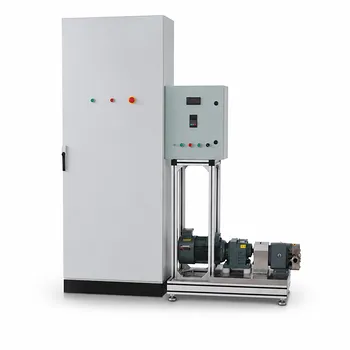
The catalytic reaction itself is only a sliver of the story—the real engineering lives in the support systems. Pilot plants must be equipped with robust catalyst handling and dosing because catalysts continuously degrade, demand precise metering, and require complex recovery loops, forcing over half of a typical industrial plant's physical equipment to be dedicated solely to their management. Without these auxiliary systems, a pilot plant fails to replicate the authentic industrial environment where catalyst performance, lifecycle, and operational logistics are truly tested.
Pilot plants are not just about proving a reaction works; they are about proving the entire catalyst management ecosystem functions under realistic, messy conditions. Omitting robust auxiliary systems leaves students and researchers blind to the dominant source of mechanical complexity and capital cost in real-world catalytic processes.
The Invisible Infrastructure of Catalytic Processes
The core chemical transformation is the glamorous part, but it’s the unglamorous auxiliary systems that determine whether a process is viable. These subsystems govern how a catalyst enters, performs, and exits the reactor.
Catalysts Are Not Static—They Degrade
In any real process, catalyst particles physically break down, get poisoned by impurities, or simply lose activity over time. This means you cannot just add a fixed amount and walk away. You need continuous dosing, activity monitoring, and spent catalyst removal to maintain stable production. A pilot plant without these functions can’t teach anyone how to manage a dynamic, living process.
Auxiliary Systems Dominate Plant Design
It’s a staggering industrial reality: over 50% of the physical equipment in a catalytic plant is there to handle catalysts and process chemicals, even though those materials often account for less than 3% of the product’s cash cost. That includes silos, dosing screws, lock hoppers, regeneration units, filtration, and recovery lines. If a pilot plant skips these, it presents a dangerously sanitized picture of what scale-up entails.
Bridging the Gap Between Lab and Plant
A beaker in a lab can’t simulate recycle streams, heat integration, or the accumulation of trace feed impurities that slowly kill a catalyst. The supplementary insights confirm that pilot plants are the only place where activity, selectivity, and deactivation rates can be evaluated under the compounded stresses of real operating conditions. Robust auxiliary systems are the tools that create those stresses.
Why Pilot Plants Must Mirror Industrial Reality
For university and vocational training, the educational mission is just as critical as the technical one. You are building engineers who will design and operate tomorrow’s plants.
Training the Complete Engineer
A student who only studies reaction kinetics in a glass reactor leaves with a knowledge gap the size of a real plant. Exposure to functional dosing, monitoring, and regeneration subsystems ingrains an early appreciation for the mechanical, logistical, and safety challenges that consume most of an engineer’s career. The primary reference is clear: the goal is to teach the operational complexity, not just the chemistry.
De-risking Scale-up
An industrial project hinges on accurate catalyst lifetime projections. If a pilot plant can’t continuously dose fresh catalyst and collect spent material under controlled conditions, its data on deactivation rates is essentially guesswork. Robust auxiliary systems provide the precise control loop needed to generate trustworthy regeneration or replacement protocols, preventing multi-million-dollar scale-up failures.
Understanding the Trade-offs
Building such comprehensive pilot systems is not without tension. Acknowledging the downsides builds a realistic perspective.
The Cost and Complexity Burden
Auxiliary systems can easily double the capital cost and control complexity of a pilot plant. For a university lab operating on fixed grants, this is a painful reality. The temptation is to simplify, but simplifying here means erasing the very problem the plant is supposed to solve.
The Risk of Teaching the Wrong Lesson
An over-simplified pilot plant risks producing graduates who grossly underestimate the footprint and operational burden of catalyst management. The educational harm is that they may design future processes based on a false mental model, where the auxiliary tail doesn’t wag the catalytic dog—but in industry, it almost always does.
How to Apply This to Your Pilot Plant Project
Your specific goal will dictate how far to push the fidelity of your auxiliary systems. Prioritize based on your primary outcome.
- If your primary focus is workforce development: You cannot compromise on the physical presence of dosing, recovery, and regeneration units. The hands-on learning of managing these systems is the whole point.
- If your primary focus is catalyst performance validation: Ensure your systems can accurately replicate the impurity exposure, residence time distributions, and recycling effects of the target industrial environment. Data quality demands realistic flows.
- If your primary focus is demonstrating a novel reactor concept: At a minimum, build in a functional dosing and sampling loop. You must prove the new reactor can handle the messy reality of continuous catalyst flow, not just an idealized batch.
The path to a successful catalytic process runs directly through the equipment you add around the reaction. Embrace the complexity—it’s the most educational and reliable part of the journey.
Summary Table:
| Catalyst Auxiliary System | Key Function in Pilot Plants | Industrial & Educational Significance |
|---|---|---|
| Continuous Dosing | Maintains stable reaction rates by feeding fresh catalyst | Teaches dynamic process control and handles catalyst deactivation |
| Recovery & Filtration | Captures spent catalyst and manages recycle loops | Models real-world material balances and prevents downstream fouling |
| Activity Monitoring | Tracks conversion efficiency over extended runs | Provides critical data to project catalyst lifetime and scale-up risks |
| Regeneration Systems | Simulates thermal or chemical catalyst reactivation | Highlights the operational footprint and complexity of industrial plants |
Bridge the Gap Between Theory and Industrial Reality with LABPARK
To train competent engineers and successfully scale up chemical processes, a pilot plant must do more than just run a reaction—it must replicate the entire operational ecosystem.
LABPARK designs and manufactures high-fidelity Educational and Vocational Unit Operations Pilot Plants tailored for universities, research institutes, and enterprises. Our systems span key engineering disciplines, including:
- Chemical Engineering (incorporating robust catalyst handling and reaction systems)
- Bioprocess & Biotech
- Environmental & Water Treatment
By incorporating realistic dosing, recovery, and auxiliary subsystems, LABPARK pilot plants prepare your students and researchers for the genuine mechanical and logistical challenges they will face in the industry.
Ready to elevate your laboratory or training facility? Contact LABPARK today to explore our custom pilot plant solutions!
Related Products
- Quantitative Dosing and Liquid Flow Control Educational Unit Operations Pilot Plant
- Educational Unit Operations Pilot Plant for Intraparticle Diffusion Effective Factor Measurement
- Micro-Scale Gas-Solid Catalytic Reaction Educational Pilot Plant
- Crude Benzene Hydrogenation Educational Unit Operations Pilot Plant
People Also Ask
- How do educational unit operations pilot plants bridge theory and design? Bridge the Engineering Gap
- How do educational unit operations pilot plants address safety and waste management when scaling up?
- What role do educational pilot plants play in scaling green chemistry? Bridging the Lab-to-Industry Gap
- Why is the attenuation path length (lA) critical when positioning pressure sensors in a fluid flow unit operations pilot plant?
- How do conservation equations guide fluid flow pilot plants? Key Scale-Up Principles