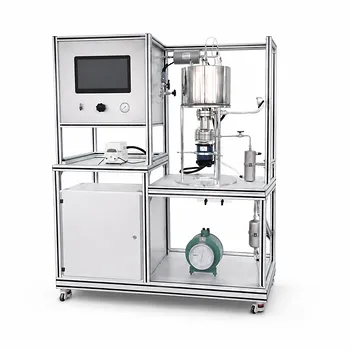
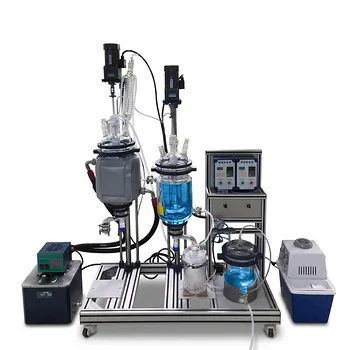
For powders that float like dust and refuse to flow, roller compaction is the transformative step that turns chaos into control.
Dry granulation via roller compaction is essential for processing low bulk density powders because it mechanically densifies these problematic materials, expels entrapped air, and converts them into free-flowing, compressible granules—without the need for liquid binders or energy-intensive drying. To demonstrate this critical unit operation, a pilot plant must integrate four core subsystems: a pre-mixing unit, a metering and conveying system, the compaction rollers with precise gap control, and a granulating mill. Working together on a pilot scale, these components allow students and researchers to observe real-time densification, map mass balance, and optimize the parameters that govern granule quality.
The ultimate challenge with low bulk density powders is their refusal to pack consistently—leading to erratic feeding, dust hazards, and weight variability in the final dosage form. Roller compaction solves this by physically compressing the powder into a solid ribbon and exactly milling it into granules that flow like a liquid. A well-designed pilot plant replicates this continuous process to reveal the fundamental trade-off between granule strength and tabletability, making the technology tangible and teachable.
The Fundamental Challenge of Low Bulk Density Powders
Low bulk density powders are a formulation nightmare because their tendency to hold vast amounts of air directly undermines every downstream unit operation.
The Flow Nightmare
These powders exhibit poor flow properties, often bridging or rat‑holing in hoppers. Their low weight-to-volume ratio means they entrain air easily, creating dusty environments and making consistent filling into dies or capsules nearly impossible.
The Hidden Enemy: Air Entrapment
Even when you manage to feed the powder, trapped air prevents proper compression. During tablet pressing, the air cannot escape fast enough, leading to capping, lamination, and weight variation. Wet granulation can mitigate this, but it adds a drying stage and risks degrading moisture-sensitive actives—making a continuous dry method like roller compaction far more attractive.
How Roller Compaction Transforms the Powder
Roller compaction addresses these issues by forcing the fluffy powder through a narrow gap, converting a low‑density starting material into dense, manageable granules.
Densification Under Mechanical Pressure
A metered feed of pre-mixed powder enters the nip between two counter-rotating rollers. As the rollers apply high mechanical pressure, the powder rearranges, fragments, and plastically deforms. The result is a solid ribbon or sheet from which nearly all air has been expelled. The ribbon’s apparent density is a direct function of the applied pressure—higher force creates a denser ribbon with greater tensile strength.
From Ribbon to Granule: Controlled Fracture
The compacted ribbon then passes into a screening mill. Here, a rotating impeller forces the ribbon against a screen, producing granules of a defined size. The mill parameters—impeller type, screen aperture, speed, and gap—determine the granule size distribution. Proper setup avoids screen blinding and heat generation that could melt temperature-sensitive powders.
The Result: Superior Flow and Compressibility
The milled granules exhibit a granular architecture that is simultaneously free-flowing and, depending on how they were compacted, highly compressible. Operators can steer the outcome by balancing roller speed and pressure. Low roller speed combined with high pressure yields strong, low‑friability granules that flow effortlessly—ideal for preventing weight variability. Conversely, low roller pressure produces ribbons of lower apparent density, which upon milling generate a higher proportion of fines and weaker granules. Those granules require less force to deform during tablet compression, resulting in higher compactability.
The Four Must-Have Subsystems of a Pilot Plant
To move this process from textbook theory to hands‑on experimentation, a pilot plant must feature subsystems that individually tackle the unique flow and compaction challenges of low‑density powders.
1. Pre‑Mixing and Conditioning
Uniformity begins before the powder ever reaches the rollers. A mixing subsystem ensures the active and excipients are homogeneously distributed. Even a small pocket of unmixed material will create density variations in the ribbon, so pilot plants include a simple tumbling or ribbon blender that mimics the blending step found in full‑scale operations.
2. Metering and Conveying System
This is the frontline defense against poor powder flow. A feed screw, stirring devices, or rotary valves actively condition the powder and deliver it at a constant rate to the roller nip. Without a controlled feeding mechanism, low‑density powders bridge and pulse, causing ribbon thickness fluctuations. In a pilot plant, varying the feed screw speed or stirrer design demonstrates directly how pre‑compression powder flow impacts final granule quality.
3. The Compaction Unit: Rollers and Gap Control
At the heart of the process, two counter‑rotating rollers apply a precise, adjustable pressure (often measured in kN/cm) while maintaining a fixed or floating gap. Pilot plants typically allow students to set roller speed and hydraulic pressure independently. Observing the ribbon’s physical appearance—a smooth, glossy surface versus a cracked, friable one—immediately teaches the relationship between specific compaction force and ribbon density.
4. The Granulating Mill
The mill transforms a continuous ribbon into discrete granules. A screening mill with an interchangeable impeller and screen lets researchers explore how different shear and impact forces influence particle size. Since predictive comminution laws (Kick’s, Rittinger’s) account for only a fraction of the actual energy consumed, direct empirical testing on this subunit is essential to avoid screen blinding, overheating, and generation of excessive fines.
Understanding the Trade‑offs
A pilot plant that simply produces granules is not enough; it must illuminate the inescapable compromises that govern dry granulation.
Flow Reliability vs. Compactability
High roller pressure and low speed create dense, strong granules that flow beautifully—but they may resist plastic deformation during tablet compression, leading to weaker tablets. Low pressure gives superior compactability because the granules contain more internal porosity and crush more easily, but that same friability can result in dust generation and flow inconsistencies. This trade‑off is the central teaching point of any roller compaction experiment.
The Hidden Cost of Over‑Compaction
Excessive pressure not only harms tabletability; it also increases wear on the rollers and mill, raises energy consumption, and can cause thermal degradation of heat‑sensitive compounds. Pilot plants must therefore allow easy collection of ribbon and granule samples so students can measure apparent density, friability, and particle size distribution at various pressure levels.
Feed Consistency Is Everything
A brilliantly designed roller compactor will fail if the feed system allows surging. This is why highlighting the metering subsystem as an equal partner—not just a conveyor—is critical. The lesson: low bulk density powders demand an integrated approach where feeding, compaction, and milling are tuned as a single system.
Making the Right Choice for Your Learning Objectives
Once the equipment is in place, the experiments you design should align with the specific learning outcome you want to achieve.
- If your primary focus is teaching powder flow fundamentals: Run trials in which you systematically vary feed screw speed while holding roller pressure constant. Measure the resulting ribbon density and granule flow rates to demonstrate how critical the pre‑compaction feeding is for low‑density materials.
- If your primary focus is optimizing downstream tabletability: Deliberately explore the low‑roller‑pressure region. Mill those fragile ribbons and then compress the granules at different forces to correlate ribbon density with tablet tensile strength.
- If your primary focus is bridging the gap to continuous manufacturing: Set up the pilot plant to run for an extended period at steady state. Have students track material throughput, energy consumption, and equipment heat‑up, then compare these measurements to batch processes like slugging.
By understanding both the “why” and the “how” of roller compaction, you transform a frustrating, air‑ridden powder into a predictable, process‑ready granule—and equip your pilot plant to teach that lesson with unforgettable clarity.
Summary Table:
| Subsystem | Key Function | Process Impact |
|---|---|---|
| Pre-Mixing & Conditioning | Homogenizes actives and excipients | Prevents density variations in the compaction ribbon |
| Metering & Conveying | Delivers powder at a constant feed rate | Eliminates bridging and ensures uniform feeding |
| Compaction Unit (Rollers) | Applies precise mechanical pressure | Densifies powder into a solid ribbon, expelling air |
| Granulating Mill | Fractures ribbon using a screening mill | Controls granule size distribution and flowability |
Bring Hands-On Powder Processing to Your Lab
Teaching the complexities of dry granulation and powder densification requires robust, industry-standard equipment. LABPARK provides high-quality Educational and Vocational Unit Operations Pilot Plants in chemical engineering, bioprocess & biotech, and environmental & water treatment.
Designed specifically for universities, research institutes, and enterprises, our pilot plants enable students and researchers to map mass balances, control critical process parameters, and bridge the gap between theory and industrial practice.
Ready to upgrade your laboratory? Contact LABPARK today to find the perfect pilot plant solution for your educational or research needs!
Related Products
- Polymerization Granulation and Pellet Processing Educational Unit Operations Pilot Plant
- Multi-Functional Drying Educational Unit Operations Pilot Plant
- Natural Product Extraction Unit Operations Training Pilot Plant
- Dual-Mode Rectification Pilot Plant for Practical Training Unit Operations
- High-Gravity Emulsification and Mass Transfer Educational Pilot Plant
People Also Ask
- How do educational unit operations pilot plants bridge theory and design? Bridge the Engineering Gap
- How do educational unit operations pilot plants address safety and waste management when scaling up?
- Why Compare Predicted and Experimental Excess Enthalpy? Key to Accurate Pilot Plant Scale-up
- When to transition from PID to adaptive control in pilot plants? Key process indicators.
- How to study gasification in pilot plants? Compare exit gas composition & efficiency