For a clear, stable, and instantly recognizable demonstration of bubbling fluidization, Group B powders are unequivocally the best choice for educational chemical engineering pilot plants. Materials like sand or glass beads, with particle sizes typically between 50 and 1000 µm and a density akin to common minerals, begin to bubble the very moment the gas velocity surpasses the minimum fluidization point. This direct transition, without any hidden pre-expansion phase, provides the immediate visual feedback essential for effective teaching.
While Group A powders are celebrated for their smooth, bubble-free expansion before bubbling, educational demonstrations of classic bubbling dynamics specifically demand the immediate, unambiguous transition that only Group B materials can reliably deliver.
Deconstructing Geldart's Theory of Fluidization
The foundation of any pilot plant design rests on understanding how different powders behave when subjected to an upward gas flow. Sir Derek Geldart’s classification system distills this into four distinct groups, each defining a unique world of fluidization behavior.
The Four Pillars of Powder Behavior
Group C powders are cohesive and fine, like flour. They cling to themselves, causing the gas to carve narrow channels through the bed instead of fluidizing it evenly—a frustrating phenomenon known as channeling that obscures any meaningful data.
Group A powders, such as fluidized catalytic cracking (FCC) catalysts, occupy a "middle earth." Upon reaching minimum fluidization velocity (Umf), they undergo a period of homogeneous bed expansion without forming bubbles. Bubbles appear only at a higher, distinct minimum bubbling velocity (Umb), creating a smooth, bubble-free regime ideal for studying expanded bed dynamics but not for demonstrating bubbling itself.
Group B powders, including sand and glass beads, are the workhorses of classical fluidization. Their inter-particle forces are negligible compared to their weight. As soon as the gas velocity hits Umf, the excess gas immediately forms bubbles, providing a stark visual onset of the bubbling regime.
Group D powders are large and dense, like grains. They are prone to spouting and slugging—where a single bubble can fill the entire column cross-section—leading to violent, unstable behavior that is poorly controlled and dangerous at scale.
The Deep Need: Why Educational Pilot Plants Demand Stability
The explicit question asks which powder group is best, but the underlying need is far more critical: how to create a fail-safe, instructive environment where theoretical concepts become tangible reality without the distracting chaos of real-world industrial complexities.
The Cost of Poor Demonstrations
An educational pilot plant that channels, slugs, or requires microscopic changes in gas flow just to sustain operation teaches students nothing about fundamental principles. It teaches them about equipment limitations. The primary goal is to reinforce the link between the superficial gas velocity, bed pressure drop, and the unmistakable onset of bubbling, a relationship that must be reproducible every time.
The Golden Standard for Learning
For a teaching tool, the ideal behavior is predictable, robust, and visually self-explanatory. Students should be able to turn a valve, watch the bed pressure drop curve, and see the exact moment when the first bubbles detach from the distributor plate, rising through the bed and bursting at the surface. This instant feedback loop solidifies the concept of "fluidization" from an abstract equation into a physical memory.
Why Group B Powders Excel at Bubbling Fluidization
Group B materials are not just a convenient option; their physical properties are engineered by nature to solve the specific challenges of an educational bubbling bed. They eliminate ambiguity completely.
Immediate and Unambiguous Bubbling
Unlike Group A powders, Group B does not have a stable, bubble-free expansion region. The minimum fluidization velocity (Umf) and the minimum bubbling velocity (Umb) are identical. This means the moment the bed becomes fluidized, it enters the bubbling regime. For a student plotting velocity against pressure drop, the graph transitions from a steep linear rise to a flat plateau right as bubbles appear, creating a perfect "textbook" curve that is impossible to misinterpret.
Robustness to Operational Variability
Educational plants are operated by students, not seasoned technicians. Gas flow rates may fluctuate. Bed inventories might vary slightly. Group B powders are incredibly forgiving of these human factors. Their dense, free-flowing nature resists the channeling that plagues Group C powders and avoids the violent, gaping bubbles of Group D materials. You can demonstrate a wide range of bubbling behaviors—from isolated bubbles to vigorous bubbling—simply by increasing the gas flow, all within a stable, non-slugging regime (if the column diameter is appropriately sized).
Safety and Practicality
The very materials that work best—clean, graded sand or spherical glass beads—are inert, non-toxic, inexpensive, and readily available. There is no need for the specialized handling required for fine, potentially respirable Group C dust or the heavy-duty support structures needed for the vigorous mixing of Group D grains. The bed can be easily emptied, recharged, and cleaned between laboratory sessions, minimizing downtime and safety hazards.
Understanding the Trade-offs
Objectivity demands acknowledging that Group B powders are not a universal solution. Their strengths in bubbling demonstrations are weaknesses in other specific educational contexts.
The Limits of Group B and the Role of Group A
If the learning objective shifts from "observe bubbling dynamics" to "observe homogeneous expansion and interphase mass transfer in a liquid-like bed," Group B will fail. Group B powders show virtually no bed height expansion before bubbles appear. To demonstrate the elegant, bubble-free expansion where interstitial gas velocity can be finely controlled, you must use a Group A powder like FCC catalyst. Using Group B for that purpose would simply show a static bed followed by immediate bubbling, missing the crucial physics. The best choice therefore hinges entirely on the defined pedagogical goal. For bubbling, Group B is superior; for expansion before bubbling, Group A is mandatory.
Making the Right Choice for Your Educational Goal
Your selection of a powder group must be a deliberate act of instructional design, driven by the specific fluidization regime you want your students to see and measure.
- If your primary focus is demonstrating classic bubbling fluidization, bed turnover, and the transition from a fixed to a fluidized state: Choose a Group B powder like silica sand or glass beads to guarantee an immediate, stable, and visually unmistakable bubbling bed.
- If your primary focus is demonstrating homogeneous bed expansion, the concept of minimum bubbling velocity distinct from minimum fluidization, and the influence of fines: Select a Group A powder such as FCC catalyst, but be prepared to explain why no bubbles appear immediately.
- If your primary focus is on the challenges of cohesive solids, poor flowability, and the method of overcoming channeling with mechanical aids: A Group C powder like cement becomes the necessary subject, but the pilot plant will require vibration or stirring and the demonstration will center on failure modes rather than ideal behavior.
By aligning the powder with the objective, you transform a simple experiment into a definitive, unforgettable lesson in fluidization physics.
Summary Table:
| Geldart Group | Materials | Fluidization Behavior | Suitability for Bubbling |
|---|---|---|---|
| Group A | FCC Catalyst, Alumina | Homogeneous expansion before bubbling | Moderate (Delayed onset) |
| Group B | Sand, Glass Beads | Immediate bubbling at Umf | Best (Stable, instant) |
| Group C | Flour, Cement | Cohesive, prone to channeling | Poor (Requires mechanical aid) |
| Group D | Grains, Peas | Spouting, slugging, violent bubbling | Poor (Unstable, difficult) |
Bring Fluidization Theory to Life with LABPARK
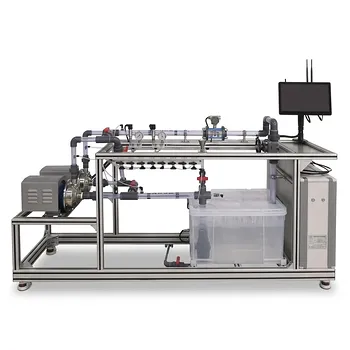
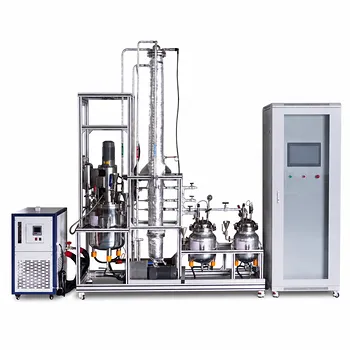
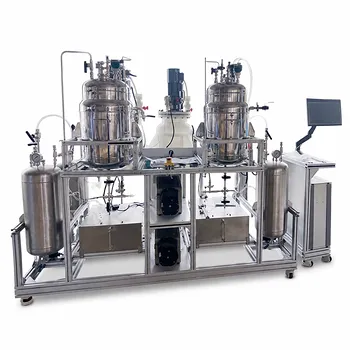
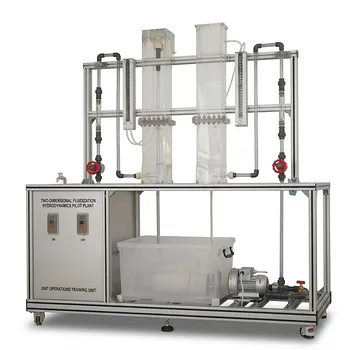
Ensure your students experience clear, reliable, and safe fluidization demonstrations. LABPARK provides state-of-the-art Educational and Vocational Unit Operations Pilot Plants in chemical engineering, bioprocess & biotech, and environmental & water treatment for universities, research institutes, and enterprises.
By choosing LABPARK, you get:
- Robust, easy-to-operate pilot plants engineered for consistent, textbook-accurate educational demonstrations.
- Safe and durable equipment designed to handle various Geldart powder groups without operational hazards.
- Industry-aligned systems that prepare students for real-world process engineering challenges.
Enhance your laboratory curriculum today—contact LABPARK now to discuss your pilot plant needs!
Related Products
- General Purpose Cosmetics Production Unit Operations Training Pilot Plant
- Gas-Solid Heterogeneous Separation Demonstration Educational Unit Operations Pilot Plant
- Electrolyte Distillation Purification and Formulation Educational Pilot Plant
- Polymerization Granulation and Pellet Processing Educational Unit Operations Pilot Plant
- Rising and Falling Film Evaporation Educational Unit Operations Pilot Plant
People Also Ask
- Why is the chemical plant startup schedule crucial? De-risk scale-up with pilot plants.
- How do deviations in estimating latent heat impact pilot plant thermal systems? Avoid hardware mis-sizing.
- When to transition from PID to adaptive control in pilot plants? Key process indicators.
- Why Compare Predicted and Experimental Excess Enthalpy? Key to Accurate Pilot Plant Scale-up
- Why Use PTFE & Hastelloy in Chemical Pilot Plants? Prevent Corrosion & Ensure Safety