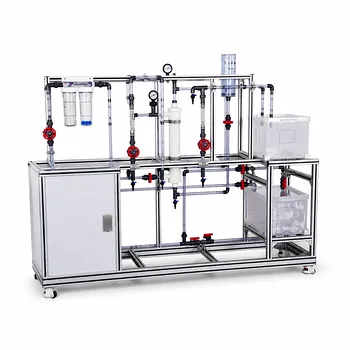
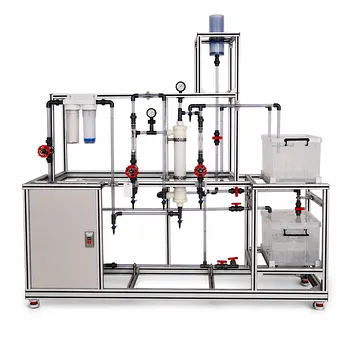
The core operational challenge is rapid, performance-crippling fouling, driven by the inherent incompatibility between hydrophobic membrane materials and biological feed streams. In a bioprocess pilot plant, using polysulfone (PSU) or polyethersulfone (PES) ultrafiltration membranes leads to non-specific protein adsorption, which creates a fast permeability decline that distorts scale-up data and halts production. Mitigation requires a two-pronged strategy: proactively modifying the membrane surface chemistry for long-term hydrophilicity and strictly controlling membrane de-wetting during process interruptions.
A hydrophobic UF membrane in a bioprocess pilot plant is a predictable failure point, not because the material is weak, but because its surface chemistry actively attracts biological foulants. The solution is not to simply clean more often, but to permanently alter the interface between the membrane and the process fluid through material science and rigorous wet-state management.
The Fundamental Incompatibility with Bioprocess Streams
The difficulty begins at a molecular level. The very properties that make PSU and PES thermally and chemically stable also make them magnets for biological material.
Why Protein Solutions Rapidly Blind the Surface
Non-specific adsorption is the primary mechanism. The highly hydrophobic PSU/PES surface seeks to minimize contact with water, so it actively adsorbs amphiphilic proteins from the solution. This creates a fouling layer almost instantly upon contact, collapsing permeate flux and ruining the reliability of a pilot-scale separation trial.
Unpacking the Layers of a Complex Foulant
This initial protein layer then becomes a foundation for more complex fouling. In downstream bioprocessing, you are not just dealing with one protein. Concentration polarization traps solutes at the surface, pore blocking occurs within the membrane structure, and the trapped biological material provides a perfect conditioning film for biofouling.
The Insidious Challenge of Biofouling
Biofouling is a critical operational risk, especially in longer pilot campaigns. Microorganisms attach and secrete extracellular polymeric substances (EPS), creating a protective matrix. This EPS barrier resists cleaning chemicals and biocides, making it far more difficult to remove than simple protein adsorption and often requiring harsh and potentially membrane-degrading treatments.
Proactive Mitigation: Engineering the Solution
Effective mitigation is an upfront engineering task, not a downstream reaction. The goal is to create a surface that water loves, repelling foulants before they can attach.
Chemically Modifying the Membrane for Inherent Hydrophilicity
You must change the membrane itself. Blending sulfonated polysulfone with the base polymer is a permanent solution that integrates hydrophilic sites into the material. Alternatively, blending with hydrophilic polymers like polyvinylpyrrolidone (PVP) or polyethylene glycol (PEG) creates a more water-friendly surface that dramatically improves initial clean water flux.
A Critical Trade-Off with Water-Soluble Blends
This is where operators must be vigilant. While a PVP or PEG blend is effective, these water-soluble polymers can leach out over time during continuous aqueous operation. This means your hydrophilicity and anti-fouling performance will gradually degrade. A pilot trial that runs perfectly for four hours might fail at scale over four days, producing data that predicts a non-existent cliff in performance.
Preserving Performance During Downtime
The operational protocol during a shutdown is as crucial as the membrane chemistry. A hydrophobic membrane must never be allowed to dry out completely. Once dried, its pores collapse and it becomes impossible to re-wet with water. If maintenance requires a dry module, you must first treat it with a humectant like glycerin. Glycerin fills the pores, preserving the membrane’s structure and permeability, allowing for a simple rinse and quick startup.
Advanced Mitigation and System Architecture
When material science isn't enough, change the process. A pilot plant's modularity is its greatest asset for troubleshooting fouling issues.
Hybrid Configurations to Protect the Membrane
You can configure the pilot plant to prevent foulants from ever touching the sensitive UF membrane. For an extremely challenging feed stream, use a vapor permeation setup where the feed is vaporized first, so only clean vapor contacts the membrane. More commonly, a hybrid microfiltration (MF)-UF system is perfect. The upstream MF unit handles cell harvesting and clarification, removing the large solids and debris that would rapidly blind the UF membrane dedicated to protein concentration and purification.
Balancing Operational Parameters vs. Membrane Lifespan
You can partially compensate for fouling by adjusting your operating conditions. By raising the feed temperature, you enhance solute back-diffusion away from the surface. By increasing cross-flow velocity, you create turbulence that physically scours the membrane. However, this comes at a cost. The increased energy for feed circulation and a higher operating pressure accelerates the physical and chemical degradation of the polymeric membrane, shortening its overall lifespan and demanding a more frequent replacement schedule.
When a Polymeric Membrane is the Wrong Tool
You must also recognize the material's absolute limits. PSU and PES have limited chemical resistance to extreme pH and strong organic solvents. If your bioprocess involves such cleaning protocols or specific solvent-based separations, the operational challenge is unsolvable by mitigation alone. The pilot plant’s polymeric membrane must be swapped for a fundamentally different, chemically resistant material, such as a ceramic, glass, or metallic membrane.
Making the Right Choice for Your Pilot Operation
Your mitigation strategy must align with the primary goal of your pilot trial. A one-size-fits-all approach will compromise your data and your budget.
- If your primary focus is generating scalable, long-term performance data: Invest in permanently modified membranes like sulfonated PSU, and implement a strict glycerin-preservation protocol for all shutdowns. Do not use a PVP blend whose performance will decay over time.
- If your primary focus is rapid proof-of-concept for a clean protein stream: A PVP or PEG-blended PES membrane is a fast, economical start. Just document the initial flux carefully and note the potential for gradual leaching in your scale-up report.
- If your primary focus is processing an exceptionally dirty or solids-laden broth: Stop trying to optimize the UF step in isolation. Reconfigure your pilot plant as a hybrid system, integrating an MF clarification step upstream to protect the UF membrane from immediate blinding.
- If your primary focus is transferring a process that uses aggressive solvents or extreme pH cleaning: Abandon downstream mitigation entirely. Your trial must directly evaluate durable ceramic membranes from the start, accepting the higher material cost as the price for chemical compatibility and operational feasibility.
Your pilot plant is a testing ground for reality, not a perfect lab bench.
Summary Table:
| Challenge | Primary Cause | Key Mitigation Strategy |
|---|---|---|
| Rapid Protein Fouling | Hydrophobic adsorption on PSU/PES | Use hydrophilic blends (sulfonated PSU, PVP, PEG) |
| Biofouling & EPS | Microbial attachment over long runs | Implement hybrid MF-UF configuration / clarification |
| Membrane De-wetting | Irreversible pore collapse during downtime | Store in humectants like glycerin to preserve structure |
| Chemical Limits | Poor pH/solvent resistance of polymers | Swap polymeric membranes for durable ceramic/glass |
Optimize Your Bioprocess Pilot Scale-Up with LABPARK
Are you facing membrane fouling or scale-up inconsistencies in your process? LABPARK provides state-of-the-art Educational and Vocational Unit Operations Pilot Plants in chemical engineering, bioprocess & biotech, and environmental & water treatment. We help universities, research institutes, and enterprises design robust, reliable systems that minimize operational challenges and deliver accurate scale-up data.
Contact LABPARK today to find the ideal pilot plant solution for your laboratory or training facility!
Related Products
- Hollow Fiber Ultrafiltration Membrane Separation Educational Pilot Plant
- Multifunctional Membrane Separation Educational Pilot Plant with Ultrafiltration, Nanofiltration, Reverse Osmosis
- Ultrafiltration Membrane Separation Educational Pilot Plant
- Multi-Functional Membrane Separation Educational Pilot Plant for Unit Operations Lab
People Also Ask
- How do PEI, PVDF, and PSU membranes compare in pilot plants? Find the best fit.
- Pervaporation vs. Vapor Permeation: Handling Suspended Solids in Membrane Pilot Plants
- What are the advantages of membrane separation in pilot plants? Efficient Organic Vapor Recovery
- How can operators optimize operating conditions and cleaning protocols in membrane separation pilot plants to mitigate fouling?
- Isotropic vs. Anisotropic Membranes: How to Choose the Best Pilot Plant Modules