Direct substitution is a starter method that quickly runs out of steam. The direct (sequential) substitution approach simply feeds the output of one iteration back as the input for the next. While it is easy to code and useful for introducing iterative concepts, it suffers from critical limitations: it cannot guarantee convergence, it is computationally inefficient, and it provides no built‑in safeguard against drifting outside physically meaningful ranges. In chemical engineering training systems that model recycle streams, the bounded Wegstein method directly addresses all three flaws by adding controlled extrapolation and smart bounding.
For teaching the mechanics of an iterative loop, direct substitution works. But for reliable, realistic recycle simulation, its lack of convergence guarantees, glacial convergence speed, and vulnerability to wild numerical swings make it a liability. The bounded Wegstein method’s acceleration parameter ‘q’ (constrained between -5 and 0) and its ability to stay within physical limits transform recycle solving from a gamble into a predictable process.
Why Direct Substitution Falters in Recycle Loops
The direct substitution method’s simplicity is also its weakness. It blindly accepts the output of one pass as the input for the next without any attempt to guide or protect the calculation.
No Guarantee of Convergence
Direct substitution may never arrive at a stable solution. Whether it converges at all depends entirely on the specific numerical properties of the recycle loop, and there is no internal mechanism to correct it if the iterations begin to oscillate or diverge. In training environments, this unpredictability can derail a session and confuse learners who expect a sensible answer.
Slow, Linear Convergence
Even when direct substitution does converge, it does so at a painfully slow, linear rate. Each iteration reduces the error by a roughly constant factor, meaning it can take dozens—or hundreds—of passes through the flowsheet to reach an acceptable tolerance. For a student waiting for a pilot‑plant simulation to stabilize, that sluggishness eats into learning time and invites frustration.
No Protection from Physical Instability
Because the method simply copies an output to become the next input, there is nothing to stop the variable from drifting into an impossible region—negative mass fractions, excessive temperatures, or flow reversals that violate the laws of physics. When that happens, downstream unit models often crash or produce meaningless results, leaving the user to figure out what went wrong.
How Bounded Wegstein Removes the Roadblocks
The bounded Wegstein method turns iteration into a guided, safe process. It uses linear extrapolation with a bounded acceleration parameter and a domain check to enforce physical realism.
Controlled Acceleration via the ‘q’ Parameter
Instead of treating the new guess as a blind copy, Wegstein uses the previous two iterates to project a smarter next guess. The acceleration parameter q—typically bounded between -5 and 0—determines how aggressively the method pushes toward the solution. A well‑tuned ‘q’ dramatically boosts convergence speed, often turning a dozen direct‑substitution loops into just two or three Wegstein cycles.
Staying Inside the Physical Solution Space
The bounded version of Wegstein adds a critical safety valve: it checks predicted values against user‑defined or physically derived limits. If an extrapolated guess would land outside the allowed range (say, a recycle flow rate below zero), the method automatically clips or dampens the step. This keeps the simulation physically plausible at every iteration, preventing cascading unit‑operation failures that plague direct substitution.
Reliable Convergence for Realistic Training
For chemical engineering pilot‑plant training systems, the bounded Wegstein method’s ability to converge reliably across many different recycle configurations means instructors can trust the simulator. Students see physically consistent results quickly and can focus on process behavior, not debugging numerical instability.
Understanding the Trade-offs
Even with its superiority, the bounded Wegstein method is not automatic magic. It requires a few thoughtful choices and comes with its own subtle cost.
Sensitivity to the Initial ‘q’ Bound
The default bound of -5 to 0 works well for most systems, but extreme recycle ratios or highly non‑linear relationships may need a tighter bound. If ‘q’ is too aggressive, the extrapolation can overshoot before the bounds kick in, causing temporary instability. In practice, however, the bounded version greatly reduces this risk compared to unbounded Wegstein.
The Hidden Teaching Value of Direct Substitution
Direct substitution retains genuine value as a pedagogical stepping stone. Because its logic is transparent, a student can explicitly trace how one iteration feeds the next. This builds intuition for what convergence means before they rely on a more opaque, accelerated method. Many training curricula therefore introduce direct substitution first, then transition to bounded Wegstein once the concept is solid.
Choosing the Right Method for Your Training Simulator
The decision comes down to what you need the simulation to accomplish.
- If your primary focus is teaching the fundamental concept of iterative solving: Start with direct substitution. Let students observe the slow march to convergence and understand why acceleration is needed. The method’s simplicity is its greatest asset here.
- If your primary focus is delivering a realistic, responsive pilot‑plant experience: Use the bounded Wegstein method. Its speed, reliability, and built‑in physical consistency will keep students engaged with process behavior, not fighting numerical noise.
- If your primary focus is balancing understanding with reliability: Introduce direct substitution briefly, then switch to bounded Wegstein. This way, learners appreciate the problem while benefiting from a robust solution.
The true power of the bounded Wegstein method in training systems is that it removes the lottery of convergence, letting students spend their time on what matters: understanding the chemical process itself.
Summary Table:
| Feature | Direct Substitution Method | Bounded Wegstein Method |
|---|---|---|
| Convergence Guarantee | None; prone to oscillation/divergence | Highly reliable |
| Convergence Speed | Slow, linear rate | Fast, accelerated via 'q' parameter |
| Physical Safety | Vulnerable to impossible physical values | Enforced bounds prevent simulation crashes |
| Best Use Case | Teaching basic iterative concepts | Delivering realistic pilot-plant simulations |
Optimize Your Chemical Engineering Training Programs
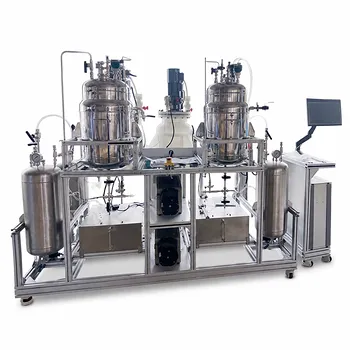
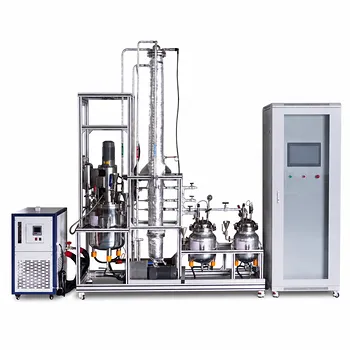
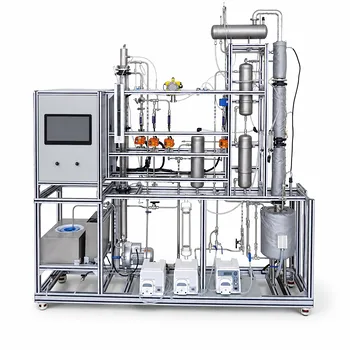
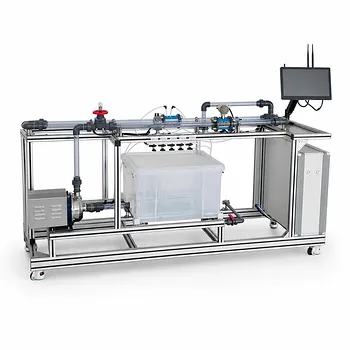
Ensure your students and researchers experience highly realistic, stable, and responsive simulations. LABPARK provides premium Educational and Vocational Unit Operations Pilot Plants in chemical engineering, bioprocess & biotech, and environmental & water treatment. Designed specifically for universities, research institutes, and enterprises, our systems bridge the gap between theory and industrial reality.
Ready to upgrade your laboratory setup? Contact LABPARK today to discover how our advanced pilot plants can elevate your training efficiency!
Related Products
- Natural Product Extraction Unit Operations Training Pilot Plant
- Residence Time Distribution and Reactor Flow Characteristics Determination Educational Pilot Plant
- Chemical Pipeline Assembly and Fluid Transport Practical Training Unit Operations Pilot Plant
- Fluid Transport and Piping Dynamics Practical Training Unit Operations Pilot Plant
- Multi Pump Fluid Transport Process Piping Unit Operations Training Pilot Plant
People Also Ask
- How to Demo Solubility Sensitivity in SFE Pilot Plants? Practical Thermodynamics
- How do pilot plants differentiate physical vs chemical extraction? Enhance Chemical Engineering Training
- How are HTU and NTU applied to determine extraction column height? Guide to Pilot Plant Scaling
- Why use split-plot designs in pilot plants instead of CRD? Optimize process parameters effectively.
- How can Hotelling's T² & Q statistics detect pilot plant abnormalities? Optimize Safety