The choice between triangular and square tube arrangements is a fundamental trade-off between thermal performance and maintenance accessibility. In educational unit operations plants, an equilateral triangular layout maximizes heat transfer and tube count but makes the shell side virtually impossible to clean mechanically. A square (in-line) layout sacrifices some thermal efficiency in exchange for clear cleaning lanes, making it ideal for fouling fluids and for teaching real-world maintenance procedures.
The core tension is simple: triangular arrangements win on compact thermal efficiency for clean streams, while square arrangements win on cleanability and versatility—an especially valuable trade-off in an educational environment where demonstrating maintenance and handling varied fluids is central to the learning outcome.
How the Tube Layout Drives Thermal Performance
The Triangular Advantage: Compactness and Turbulence
An equilateral triangular layout packs the maximum number of tubes into a given shell diameter. This dense packing yields a higher heat transfer area per unit volume and creates inherently higher shell-side turbulence.
The result is a measurably higher shell-side heat transfer coefficient. For an educational plant running clean utility fluids or pre-filtered product streams, this layout shows students how to squeeze the most duty out of the smallest possible exchanger.
However, this turbulence comes with a penalty. The triangular pattern naturally creates a higher pressure drop on the shell side. While often acceptable for liquids, it’s a parameter students need to measure and factor into pump sizing calculations.
The Square Layout: Designed for Accessibility
An in-line square pattern arranges tubes with clear, straight lanes running the full length of the bundle. This geometry reduces packing density and straightens the flow path, which lowers both shell-side turbulence and the heat transfer coefficient compared to a triangular layout.
The real advantage is that these lanes provide access. With a typical minimum clearance of 6.4 mm (0.25 inches) between tubes, it becomes possible to pass mechanical brushes or scrapers through the bundle. This turns the exchanger into a teachable platform for fouling removal.
A staggered square arrangement offers an intermediate option, improving turbulence over in-line square while retaining some degree of cleanability. It is a useful comparison point when designing a multi-exchanger training skid.
The Maintenance and Cleaning Trade-off
Why Mechanical Cleanability Matters in Teaching
In industrial practice, the shell side often handles cooling water, crude process streams, or slurry-like fluids that leave deposits. A triangular layout quickly becomes a black box once fouled—the only practical cleaning method is chemical circulation, which students cannot easily observe or assess.
A square layout turns cleaning into a visible, hands-on exercise. Students can insert inspection tools, measure fouling thickness, and even practice manual cleaning with rod-type brushes through the lanes. This direct demonstration of maintenance procedures is often cited as a key curriculum requirement for vocational pilot plants.
When Each Layout Reaches Its Limits
The triangular layout’s heat transfer advantage vanishes if the unit cannot be cleaned effectively. Fouling resistance becomes the dominant thermal barrier, and without mechanical cleaning access, the exchanger’s performance degrades irreversibly over time. This teaches a powerful lesson: thermal design cannot be separated from maintenance reality.
Conversely, a square layout’s lower clean coefficient may demand a slightly larger shell for the same duty. The capital cost increases, but the operating cost and uptime may improve when fouling is present. For an educational facility that runs a wide range of student-designed experiments—often with poorly controlled fluids—this durability is a practical necessity.
Understanding the Trade-offs
No single arrangement is universally superior. The table below crystallizes the objective differences you will present to students and consider for your lab.
| Criterion | Equilateral Triangular | Square (In‑line) |
|---|---|---|
| Thermal performance | Higher shell-side coefficient | Lower shell-side coefficient |
| Pressure drop | Higher | Lower |
| Tube count per shell | Maximum | Fewer tubes |
| Mechanical cleaning | Not practical | Easy, with clear lanes |
| Best suited for | Clean, non‑fouling shell-side fluids | Fouling, particle‑laden, or variable fluids |
| Pedagogical value | Demonstrates high‑efficiency design | Demonstrates maintenance, inspection, and fouling management |
A staggered square layout sits between these two. It provides a middle ground that can be used to show students how small geometric changes influence both heat transfer and accessibility.
Making the Right Choice for Your Educational Unit Operations Plant
Your selection should be driven not just by thermal analysis but by what you intend to teach. Here’s how to align the hardware with the learning objectives.
- If your primary focus is maximizing thermal efficiency for a single, clean fluid system: Select an equilateral triangular layout. It will give your students the most compact and highest-performance benchmark against which to measure other configurations.
- If your primary focus is delivering a versatile plant that can handle diverse, potentially fouling student projects: Choose a square (or rotated square) layout. This normalizes the teaching of mechanical cleaning, inspection, and fouling factor measurement—skills directly transferable to industry.
- If your budget and lab footprint allow for a comparative skid: Acquire two identical-sized shells, one with a triangular tube sheet and one with a square arrangement. Running them side-by-side with the same fluids is one of the most powerful active learning exercises in a unit operations course.
The layout you choose becomes the physical text from which students learn the inseparable link between thermal design and operational maintainability. Pick the one that tells the most complete story.
Summary Table:
| Tube Layout | Thermal Efficiency | Mechanical Cleaning | Pressure Drop | Best Suited For |
|---|---|---|---|---|
| Equilateral Triangular | High (maximum tube density & turbulence) | Extremely difficult (chemical only) | Higher | Clean, non-fouling shell-side fluids |
| Square (In-line) | Lower (reduced turbulence) | Easy (clear 6.4 mm lanes) | Lower | Fouling, particle-laden, or variable fluids |
Enhance Your Engineering Curriculum with LABPARK Pilot Plants
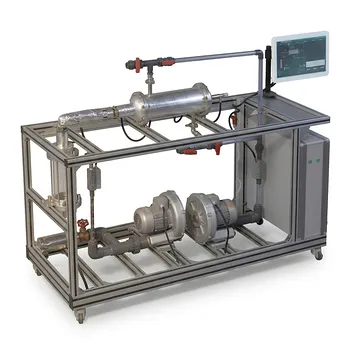
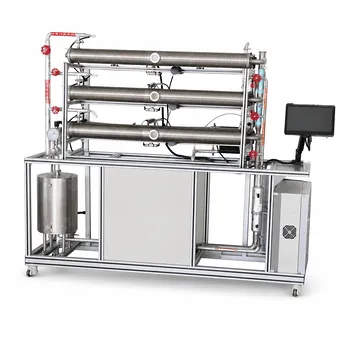
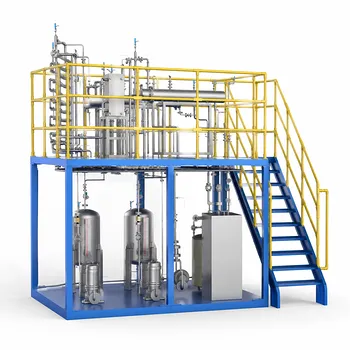
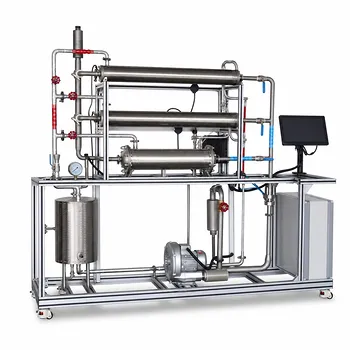
Choosing the right heat exchanger geometry is crucial for teaching practical engineering trade-offs. LABPARK provides high-quality Educational and Vocational Unit Operations Pilot Plants in chemical engineering, bioprocess & biotech, and environmental & water treatment for universities, research institutes, and enterprises.
Our custom-designed pilot plants allow students to gain hands-on experience with real-world fluid dynamics, heat transfer, and maintenance procedures.
Ready to upgrade your laboratory training systems? Contact LABPARK today to discuss your custom pilot plant specifications!
Related Products
- Shell and Tube Heat Exchanger Heat Transfer Coefficient Determination Educational Pilot Plant
- Three-Tube Heat Transfer Educational Pilot Plant for Unit Operations Training
- Comprehensive Multi-Modal Heat Transfer Unit Operations Pilot Plant for Engineering Training
- Dual Mode Heat Transfer Pilot Plant for Unit Operations Training
- Comprehensive Heat Transfer Coefficient Determination Educational Unit Operations Pilot Plant
People Also Ask
- Why Apply LMTD Correction in Shell-and-Tube Pilot Plants & How to Determine It
- How is the fouling factor (Rd) evaluated? Key Pilot Plant Insights for Students
- How is fouling factor demonstrated using shell and tube pilot plants? Practical Lab Guide
- Why is simulating and calculating fouling factors crucial when operating educational heat exchanger pilot plants?
- Why Estimate Tube Wall Temp in Heat Exchangers? Master Pilot Plant Thermal Resistance