Ceramics are the default choice for components in the hottest zones of a pilot plant, such as furnace tubes and reactor linings, where the primary challenge is maintaining structural integrity above 1000°C. Graphite, conversely, should be your first consideration for heat exchangers and electrodes, where the goal is to move heat or electricity through a highly corrosive fluid without the material itself degrading.
The decision isn't just about picking a "corrosion-resistant" material; it's about matching the component's primary function to the material's core strength. Ceramics solve a heat-and-wear problem in reactor cores. Graphite solves a heat-transfer problem in coolers, condensers, and electrochemical cells. Choosing poorly means either immediate mechanical failure or a catastrophic process leak.
Understanding the Functional Divide
The primary reference points you to a clear, function-based decision logic. It’s less about which chemical you’re handling in general and more about the specific job the component must do.
When Extreme Heat is the Dominant Challenge
If your pilot plant component will see glowing red heat, ceramics are the only rational choice.
The primary reference highlights high-temperature reactors and furnaces as the domain of ceramics like alumina and zirconia. These materials do not melt or creep under thermal loads that would turn metals into wet noodles. Their job is to provide a chemically inert, dimensionally stable container for reactions occurring well above the softening point of most metals.
Crucially, ceramics provide thermal stability without contamination. In a pilot plant designed for scale-up, leaching metal ions from a steel reactor wall into your catalyst or high-purity product destroys the experiment's validity. A dense alumina liner eliminates this variable.
When Thermal Conductivity is the Dominant Challenge
If the component's main job is to transfer heat, stop thinking about metals and start thinking about graphite.
Graphite’s unique value proposition is the combination of metallic-level thermal conductivity with near-universal chemical inertness. The supplementary material clarifies this perfectly: it's ideal for shell-and-tube heat exchangers handling corrosive, non-oxidizing acids and solvents. A metal exchanger might have higher theoretical conductivity, but corrosion fouling will rapidly destroy its real-world performance.
Think of graphite as the ultimate cold finger for aggressive fluids. You can pump a hot, concentrated hydrochloric acid solution through a graphite heat exchanger and cool it down without the material adding contamination or succumbing to pitting. The impermeable graphite variant mentioned in the supplementary references is key here, as it prevents process fluid from leaking through the porous base material.
Identifying Critical Failure Modes
Selecting advanced materials means understanding exactly how they fail. The two candidates have very different, equally dangerous Achilles' heels.
The Brittle Boundary of Ceramics
Ceramics crack; they don't dent. A process upset that causes a rapid thermal shock (like injecting a cold feed into a 1200°C furnace tube) can instantly shatter an alumina component.
Mechanical stress is a design killer. You cannot bolt a ceramic tube into a system in the same way you would a steel one. Flanged, gasketed connections require careful engineering to avoid point-loading. If your pilot plant setup involves frequent reconfiguration, the technician-induced failure risk for ceramic parts is high.
The Chemical Boundary of Graphite
Graphite literally burns away in strongly oxidizing environments. The supplementary reference provides the critical specification: avoid nitric acid above a 30% concentration. Hot, concentrated sulfuric acid or fuming nitric acid will not just corrode graphite; they will oxidize it to carbon dioxide gas. Your heat exchanger will dissolve.
Galvanic corrosion is a hidden danger. Because graphite is highly noble, it can act as a powerful cathode. If you couple a graphite exchanger with a less noble metallic pipe (like carbon steel) without proper insulation, you can accelerate the corrosion of the steel into a dangerous failure.
Understanding the Trade-offs
No material is magic. You are making a deliberate sacrifice with each choice.
Choosing ceramics means sacrificing toughness and design flexibility. You gain an unmatchable thermal ceiling, but you must accept a component that is a ceramic fabrication—expensive, sensitive to thermal gradients, and impossible to repair in-house. A pilot plant full of ceramic-lined vessels is a pilot plant that must be run with absolute procedural discipline.
Choosing graphite means sacrificing mechanical strength and oxidative safety. You gain phenomenal heat transfer and acid resistance, but you are installing a material that is soft, easily eroded by high-velocity slurries, and vulnerable to a chemical attack that literally turns your equipment into smoke. If your pilot process involves fuming nitric acid, even as a cleaning agent, standard graphite is a non-starter.
Making the Right Choice for Your Goal
The heart of the decision lies in your pilot plant's mission. Select based on the functional and chemical corner you cannot escape.
- If your primary focus is ultra-high-temperature gas reactions (e.g., reforming, pyrolysis): Specify alumina or similar ceramics for the hot zone containment. Your problem is temperature, and no realistic metal or graphite option can compete.
- If your primary focus is cooling or heating highly corrosive liquids (e.g., metal pickling acids, chlorinated solvents): Specify impervious graphite for your shell-and-tube heat exchangers. Its marriage of thermal conductivity and broad chemical resistance is unmatched by metal alloys.
- If your primary focus is pilot-scale electrochemistry (e.g., brine electrolysis for chlorine): Graphite electrodes are the established choice, but you must pair them with a power supply and process control that prevents the oxygen evolution that erodes them.
- If your process fluid contains suspended abrasive solids: Be extremely cautious with graphite. The soft matrix will erode. A ceramic-lined component, while harder, can be catastrophically damaged by a large, hard particle strike. You are likely facing a more complex lined-steel or alternative alloy solution.
To specify materials successfully in a pilot plant, you must marry the component’s purpose to the material’s fundamental physics. Trust ceramics to hold back the highest heat, and trust impermeable graphite to corral aggressive fluids while exchanging their energy, but always verify the specific chemical environment against the material’s strict limits.
Summary Table:
| Material | Primary Application | Key Strengths | Critical Vulnerability |
|---|---|---|---|
| Ceramics | Hot zone containment (furnace tubes, reactor linings) | Thermal stability (>1000°C), high chemical purity | Brittle, susceptible to thermal shock |
| Graphite | Heat exchangers, electrochemical electrodes | High thermal conductivity, acid resistance | Vulnerable to strong oxidizers (e.g., nitric acid) |
Optimize Your Pilot Plant with the Right Materials
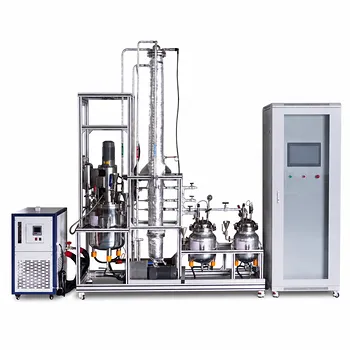
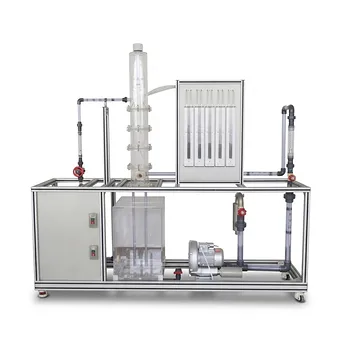
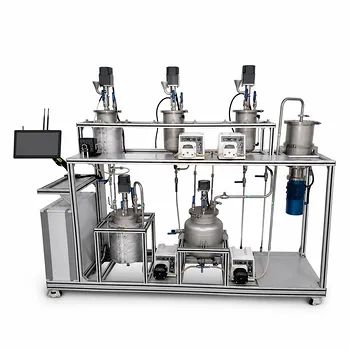
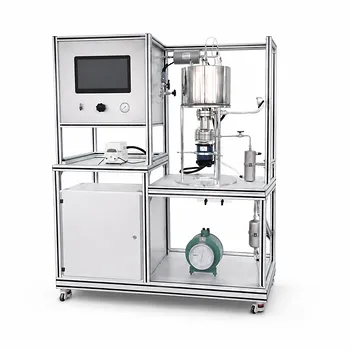
Choosing the correct materials is critical to the safety, durability, and scalability of your chemical and environmental processes. LABPARK provides state-of-the-art Educational and Vocational Unit Operations Pilot Plants in chemical engineering, bioprocess & biotech, and environmental & water treatment designed specifically for universities, research institutes, and enterprises.
Let our engineering team help you specify the ideal materials for your research and training needs. Contact LABPARK today to find the perfect pilot plant solution for your lab!
Related Products
- Multi-Functional Special Distillation Educational Pilot Plant
- Polymerization Granulation and Pellet Processing Educational Unit Operations Pilot Plant
- Carbon Material Thermal Pretreatment Multiphase Separation Educational Pilot Plant
- Constant Pressure Filtration Educational Unit Operations Pilot Plant
- Plate Column Hydrodynamics Tray Demonstration Educational Pilot Plant
People Also Ask
- Why does simple distillation yield higher efficiency than flash distillation? Key thermodynamic differences.
- Why is the acentric factor important in pilot plants? Fluid property prediction.
- How Batch vs Continuous Configuration Affects Distillation Pilot Plant Versatility & Footprint
- How to Integrate Spectroscopy in Distillation Pilot Plants for Advanced Process Control
- How to Estimate Distillation Pilot Plant Tray Efficiency? O'Connell's Correlation Guide