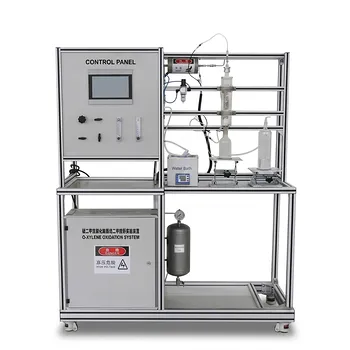
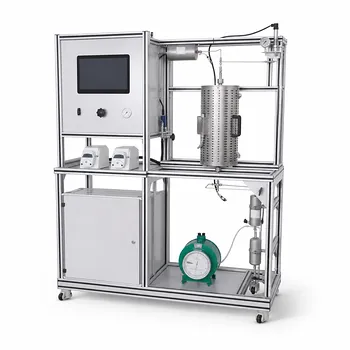
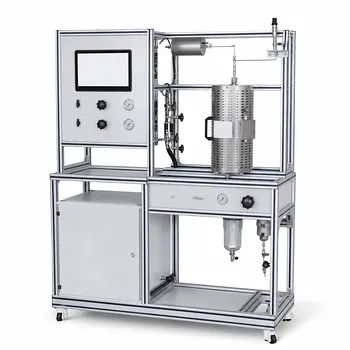
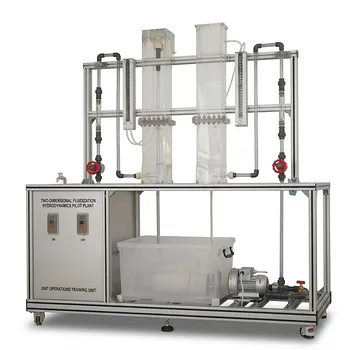
For high-fouling feedstocks or reactions that involve solids, slurry reactors are the technically superior and often the only viable choice. The core limitation of a fixed-bed reactor is its intolerance to solids, which lead to a catastrophic increase in pressure drop and reactor plugging. By suspending fine catalyst particles in a well-mixed liquid phase, slurry reactors inherently manage solids and provide a continuous pathway for handling fouling materials—a fundamental advantage that eliminates the maloperation risks synonymous with packed beds.
The primary selection criterion is not performance, but survival. A fixed-bed reactor is a non-starter if the feed is already a slurry, produces a solid product, or contains high levels of fouling organometallic compounds. The choice often defaults to a slurry system, which transforms the solid-handling challenge from an operational failure point in a fixed bed into a managed transport property within a backmixed liquid phase.
Why Solids Break a Fixed Bed
The physical architecture of a fixed-bed reactor is its fatal flaw when processing complex, dirty feedstocks. Understanding this limitation is the first step in pilot plant design.
The Inescapable Physics of Plugging
In a trickle-bed or packed bubble column, gas and liquid flow through the interstitial spaces of a stationary catalyst bed. Any external solid, whether it enters with the feed or forms as a reaction byproduct, acts as a filterable particulate. These solids accumulate in the narrow voids between catalyst pellets, rapidly increasing the bed's resistance to flow. This manifests as an exponential increase in pressure drop, quickly exceeding the system's pumping capacity and leading to column maloperation or complete shutdown.
The Fouling Mechanism in Heavy Feeds
The problem is magnified with feedstocks like vacuum residua, which contain high concentrations of organometallic compounds. In a fixed bed, these compounds thermally decompose and deposit metallic layers (e.g., nickel, vanadium) onto the external surface of the catalyst pellets. This pore-mouth plugging and bed coking rapidly deactivates the catalyst and physically cements the bed together. Offline catalyst removal in a trickle-bed is an arduous, slow process, making continuous operation with a high-fouling feed economically and practically infeasible.
The Slurry Reactor's Operational Reality
A slurry reactor is not just a different piece of equipment; it represents a fundamentally different strategy for managing the solid phase. It turns the fixed-bed's Achilles' heel into a manageable operational parameter.
Managed Suspension, Not Packed Fixation
Instead of a stationary catalyst, a slurry reactor uses a very fine catalyst (typically less than 100 μm) that is suspended in the liquid reactant. This creates a mobile, well-mixed system. Fouling precursors or solid products are not trapped in a confined space; they are dispersed throughout a continuously stirred or recirculated volume. This prevents localized accumulation and catastrophic pressure drop, allowing the reaction to proceed on a gradually deactivating catalyst that can be continuously removed and replaced.
The Cost of Superiority: The Separation Step
The slurry reactor’s greatest operational advantage creates its primary downstream challenge. Because the catalyst acts as a homogeneous phase within the liquid, it must be mechanically separated from the final product. This introduces a mandatory solid-liquid separation unit operation—such as filtration, centrifugation, or sedimentation—that is completely absent in a fixed-bed process. In a research or educational pilot plant, this adds complexity, cost, and a critical control point for defining product purity and catalyst recovery rate.
Understanding the Trade-offs in Heat and Scale
While solids handling is the deciding factor, the choice also forces critical trade-offs in thermal management and reactor engineering, especially for highly exothermic reactions.
Heat Management: Isothermal Control vs. Risky Hot Spots
Slurry reactors provide exceptional heat transfer. The intense mixing of the liquid-solid suspension creates uniform, near-isothermal conditions throughout the reactor. This is a definitive advantage over fixed beds for controlling strongly exothermic reactions, which risk developing localized hot spots in a packed bed. A hot spot in a fixed bed can cause a thermal runaway, instantly deactivating an expensive catalyst load. A slurry reactor’s design inherently suppresses this risk, but it introduces a different thermal challenge: preventing erosion in external heat exchange loops.
The Erosion and Scale-Up Problem
In a slurry pilot plant, the abrasive, particle-laden liquid makes internal cooling coils impractical due to severe erosion. Heat management is therefore moved to an external circulation loop with a specialized, wide-channel heat exchanger. This decoupling of mixing and heat transfer is highly effective in the lab, but it creates a major scale-up uncertainty. The complex, coupled hydrodynamics and mass transfer of a three-phase slurry bubble column do not scale linearly, making the transition from pilot data to commercial design significantly more complex than for a plug-flow fixed-bed train.
Making the Right Choice for Your Goal
Choosing between these reactor types in a pilot plant is not about finding the universally “best” system, but about aligning your equipment with your core experimental or pedagogical objective.
-
If your primary focus is processing a clean, solids-free feedstock for catalyst stability studies: A fixed-bed trickle-flow reactor is the standard choice. It provides plug-flow behavior, eliminates the need for catalyst-product separation, and is the industry workhorse you need to model.
-
If your primary focus is handling a high-fouling feed or studying continuous catalyst deactivation: A slurry reactor is your only viable option. It prevents immediate reactor plugging and, when designed with an ebullated or continuous stirred-tank mechanism, provides a platform for online catalyst addition and withdrawal that a fixed bed cannot replicate.
-
If your primary focus is demonstrating contrasting hydrodynamic regimes for education: A modular pilot plant is essential. A side-by-side setup allows direct measurement of the stark pressure drop difference in a fixed bed with a dirty feed versus the stable operation of a slurry column, while also teaching the contrasting mass transfer resistances and post-reaction separation requirements.
The ultimate goal of process development is to let the feedstock dictate the reactor configuration, not the other way around.
Summary Table:
| Feature | Fixed-Bed Reactor | Slurry Reactor |
|---|---|---|
| Solids Tolerance | Low (prone to plugging/coking) | High (particles suspended in liquid) |
| Pressure Drop Risk | High (critical catalyst plugging) | Low (managed via backmixed phase) |
| Thermal Management | Risk of localized hot spots | Excellent (isothermal control) |
| Separation Needs | None (catalyst remains in bed) | Mandatory downstream solid-liquid separation |
| Primary Use Case | Clean feeds & catalyst stability studies | High-fouling feeds & slurry reactions |
Optimize Your Chemical Engineering Lab with LABPARK
Choosing the right reactor configuration is critical for successful process scale-up and realistic hands-on education. LABPARK provides state-of-the-art Educational and Vocational Unit Operations Pilot Plants in chemical engineering, bioprocess & biotech, and environmental & water treatment.
Whether you are a university looking to demonstrate contrasting hydrodynamic regimes, a research institute studying continuous catalyst deactivation, or an enterprise developing new processes, our modular pilot systems deliver the durability and precision you need.
Contact LABPARK today to discuss your custom pilot plant requirements and bring advanced engineering concepts to life!
Related Products
- Multi Functional Catalytic Reaction and Reactor Evaluation Educational Unit Operations Pilot Plant
- Multi-Reactor Educational Pilot Plant for Reaction Engineering Unit Operations
- Fixed Bed Gas Solid Catalytic Reaction Educational Pilot Plant
- Fixed-Bed Chemical Reaction and Gas Dust Tar Removal Unit Operations Pilot Plant
- Educational Unit Operations Pilot Plant for Intraparticle Diffusion Effective Factor Measurement
People Also Ask
- What reaction engineering principles are shown in a catalytic reactor pilot plant? SO2 Oxidation Guide
- Why is FTIR integration in catalytic pilot plants important? Real-Time Student Insights
- How to analyze active metal distribution & identify catalyst poisoning in pilot plants? Expert Diagnostic Guide
- How do temperature limits and WHSV influence catalytic reactor optimization? Scale-Up Guide
- Why is XPS Critical for Catalytic Reactor Pilot Plants? Optimize Catalyst Performance