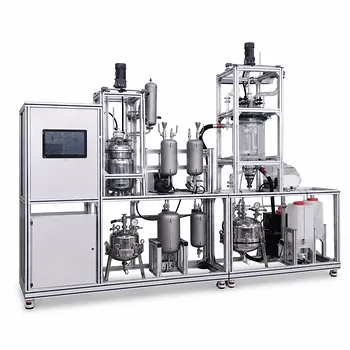
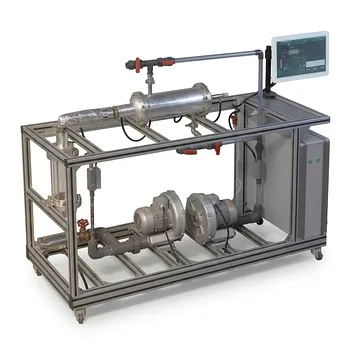
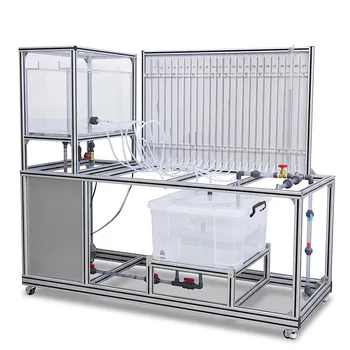
Heat-sensitive raw materials directly dictate the required residence time and temperature control strategy in your pilot extraction setup. If your biological or chemical compounds are thermally labile, you must select equipment that minimizes exposure to elevated temperatures and reduces contact time to prevent degradation. For liquid-liquid extraction, this typically pushes you toward centrifugal extractors, which achieve separation in seconds rather than minutes. Conversely, if your materials are thermally robust and the extraction reaction is slow, a mixer-settler that provides longer, controlled residence becomes the more rational choice.
Thermal stability isn’t just a property to measure — it’s a design constraint that filters your pilot equipment options. The key is matching the equipment’s inherent residence time and temperature control capability to the degradation kinetics of your target molecule, ensuring you extract what you want without destroying it.
The Critical Link Between Thermal Stability and Residence Time
The moment you introduce heat-sensitive raw materials, your pilot plant design shifts from simply achieving high recovery to preserving product integrity. Thermal degradation is a function of both temperature and time, so the equipment you choose must control at least one of these variables extremely tightly.
Why Heat-Sensitive Materials Demand Minimal Exposure
In bioprocess research, compounds like antibiotics, proteins, or natural products often have narrow stability windows. Even brief exposure to moderate heat can cause denaturation, side reactions, or potency loss.
The primary reference highlights that for unstable biological materials, the ideal equipment is one that keeps residence time extremely short. This isn’t just about the gross holding time in the plant; it’s about the time the material spends in contact with the extracting solvent at potentially degrading temperatures.
How Reaction Kinetics Interact with Stability
If the extraction itself involves a chemical reaction (reactive extraction), you face a trade-off. Slow reactions need time to reach equilibrium, but that time might destroy your product.
The equipment choice then depends on which factor dominates. If the reaction is fast but the compound is fragile, speed wins — you’ll choose a centrifugal contactor. If the reaction is slow and the compound is stable, a mixer-settler provides the necessary residence.
Matching Pilot Equipment to Thermal Sensitivity
Liquid-liquid extraction pilot plants offer a spectrum of residence-time profiles, and your thermal stability data points you to one end or the other. The two archetypes are centrifugal extractors and mixer-settlers, each solving a different part of the stability equation.
Centrifugal Extractors: The Rapid-Separation Specialist
When you have heat-sensitive or highly unstable biological materials, centrifugal extractors are the go‑to option. They combine mixing and separation in a single, high-speed rotor, generating enormous centrifugal forces.
This design yields extremely short residence times — often just a few seconds. The liquid passes through the unit so quickly that there is minimal opportunity for thermal degradation. Additionally, the intense shear can help break any emulsions that might otherwise trap material and extend exposure. The supplementary references confirm that centrifugal extractors are explicitly selected when extremely short contact time is required or the liquid mixture is prone to forming stable emulsions.
Mixer-Settlers: When Time is on Your Side
If your raw materials are robust enough to tolerate longer holding times, and especially if the extraction reaction is slow, a mixer-settler pilot plant becomes a logical choice.
These units provide a dedicated mixing chamber where phases can be held for precisely the residence time needed to achieve equilibrium. The subsequent quiescent settler then allows gravity separation. Because the reaction can proceed to completion without compromise, mixer‑settlers are favored for systems where the extraction chemistry, not thermal degradation, governs the rate.
The Overlooked Factor: Temperature Control in Solid-Liquid Extraction
In solid-liquid extraction pilot plants (e.g., leaching of botanicals), thermal stability influences the choice of equipment in a slightly different way. You’re not just selecting based on contact time; you must also precisely manage temperature.
Increasing temperature normally boosts solubility and diffusion rates, improving yield. But for thermolabile compounds, excessive heat causes solvent loss, formation of unwanted contaminants, or direct degradation. The equipment must therefore offer tight temperature control — often through jacketed vessels, inline heat exchangers, and careful heating-medium regulation — rather than simply a short bulk residence time.
Understanding the Trade-offs
No equipment type is universally perfect. A centrifugal extractor solves the thermal degradation problem but introduces its own set of limitations that you must weigh against your process goals.
Capital cost and complexity: Centrifugal units are precision mechanical devices; they cost more and demand more maintenance than a simple mixer-settler.
Limited multi‑stage flexibility: If your separation requires many theoretical stages, a single centrifugal contactor may not be enough. Series operation is possible but can become expensive. Vertical columns (agitated or pulsed) might then offer a better compromise between residence time and stage count, as long as the material can tolerate their somewhat longer residence compared to a centrifugal machine.
Emulsion vs. stability: Centrifugal extractors excel at breaking unstable emulsions, but they also generate fine dispersions that, in the wrong chemistry, could create new stability problems. Thermal stability rarely exists in isolation; often, heat‑sensitive streams also exhibit tricky emulsification behavior, making the centrifugal option doubly attractive.
Making the Right Choice for Your Goal
Your decision boils down to the interplay of thermal stability, reaction speed, and practical plant constraints. Use these guiding questions to align equipment with your top priority.
- If your primary focus is protecting a highly thermolabile compound: Choose a centrifugal extractor. Its seconds‑scale residence time and emulsion‑breaking ability minimize degradation risk.
- If your primary focus is completing a slow extraction reaction without product damage: Choose a mixer‑settler pilot plant. It gives you the controlled residence time needed, provided the material is thermally robust enough to handle it.
- If your primary focus is balancing a moderate sensitivity with a high number of stages: Evaluate a mechanical agitated or pulsed column. They offer shorter residence than a mixer‑settler but more stages than a single centrifugal unit, with reasonable temperature control.
- If your primary focus is solid‑liquid extraction of a delicate botanical: Prioritize equipment with precise temperature control over residence time alone. A jacketed, stirred vessel operated in batch or continuous mode will often serve better than chasing ultra‑short contact.
Ultimately, thermal stability is a gatekeeper. It tells you not only what you can extract, but how you extract it. By mapping that stability profile onto the residence‑time and temperature‑control characteristics of your pilot equipment, you move from hoping for a good result to engineering one.
Summary Table:
| Equipment Type | Residence Time | Thermal Stability | Key Application |
|---|---|---|---|
| Centrifugal Extractor | Seconds | High (Thermolabile) | Fast separation, emulsion-prone mixtures |
| Mixer-Settler | Minutes to Hours | Low (Thermobalance) | Slow extraction reactions, equilibrium focus |
| Agitated/Pulsed Column | Moderate | Moderate | Multi-stage extraction with balanced exposure |
| Jacketed Vessel | Variable | Moderate to High | Solid-liquid extraction with tight temp control |
Ensure your research and educational setups achieve the perfect balance of yield and product integrity. LABPARK provides state-of-the-art Educational and Vocational Unit Operations Pilot Plants in chemical engineering, bioprocess & biotech, and environmental & water treatment. Tailored for universities, research institutes, and enterprises, our systems deliver the precise temperature control and residence time management your delicate processes demand.
Ready to elevate your laboratory capabilities? Contact us today to explore our pilot plant solutions!
Related Products
- Natural Product Extraction Unit Operations Training Pilot Plant
- Comprehensive Liquid-Liquid Extraction Pilot Plant for Engineering Education
- Gallium and Indium Selective Extraction Educational Pilot Plant
- Educational Rotary Disc Liquid-Liquid Extraction Pilot Plant
- Green Anhydrous Ethanol Refining Practical Training Pilot Plant
People Also Ask
- How to Demo Solubility Sensitivity in SFE Pilot Plants? Practical Thermodynamics
- How do pilot plants differentiate physical vs chemical extraction? Enhance Chemical Engineering Training
- Why do emulsions form during extraction scale-up? Resolve pilot plant phase separation issues.
- How are HTU and NTU applied to determine extraction column height? Guide to Pilot Plant Scaling
- What key factors contribute to emulsion formation during liquid-liquid extraction? Scale-up mitigation strategies.