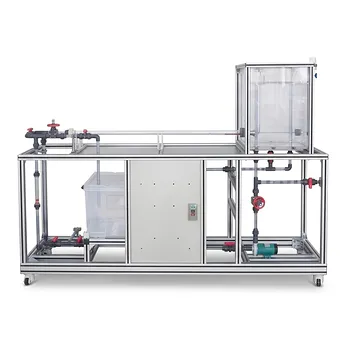
Simultaneous multi-parameter monitoring in a bioprocess pilot plant is achieved by designing a multichannel Flow Injection Analysis (FIA) system where each analytical channel is dedicated to a specific analyte using a tailored detection principle. For example, a single system can track glucose, maltose/polysaccharides, ammonium, and protease activity side by side by combining an oxygen electrode, enzymatic conversion cascades, an ammonia electrode, and a stopped-flow photometric detector. All channels share a common automated sampling unit and a multi-channel peristaltic pump, allowing real-time, on-line measurement without manual intervention.
A multichannel FIA platform integrates automated sampling, selective chemical or enzymatic conversion, and distinct detectors into parallel analytical lines. This configuration not only provides real-time concentration profiles of multiple critical process parameters but also enables rapid fault diagnosis by comparing signal trends across channels—turning a collection of individual assays into a coherent, self-diagnosing monitoring network.
The Architecture of a Multichannel FIA System
A multichannel FIA system in a bioprocess plant is a structured network of shared and channel-specific components. The goal is to draw a single, representative sample stream from the bioreactor and then distribute it to several detection pathways without cross‑interference.
The Shared Sampling and Flow Network
All channels pull from a common on-line sampling device (such as a sterile filtration probe) connected to the bioreactor. A multi-channel peristaltic pump drives the carrier solution and the sample through individual tubing lines. Because the pump and the initial sampling point are shared, any systemic change—like a pump rate reduction—affects every channel simultaneously, while a blockage in one channel’s tubing only disturbs that line.
This shared infrastructure simplifies maintenance and provides a built-in diagnostic advantage. By comparing the response times and peak shapes of the different channels, operators can quickly isolate whether a problem originates in the common sample path or in a single analytical line.
Individual Analytical Channels for Each Parameter
After the sample is split, each channel contains its own reaction coil, enzyme column, or mixing chamber, followed by a specific detector. The chemistry and detector are optimized for a single analyte. This modular design allows independent calibration, replacement of enzyme cartridges, and adjustment of reaction conditions without disrupting the other channels. The result is a flexible system that can be expanded or reconfigured as the monitoring needs of the cultivation evolve.
Configuring Channels for Key Bioprocess Parameters
A practical configuration mirrors the setup used for monitoring Bacillus licheniformis cultivations. The system dedicates four parallel channels to the most critical substrates and enzyme activities, using well-characterized detection strategies.
Glucose Monitoring with an Oxygen Electrode
The glucose channel employs an oxygen electrode as the transducer. The sample is mixed with a carrier containing glucose oxidase, which consumes oxygen while converting glucose to gluconic acid. The oxygen depletion measured by the electrode is directly proportional to the glucose concentration. This approach provides high specificity and a fast response, typically within one minute, making it ideal for tracking the primary carbon source in real time.
Measuring Maltose and Polysaccharides via Enzymatic Conversion
For more complex carbohydrates, such as maltose or residual polysaccharides, the system uses an indirect conversion strategy. A first channel measures the baseline glucose level. A parallel channel treats the sample with α-glucosidase or amyloglucosidase to hydrolyze maltose and soluble polysaccharides into additional glucose. The total glucose after hydrolysis is compared to the baseline channel; the difference reflects the concentration of maltose and polysaccharides.
This comparison approach eliminates interference from already-present glucose and provides a direct readout of the polymer degradation that often accompanies enzyme secretion in industrial fermentations.
Ammonium Detection Using an Ammonia Electrode
The ammonium channel uses a different chemical tactic. The sample is merged with an alkaline carrier solution that raises the pH, converting ammonium ions (NH₄⁺) into dissolved ammonia gas (NH₃). A gas-sensing ammonia electrode then detects the ammonia that diffuses through a hydrophobic membrane. The signal correlates with the ammonium concentration in the original sample. This method avoids interference from other cations and works reliably in complex fermentation broths.
Stopped-Flow FIA for Protease Activity
Enzyme activity monitoring—like that of an extracellular protease—demands a kinetic assay. The system applies a stopped-flow FIA technique. A solution containing a chromogenic substrate (e.g., a p-nitrophenol‑linked peptide) is mixed with the sample, and the flow is stopped for a fixed incubation time. During this stop, the protease releases p-nitrophenol, which is then detected photometrically at 340 nm when the flow resumes.
By precisely controlling the incubation time, the signal becomes a direct measure of enzyme activity rather than concentration. This channel can be alternated with the other continuous-flow channels without disrupting the overall sampling rhythm.
Understanding the Trade-offs and Limitations
While a multichannel FIA brings substantial advantages, it introduces specific constraints that must be managed.
Enzyme Stability and Reagent Consumption
Enzyme columns and reagent solutions have a finite lifetime. Glucose oxidase and amyloglucosidase gradually lose activity, causing signal drift. Frequent calibration with standard solutions is essential, and enzyme cartridges must be replaced according to a strict schedule. Similarly, the alkaline carrier for ammonium detection consumes caustic reagents, increasing operational cost. A balance must be struck between analysis frequency and reagent replenishment.
Interference and Matrix Effects
The ammonia electrode, though selective, can be influenced by volatile amines or pH fluctuations in the broth. In the glucose-maltose differential method, the accuracy relies on identical flow and detection conditions in both channels; any mismatch—such as a slightly different enzyme activity—will propagate an error. Preventing these matrix effects requires careful selection of carrier buffers and routine baseline checks.
Stopped-Flow Complexity and Throughput
The stopped-flow protease assay interrupts the continuous flow, meaning the sample throughput for that channel is lower. If rapid sequential data points are needed for all parameters, the timing of the stop must be carefully orchestrated so that it does not delay reporting from the other channels. Additionally, the photometric readout at 340 nm can be susceptible to bubble formation or stray light, demanding meticulous priming of the flow cell.
Troubleshooting with Multi-Channel Signal Analysis
One underappreciated benefit of the multichannel design is that it transforms fault diagnosis from guesswork into a systematic comparison.
Differentiating Local from Systemic Faults
Because all channels share the same pump and sample source, a global flow reduction—caused by pump wear or a partially blocked sample filter—will manifest as a simultaneous broadening of peaks and increased residence time in every channel. Conversely, if only one channel shows an abnormal drift or lost signal, the problem is localized: a jammed carrier tube, a deactivated enzyme cartridge, or a failing electrode on that line. Supervisory software applies heuristic rules to compare these cross-channel signatures, dramatically reducing troubleshooting time.
Diagnosing Subsystem Failures
The multiple parallel channels also help pinpoint faults within the five critical subsystems: sampling system (plugged filtration probe), flow system (air bubbles or leaking fittings), reaction system (enzyme inhibitor entering the broth), detector system (electrode membrane aging), and automation system (A/D conversion error). For example, a temperature fluctuation in the water bath will subtly shift reaction rates across all channels that rely on enzymatic conversion, while a single photometer’s baseline jump points to an electronics fault. This comparative logic is especially valuable in pilot‑plant and training environments where quick recovery is paramount.
Making the Right Choice for Your Bioprocess
Your configuration should reflect what you most need to control and diagnose in your specific fermentation or cell culture process.
- If your primary focus is reliable nutrient monitoring: Start with the glucose and ammonium channels. They require minimal sample pre‑treatment, use robust electrode‑based detection, and give you direct control over feeding strategies.
- If your primary focus is tracking enzyme secretion or polymer hydrolysis: Add the differential glucose/maltose channel and the stopped‑flow protease channel. Be prepared for more frequent enzyme cartridge replacement and careful calibration routines.
- If your primary focus is rapid fault isolation and operator training: Leverage the multichannel architecture itself. Choose a system that visualizes all channels simultaneously and apply signal‑comparison logic to teach operators how to distinguish a pump failure from a single‑channel blockage.
- If your primary focus is in‑line protein product monitoring: Extend the platform with a flow injection immunoassay (FIIA) channel, as demonstrated for IgG. This module will add automated binding, washing, elution, and fluorescence detection to the same shared sampling system.
A well‑designed multichannel FIA system turns a bioprocess pilot plant from a “black box” into a transparent, self‑aware environment where multiple parameters, their interactions, and even the health of the analytical hardware itself can be understood at a glance.
Summary Table:
| Parameter | Detection Method / Sensor | Reaction / Principle | Key Benefit |
|---|---|---|---|
| Glucose | Oxygen electrode | Glucose oxidase consumption | Fast response (<1 min), high specificity |
| Maltose & Polysaccharides | Oxygen electrode (differential) | Enzymatic hydrolysis via amyloglucosidase | Eliminates baseline glucose interference |
| Ammonium | Gas-sensing ammonia electrode | Alkaline carrier converts NH₄⁺ to NH₃ gas | Avoids cation interference in complex broths |
| Protease Activity | Stopped-flow photometer (340 nm) | Chromogenic substrate incubation | Direct kinetic measurement of enzyme activity |
Scale Up Your Bioprocess Training & Research with LABPARK
Are you looking to equip your facility with advanced, hands-on learning and research systems? LABPARK provides premium Educational and Vocational Unit Operations Pilot Plants in chemical engineering, bioprocess & biotech, and environmental & water treatment.
Specially designed for universities, research institutes, and enterprises, our pilot plants help you:
- Bridge the Gap: Transition students and researchers from theoretical concepts to real-world industrial operations.
- Master Advanced PAT: Implement complex multi-parameter monitoring, automation, and flow injection analysis setups.
- Ensure Operational Reliability: Rely on robust, industrial-grade equipment tailored to your specific curriculum or research goals.
Ready to elevate your lab's capabilities? Contact LABPARK today to discuss your custom pilot plant configuration!
Related Products
- Cavitation Phenomenon Demonstration and Analysis Educational Unit Operations Pilot Plant
- Fluid Transport and Piping Dynamics Practical Training Unit Operations Pilot Plant
- Multi Pump Fluid Transport Process Piping Unit Operations Training Pilot Plant
- Quantitative Dosing and Liquid Flow Control Educational Unit Operations Pilot Plant
- Fluid Friction Resistance Determination Educational Unit Operations Pilot Plant
People Also Ask
- How do pilot plants teach U-tube manometers? Master Differential Pressure Calculations
- How to teach pump cavitation vs. gas binding? Interactive pilot plant teaching guide.
- What factors should be considered when selecting float valve types? F1 vs. V-4 vs. T-type Guide
- How does an FIA biosensor improve fermentation monitoring compared to HPLC? Speed & automation.
- What are key parameters for stable biosensor FIA in bioprocess training? Achieve optimal performance.