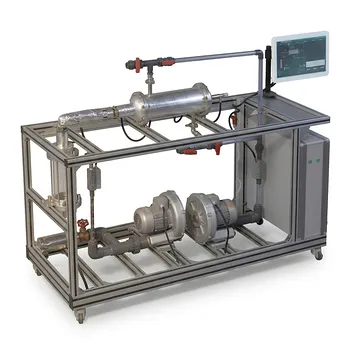
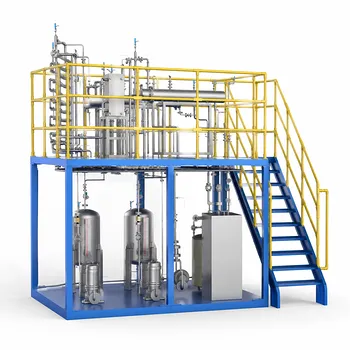
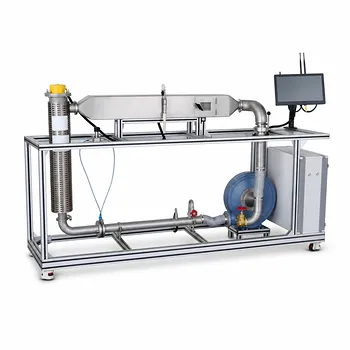
For corrosive or high-temperature pilot plant service, stainless steel is the standard starting point. Specifically, austenitic grades like 1Cr18Ni9Ti are recommended for tubes, tube sheets, and shells. When these are insufficient for extreme chemical aggressiveness, you graduate to non-metallic solutions like graphite, PTFE, or glass for the highest level of chemical resistance.
The "correct" material is rarely about a single metal; it’s a strategic decision balancing the fluid’s aggressiveness, the operating temperature, and the educational or research budget. The highest-value skill is not just picking a grade, but first routing the problem fluid strategically to minimize cost and then understanding exactly where standard stainless steel fails and requires an exotic upgrade.
Mastering the Strategic Fluid Routing Principle
Before you even consult a material compatibility chart, your first and most impactful decision is fluid placement. This can dramatically reduce your material costs and maintenance headaches.
The Tube-Side Priority Rule
Always route the most problematic fluid through the tubes, not the shell. This is the single most important rule in pilot plant heat exchanger design. This is because fabricating a tube bundle from an expensive, exotic alloy is far more cost-effective than constructing an entire pressure vessel and shell from that same material. Directing corrosive or high-temperature fluids to the tube side also minimizes heat loss to the environment and avoids exposing the shell to the most severe thermal and chemical stresses.
Managing Fouling Through Geometry
Fluids with a high fouling potential must also be placed on the tube side. The primary reason is cleanability. Mechanical cleaning of straight tubes with brushes is straightforward, whereas cleaning the complex geometry of the shell-side, with its baffles and cross-flow passages, is extremely difficult. Furthermore, you can guarantee a higher, more consistent fluid velocity inside the tubes. This velocity helps to scour the tube walls and reduce the settling of deposits, directly addressing the root cause of fouling.
The Material Selection Hierarchy in Practice
With the fluid safely routed to the tube side, you can now select materials with a focused, tiered approach, starting with the most robust industrial workhorse.
The Stainless Steel Workhorse
For most corrosive and high-temperature scenarios in a pilot plant, 316-grade stainless steel is the universal answer. Its combination of high-temperature mechanical strength and excellent corrosion resistance makes it the backbone of pilot plant design. At elevated temperatures, standard carbon steel like A3F or 16MnR loses strength and corrodes rapidly. Austenitic stainless steels like 1Cr18Ni9Ti or 0Cr18Ni9Ti maintain structural integrity and resist chemical attack, making them the logical upgrade. The trade-off is cost. Moving from carbon steel to a stainless-steel shell and tube bundle roughly doubles the material cost factor, a premium you must accept for safety and longevity in a teaching lab environment.
Extreme Environment Contingencies
When the stainless steel workhorse fails, you must immediately move to specialist solutions. This failure point typically involves highly concentrated acids or strong oxidizers. For extremely aggressive chemical environments, non-metallic materials like graphite, PTFE, and glass become the primary candidates. These offer virtually universal corrosion resistance but come with severe mechanical limitations—they are brittle and have low tensile strength, which fundamentally changes the heat exchanger's structural design. In demanding high-strength, high-corrosion scenarios, where 316 stainless is insufficient but a full non-metallic solution is impractical, duplex stainless steel offers a powerful compromise. It provides higher mechanical strength and improved corrosion resistance over standard austenitics, serving as a cost-effective step-up before resorting to ultimate alloys like Hastelloy C-276.
Understanding the True Cost of Corrosion
The choice between a cheap, short-lived metal and an expensive, durable one is an economic calculation that goes far beyond the initial purchase order.
The False Economy of Carbon Steel
Selecting carbon steel for even mildly corrosive tube-side service is one of the most dangerous short-term decisions in a pilot plant. While the material cost factor for a carbon steel unit may be less than half that of stainless steel, the decision ignores safety risk and operational downtime. Carbon steel tubes might require replacement every two years, incurring not just the part cost but the labor, system downtime, and the constant safety hazard of a leak. For a functioning pilot plant dedicated to student learning and research uptime, this is an unacceptable risk profile. A Net Present Value (NPV) calculation will almost always favor the longer service life of stainless steel.
Translating Metallurgy to Budget
Every material choice is a direct line item in your capital budget, expressed through the material cost factor ($F_m$). The cost impact scales dramatically as you move up the alloy ladder. Consider these relative multipliers for a small-scale exchanger. A complete titanium unit can be over seven times more expensive than a carbon steel baseline, a cost generally reserved for unique research conditions, not general unit operations education. A practical compromise often seen in teaching labs is a carbon steel shell with Monel tubes or, more commonly, a full stainless steel unit, which provides a robust, safe, and industrially relevant platform without the extreme cost of nickel alloys or titanium.
The Pedagogical Gold in Shell-and-Tube Design
In a unit operations pilot plant, the choice of a shell-and-tube heat exchanger is itself a deliberate teaching decision, and material selection amplifies its educational value.
Why Not Just a Plate-and-Frame?
For high-temperature, high-pressure, or corrosive service, the shell-and-tube exchanger is the non-negotiable industrial standard. While plate heat exchangers offer superior thermal efficiency and a compact footprint, their gasket limitations (typically failing above 250°C) disqualify them from many high-temperature applications. The robust structure of a shell-and-tube unit, complete with its baffles and tube sheets, is the only design that can reliably and safely handle the combined punishment of high thermal stress and pressure drops from aggressive fluids. Teaching students to manage this specific equipment is essential for industrial preparation.
Demonstrating Real-World Stress
The visible, industrial construction of a shell-and-tube unit makes abstract concepts tangible. Students can see the tube passes, understand why thermal expansion stress is managed with a floating head or U-tube design, and physically trace the path of the shell-side fluid around baffles. Using contrasting materials in these systems — for example, a clear polymeric shell for visualization versus a stainless steel tube bundle for corrosion resistance — can create an exceptionally powerful teaching tool that directly demonstrates the very principles of materials selection.
Making the Right Choice for Your Educational Goal
Your final material selection must align with the core purpose of the pilot plant experiment. Use the following logic based on your primary objective.
- If your primary focus is teaching standard industrial processes for typical corrosive fluids: Choose 316 stainless steel for all wetted parts. It provides the best balance of safety, durability, and industrial relevance, demonstrating the real-world solution.
- If your primary focus is researching extreme chemical environments or modeling catastrophic failure points: Invest in a carbon steel shell with high-grade Monel or Hastelloy C-276 tubes. This configuration allows for focused research on exotic alloy performance without the budget-destroying cost of an entirely exotic shell.
- If your primary focus is comparing material performance in a single, visible experiment: Design a custom unit with a stainless steel shell but install an easily swappable tube bundle, allowing students to test and measure the degradation of different tube materials under identical process conditions over a semester. The ultimate selection is more than a spec-sheet match; it's the engineering decision that defines what your plant can safely teach and reliably produce.
Summary Table:
| Material | Temperature & Corrosion Suitability | Key Advantage | Best Use Case |
|---|---|---|---|
| 316 Stainless Steel | High temperature, moderate corrosion | Universal workhorse, high strength | Standard educational labs & industrial applications |
| Carbon Steel | Low temperature, non-corrosive fluids | Low initial cost | Shell-side routing for non-aggressive fluids |
| Non-Metallics (PTFE/Glass/Graphite) | Extremely aggressive chemicals | Universal chemical resistance | Highly acidic or oxidizing research applications |
| Duplex / Special Alloys (Hastelloy, Monel) | High stress, high corrosion | High strength + superior chemical resistance | Specialized research & extreme temperature/pressure |
Equip Your Lab with Industry-Grade Pilot Plants
Designing safe, durable, and budget-friendly unit operations labs requires the right engineering expertise. LABPARK provides state-of-the-art Educational and Vocational Unit Operations Pilot Plants in chemical engineering, bioprocess & biotech, and environmental & water treatment.
We help universities, research institutes, and enterprises select the optimal configurations and corrosion-resistant materials for shell-and-tube heat exchangers and other pilot systems, ensuring maximum safety, reliability, and pedagogical value.
Ready to elevate your engineering training and research capabilities? Contact our engineering experts today to customize your pilot plant solution!
Related Products
- Shell and Tube Heat Exchanger Heat Transfer Coefficient Determination Educational Pilot Plant
- Three-Tube Heat Transfer Educational Pilot Plant for Unit Operations Training
- Comprehensive Multi-Modal Heat Transfer Unit Operations Pilot Plant for Engineering Training
- Dual Mode Heat Transfer Pilot Plant for Unit Operations Training
- Circulating Wind Tunnel Drying and Convective Heat Transfer Coefficient Determination Educational Pilot Plant
People Also Ask
- Why Apply LMTD Correction in Shell-and-Tube Pilot Plants & How to Determine It
- How is the fouling factor (Rd) evaluated? Key Pilot Plant Insights for Students
- How is fouling factor demonstrated using shell and tube pilot plants? Practical Lab Guide
- Why is simulating and calculating fouling factors crucial when operating educational heat exchanger pilot plants?
- How do tube pitches affect equivalent shell diameter (De)? Math & pilot plant impact explained.