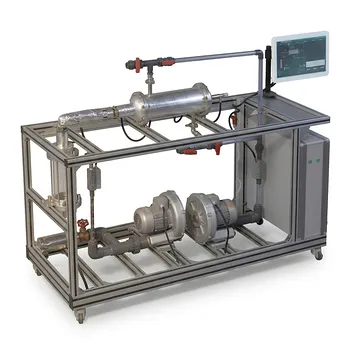
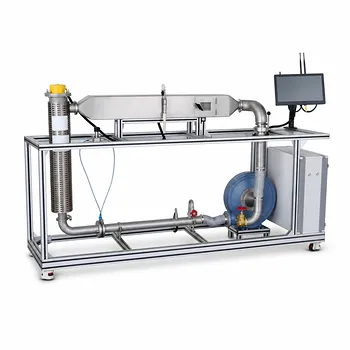
The choice between a shell-and-tube and a plate heat exchanger in your student laboratory is not a simple equipment preference—it’s a strategic decision about what your students will learn.
A shell-and-tube unit excels at demonstrating industrial-scale robustness, high-temperature/high-pressure operation, and classic components like baffles and tube passes. A plate heat exchanger delivers exceptional compactness, remarkable heat transfer coefficients, and hands-on maintenance insight. Whenever the budget and space allow, installing both types delivers the richest educational outcome by making the trade-offs tangible through direct comparison.
The decision hinges entirely on your educational emphasis: equip students with the realities of heavy industrial processes or illuminate modern, high‑efficiency thermal design. Where resources permit, pairing a shell‑and‑tube with a gasketed plate exchanger creates an unmatched comparative laboratory.
Why the Heat Exchanger Choice is a Pedagogical Decision
The heat exchanger you select becomes the canvas on which students paint their understanding of heat transfer, fluid mechanics, and plant safety. It shapes the experiments, the data they collect, and the problem‑solving instincts they develop.
Teaching Industrial Realism with Shell‑and‑Tube Units
A shell‑and‑tube heat exchanger is the industrial workhorse. Its robust, often large‑scale structure handles pressures and temperatures that far exceed the limits of gasketed plate exchangers. For a student, seeing the bundle of tubes, segmental baffles, and multiple tube passes makes abstract textbook diagrams concrete.
This unit is the ideal platform to teach fluid routing logic. Students learn why corrosive, fouling, or high‑pressure fluids always travel through the tube side—tubes are easier to clean, inspect, and pressure‑rate without requiring a thick, costly shell. Routing steam through the shell side to simplify condensate drainage becomes a memorable lesson in process safety. These practical standards form the backbone of industrial proficiency.
Exploring Modern Efficiency with Plate Heat Exchangers
On the other end of the spectrum sits the plate heat exchanger. Its defining advantage is a heat transfer coefficient that can approach 7000 W/(m²·°C) for low‑viscosity fluids, thanks to the highly turbulent flow paths created by the corrugated plates. The heat transfer area per unit volume dwarfs that of a shell‑and‑tube unit, so a compact footprint handles substantial thermal duties.
A gasketed plate exchanger is an educator’s ally for maintenance training. Students can disassemble the plate pack, inspect fouling patterns, and reassemble it—turning an abstract “fouling factor” into a visible, tactile experience. However, the gaskets impose a strict ceiling: typical operating pressures stay below 1.5‑2.0 MPa and temperatures under 130‑250 °C. This limitation is the perfect springboard for a discussion on material selection and operational envelopes.
The Power of Comparison: Why Both Matters Most
A pilot plant equipped with both exchanger types transforms a simple heat balance exercise into a living lesson in design philosophy. Students run the same hot and cold fluids through each unit and measure the stark differences in effectiveness, pressure drop, and approach temperature. They see that the shell‑and‑tube’s larger volume and slower velocities tolerate fouling differently than the plate unit’s narrow gaps. They discover that easy cleaning on one device can mean a gasket leak risk on the other. No lecture alone can replicate this insight.
Understanding the Trade‑offs
Making a confident choice means weighing the very attributes you want your students to grapple with. The trade-offs are instructive by themselves.
Robustness vs. Thermal‑Performance Density
A shell‑and‑tube exchanger can operate at temperatures where carbon steel remains strong and can be designed for extreme pressures, yet its overall heat transfer coefficient is only a fraction of a plate unit’s. The plate exchanger achieves phenomenal energy efficiency in a tiny volume but sacrifices the ability to handle steam at 400 °C or a process stream at 200 bar. For a curriculum focused on high‑pressure petrochemical or power‑generation scenarios, the shell‑and‑tube is irreplaceable. For a bioprocessing or food‑grade liquids course, the plate unit’s efficiency and cleanability mirror real‑world practice.
The Cleaning and Maintenance Learning Curve
Both technologies reveal different facets of upkeep. The tube side of a shell‑and‑tube unit is straightforward to mechanically clean, but shell‑side cleaning can be a challenge—teaching students to think about accessibility and fouling allocation. A gasketed plate exchanger makes disassembly‑reassembly a routine student activity, yet it introduces gasket aging, proper tightening procedures, and the risk of misalignment. Welded plate exchangers can push pressure limits to 80 bar and temperatures to 500 °C, but they eliminate cleanability—a trade‑off that highlights the link between maintenance philosophy and process severity.
The Educational Cost of a Single Choice
A laboratory that only offers one configuration risks creating blind spots. Students might graduate without understanding when the plate‑and‑frame design fails or why a heavy shell‑and‑tube remains the standard for large‑scale crude preheat. The upfront cost and footprint of two units are real constraints, but the pedagogical return—an engineer who can match equipment to process requirements—is often worth the investment.
Making the Right Choice for Your Teaching Goals
Your decision should flow directly from the specific skills and principles you want students to carry into their careers. Consider these focused pathways.
- If your primary focus is heavy industrial process training (high temperature, high pressure, condensation, boiling): Anchor the lab with a shell‑and‑tube exchanger, where students master thermal stress, tube‑pass arrangements, and industry‑standard routing rules.
- If your primary focus is compact, high‑efficiency heat transfer and hands‑on maintenance practice: Select a gasketed plate heat exchanger; its unmatched coefficients and disassembly capability teach plate geometry effects, fouling visualization, and rapid cleaning protocols.
- If your primary goal is comprehensive, comparative education and you have the budget and space: Install both types side by side—let students generate their own data on effectiveness versus pressure drop, and defend which exchanger they would choose for a given process.
- If your curriculum emphasizes safety, inspection, and long‑term upkeep: Combine a shell‑and‑tube unit (for tube‑side inspection and mechanical cleaning lessons) with a gasketed plate unit (for gasket care and plate‑pack reassembly).
By matching each equipment choice to a clear learning outcome, you turn a pilot‑plant heat exchanger from a simple component into a profound, enduring lesson in engineering design.
Summary Table:
| Feature | Shell-and-Tube Heat Exchanger | Plate Heat Exchanger |
|---|---|---|
| Best For | Heavy industrial realism (high temp/pressure) | High-efficiency, compact design |
| Heat Transfer | Moderate coefficient | Very High (up to 7000 W/(m²·°C)) |
| Maintenance | Tube-side cleaning & inspection | Hands-on plate pack disassembly & gasket care |
| Limits | High mechanical limits | Limited by gasket temperature/pressure |
| Key Teaching Goal | Industrial fluid routing & process safety | Thermal efficiency & fouling visualization |
Equip Your Lab for Educational Excellence with LABPARK
Choosing the right equipment is critical to preparing the next generation of engineers. LABPARK provides state-of-the-art Educational and Vocational Unit Operations Pilot Plants in chemical engineering, bioprocess & biotech, and environmental & water treatment for universities, research institutes, and enterprises.
Whether you need side-by-side heat exchangers for comparative learning or a fully integrated pilot plant, our experts will help you design the perfect configuration for your curriculum.
Contact our engineering experts today to discuss your laboratory requirements and request a customized solution!
Related Products
- Shell and Tube Heat Exchanger Heat Transfer Coefficient Determination Educational Pilot Plant
- Three-Tube Heat Transfer Educational Pilot Plant for Unit Operations Training
- Comprehensive Multi-Modal Heat Transfer Unit Operations Pilot Plant for Engineering Training
- Dual Mode Heat Transfer Pilot Plant for Unit Operations Training
- Circulating Wind Tunnel Drying and Convective Heat Transfer Coefficient Determination Educational Pilot Plant
People Also Ask
- Why Apply LMTD Correction in Shell-and-Tube Pilot Plants & How to Determine It
- How is the fouling factor (Rd) evaluated? Key Pilot Plant Insights for Students
- How is fouling factor demonstrated using shell and tube pilot plants? Practical Lab Guide
- Why is simulating and calculating fouling factors crucial when operating educational heat exchanger pilot plants?
- Why Estimate Tube Wall Temp in Heat Exchangers? Master Pilot Plant Thermal Resistance