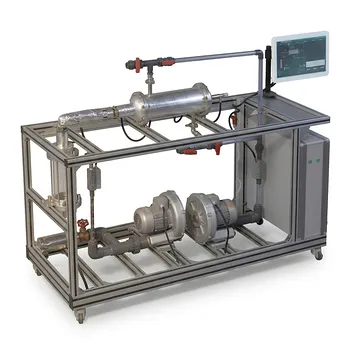
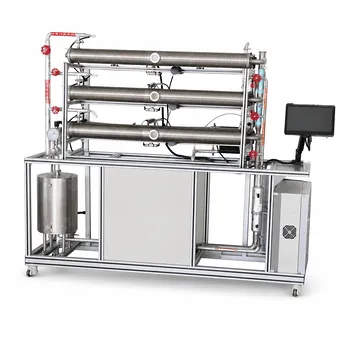
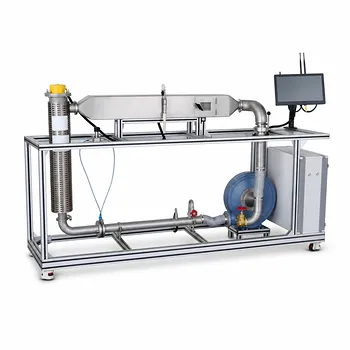
For a shell-and-tube heat exchanger, design calculations size the exchanger for a specified thermal duty, while rating calculations predict how an already-sized unit will perform under new or changing conditions. In a pilot plant laboratory, this means design problems are about selecting the right number of tubes and pass arrangement on paper, whereas rating problems deal with the actual hardware sitting on your bench—predicting outlet temperatures when you cut flow rates in half or swap process fluids.
Rating and design calculations are mirror-image processes: design starts with the desired heat load and solves for area, rating starts with the fixed area and solves for the unknown heat duty or outlet temperatures. Because the outlet temperature is both an input to the LMTD and the result you are calculating, rating calculations become iterative—a challenge you will encounter directly when running real pilot plant experiments.
The Fundamental Difference: Knowns and Unknowns
Understanding which variables are fixed and which you are solving for is the key to choosing the right approach.
What a Design Calculation Sets Out to Solve
Design calculations begin with a fully defined process requirement: you know the inlet and desired outlet temperatures for both fluids, their flow rates, and the physical properties. The goal is to determine the required heat transfer area.
You compute the heat duty (Q) directly from the flow and temperature change of one of the streams. With Q fixed, you then size the exchanger—selecting tube diameter, length, number of tubes, and shell-side passes—so that the available area matches what the duty demands.
What a Rating Calculation Tells You About Existing Equipment
When you are staring at a real shell-and-tube pilot plant, the geometry is already cast. The number of tubes, their diameter, the baffle configuration, and the total surface area are all constants.
A rating calculation asks: If I change the inlet conditions, what outlet temperatures and overall heat duty will this existing hardware actually deliver? The heat duty is now the unknown, not a given number, because the outlet temperatures are not yet known.
Why Rating Calculations Are Inherently Iterative
The deep need behind your question is to understand why you cannot simply plug numbers into a single formula when testing an existing exchanger.
The LMTD Method Locks the Outlet Temperature in a Loop
The Log Mean Temperature Difference depends on all four terminal temperatures: both inlet and both outlet temperatures. In a rating problem, you know the inlets but not the outlets.
You must therefore guess an outlet temperature, calculate the LMTD, compute the corresponding heat duty, and then check whether the energy balance on the cold and hot sides closes. If the duty you calculated from heat transfer equations does not match the duty the fluid enthalpies demand, you adjust your guess and repeat. This trial‑and‑error loop is the central difficulty that makes rating calculations tedious by hand.
How the ε‑NTU Method Eliminates the Guesswork
The Effectiveness‑NTU (Number of Transfer Units) method was developed precisely to avoid this iteration. Because the effectiveness ε (the ratio of actual heat transfer to the maximum possible) can be expressed as a function of NTU and the capacity rate ratio (Cmin/Cmax), and because NTU is based only on the fixed area and the known flow properties, you can solve for the outlet temperatures directly.
For a given exchanger geometry and flow rates, you calculate NTU = UA/Cmin, read the effectiveness from correlations, and then find the actual heat duty and outlet temperatures without any trial and error. This is the method you will most likely use when manually analyzing pilot plant data.
Applying Rating Calculations in the Pilot Plant
When you run a unit operations lab, you are constantly doing rating calculations, whether you realize it or not.
From Experimental Data to Real‑World Coefficients
You measure flow rates and all four fluid temperatures. With those, you compute the experimental heat duty Q and the experimental LMTD. Because you already know the physical area of the exchanger, you can then determine the “actual” overall heat transfer coefficient (U) that was achieved in that run.
Comparing this experimental U to the theoretical U predicted by film heat transfer correlations (which account for tube geometry, fluid velocity, and thermal conductivity) reveals the impact of real‑world effects like fouling, flow maldistribution, and bypassing on the shell side. This is precisely why pilot plants are indispensable: the rating mindset lets you quantify what your design equations miss.
Predicting the Effect of Operating Changes
Suppose you halve the cooling water flow rate. You cannot simply use the old LMTD. You must perform a rating calculation with the new flow rates and re-evaluate the heat transfer coefficient (which depends on velocity). Using the ε‑NTU method, you quickly predict the new outlet temperatures.
This is the same mental process operators use for troubleshooting and optimization, and it is the core of process control education.
Understanding the Trade‑offs
No approach is universally superior; each carries its own assumptions and limitations that a pilot‑plant operator must respect.
The Danger of Assumed Coefficients
Rating calculations—especially when not backed by experimental data—require you to estimate an overall heat transfer coefficient from correlations. A small error in U (perhaps due to unaccounted fouling) can lead to a significant error in the predicted outlet temperature.
In a pilot plant, the rating calculation is only as good as the U you feed it. That is exactly why hands‑on measurement is so critical: you build a library of realistic U values for different fluids and operating regimes.
The Sensitivity of Shell‑Side Flow
Shell‑and‑tube exchangers in a pilot plant are particularly sensitive to shell‑side flow distribution. Design calculations often assume ideal flow patterns, but in a small‑diameter shell, bypass streams around the tube bundle can reduce the effective area.
A rating calculation that does not account for these real‑world inefficiencies will overpredict performance. You may need to apply correction factors to the LMTD or adjust your NTU‑effectiveness correlations based on observed pressure drops.
When Iteration Becomes an Educational Tool, Not a Hindrance
While the ε‑NTU method is efficient, forcing students to perform a few LMTD iterations by hand teaches them why the outlet temperature dependency matters. It builds intuition about the sensitivity of the solution.
In a research setting, you will likely use software or the ε‑NTU method. In a learning environment, the iterative struggle with LMTD has pedagogical value—use it wisely, then transition to the direct method to reinforce the physics.
How to Apply These Concepts in Your Pilot Plant Work
Your choice of calculation method should be dictated by your immediate goal in the lab.
- If your primary focus is sizing a new exchanger for a specified duty: Use a straightforward design calculation. Fix Q from the process requirement, then iterate on tube count and geometry until the assumed U and area satisfy the length constraints. This is excellent for learning equipment design principles.
- If your primary focus is predicting the performance of an installed unit under new conditions: Use a rating calculation with the ε‑NTU method to avoid iteration. This is the fastest, most reliable way to forecast outlet temperatures when you know the exchanger’s area and design U.
- If your primary focus is diagnosing fouling or validating heat transfer correlations: Collect pilot plant data (all four temperatures and flow rates), compute Q and LMTD, and back‑calculate the experimental U. Compare it against the clean theoretical U. This rating‑oriented analysis quantifies the performance penalty from real‑world factors.
- If your primary focus is teaching the fundamental challenge of coupled variables: Have your team attempt an LMTD‑based rating calculation by hand for two or three iterations. Then, show how the ε‑NTU method solves the same problem instantly. This builds both respect for numerical methods and a deep understanding of the underlying heat transfer relationships.
The distinction between rating and design is not just academic—it is the difference between designing something that might work on paper and understanding what your equipment is actually doing. Learn to think in both modes, and your pilot plant data will tell you far more than any textbook can.
Summary Table:
| Feature | Design Calculations | Rating Calculations |
|---|---|---|
| Primary Objective | Size the heat exchanger (determine area) for a specific thermal duty | Predict performance (outlet temps & heat duty) of an existing unit |
| Known Variables | Inlet & outlet temperatures, flow rates, fluid properties | Heat exchanger geometry/area, inlet temperatures, flow rates |
| Unknown Variables | Required heat transfer area (A) | Outlet temperatures, actual heat duty (Q) |
| Calculation Method | Direct calculation | Iterative (LMTD method) or Direct (ε-NTU method) |
Bring Heat Transfer Theory to Life with LABPARK
Are you looking to bridge the gap between textbook formulas and hands-on engineering? LABPARK provides premier Educational and Vocational Unit Operations Pilot Plants in chemical engineering, bioprocess & biotech, and environmental & water treatment.
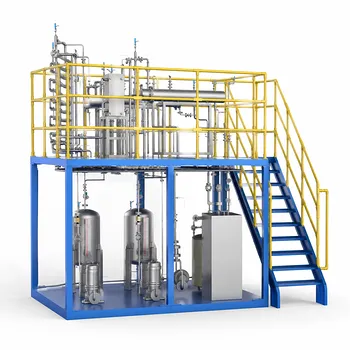
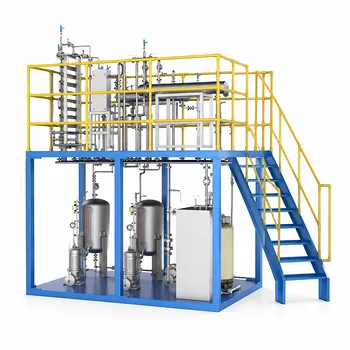
Tailored for universities, research institutes, and enterprises, our pilot plants—including highly instrumented shell-and-tube heat exchangers—help students and researchers master real-world rating, design, and troubleshooting operations.
Ready to upgrade your lab's capabilities? Contact LABPARK today to consult with our experts!
Related Products
- Shell and Tube Heat Exchanger Heat Transfer Coefficient Determination Educational Pilot Plant
- Three-Tube Heat Transfer Educational Pilot Plant for Unit Operations Training
- Comprehensive Multi-Modal Heat Transfer Unit Operations Pilot Plant for Engineering Training
- Dual Mode Heat Transfer Pilot Plant for Unit Operations Training
- Circulating Wind Tunnel Drying and Convective Heat Transfer Coefficient Determination Educational Pilot Plant
People Also Ask
- Why Apply LMTD Correction in Shell-and-Tube Pilot Plants & How to Determine It
- How is the fouling factor (Rd) evaluated? Key Pilot Plant Insights for Students
- How is fouling factor demonstrated using shell and tube pilot plants? Practical Lab Guide
- Why is simulating and calculating fouling factors crucial when operating educational heat exchanger pilot plants?
- Why Estimate Tube Wall Temp in Heat Exchangers? Master Pilot Plant Thermal Resistance