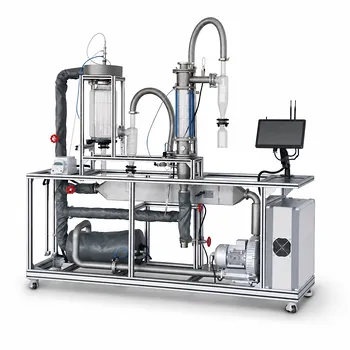
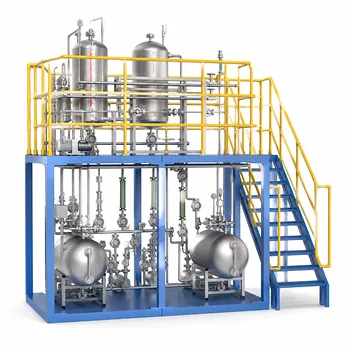
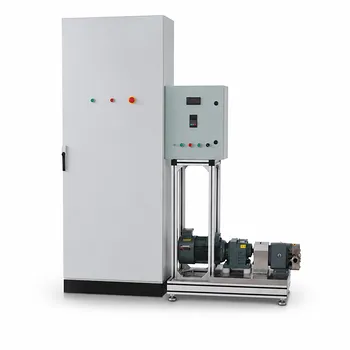
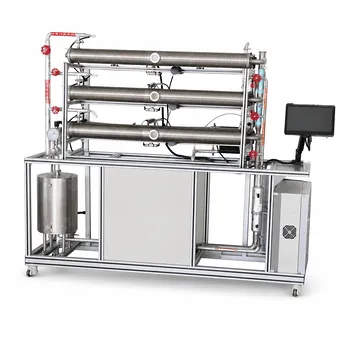
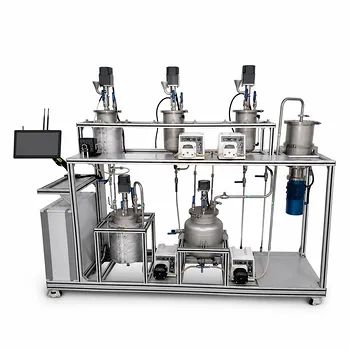
The most powerful lesson a granulation pilot plant teaches is not found in a textbook—it is the visceral understanding of cause and effect that comes from physically turning a valve or adjusting a setpoint and immediately seeing the consequences. Unit operations pilot plants for wet and fluid bed granulation allow students and researchers to directly manipulate Critical Process Parameters (CPPs) such as liquid addition rate, spray nozzle air volume, granulation fluid mixing time, and drying air temperature. By doing so, they can observe and quantify the resulting shifts in Critical Quality Attributes (CQAs) like particle size distribution, powder density, moisture content, and downstream dissolution rates. This hands-on feedback loop transforms abstract Quality by Design (QbD) concepts into a concrete, intuitive skill set.
The true value of these pilot-scale systems lies not just in showing what happens, but in teaching why it matters. They bridge the gap between theoretical process knowledge and the messy, interconnected reality of industrial granulation, where understanding the CPP-CQA relationship is the key to scale-up, troubleshooting, and building robust, reliable processes.
From Theory to Intuition: Why the Pilot Plant Changes Everything
Experiencing the Direct Link Between Process Settings and Granule Quality
In a classroom, a student learns that a higher liquid addition rate leads to larger granules. In a pilot plant, they feel the weight of that change. They watch the power draw on the impeller climb, see the particle size distribution shift in real-time, and then measure the resulting density and flowability. This sensory-rich experience cements the cause-and-effect relationship in a way that memorizing a list of CPPs and CQAs never can.
A pilot plant also forces the user to confront interactive effects. Changing the spray nozzle air volume does not just alter droplet size; it impacts the evaporation rate, the wetting zone, and the trajectory of the granules. The immediate, visible feedback from the unit allows a researcher to build an intuitive mental model of these complex interactions, which is the foundation of expert process control.
Confronting the Realities of Scale and Variability
Small benchtop mixers can suggest trends, but they hide the nuances that govern industrial production. Unit operations pilot plants reveal how material flow patterns, heat transfer limitations, and mechanical stresses change with scale. A student might discover that a drying air temperature that worked perfectly in a lab oven now causes particle attrition or case-hardening in a fluidized bed dryer. This direct confrontation with common pilot-scale failures—like powder degradation or loss of yield—is an education in itself, teaching the practical constraints that define the design space.
Decoding the Granulation Mechanism: How Wet and Fluid Bed Processes Respond
The Role of Liquid Binder: Nucleation and Growth Regimes
Wet granulation depends on the careful delivery of a liquid binder to create agglomerates. In a pilot plant, users can systematically vary binder viscosity, liquid addition rate, and spray droplet size to observe the transition from nucleation to steady growth. This hands-on manipulation demonstrates how the capillary state is reached and how over-wetting can push the process into an uncontrolled rapid growth regime, where granules become clumps and yield is lost.
Fluid bed granulation adds another layer of dynamism. Here, the granulation fluid is sprayed onto fluidized particles, and the balance between liquid addition and simultaneous drying dictates granule formation. By adjusting the air volume and temperature, students witness how the rate of evaporation competes with the agglomeration forces, directly linking thermodynamic and kinetic CPPs to final particle morphology.
Using Dimensionless Numbers to Predict Behavior
A pilot plant turns mathematical abstractions into physical observations. By changing collision velocity (through impeller speed or fluidizing air flow) and binder viscosity, users can calculate the dimensionless viscous Stokes number. They can then map the resulting granule properties onto the noninertial growth, inertial growth, and coating regimes on a regime map. Seeing the theory validate itself on real material—where a small change in viscosity shifts the process from slow granulation to a dry coating mode—creates a profound, lasting understanding of granulation mechanisms.
Drying Dynamics and Their Impact on Final CQAs
The drying step is often the hidden bottleneck. In a unit operations pilot plant, researchers can manipulate drying air temperature, airflow rate, and residence time to see how they affect moisture content, granule hardness, and final particle size distribution. They learn that pushing for speed with high heat can cause surface drying and internal moisture gradients, leading to downstream dissolution failures—an invaluable lesson in the trade-off between process efficiency and product quality.
Building the Design Space: Experimentation, Risk, and Control
Applying DoE to Map CPP-CQA Relationships
Pilot plants are the ideal platform for systematic experimentation. Students and researchers can execute structured Design of Experiments (DoE) studies, varying multiple CPPs in a controlled manner to model their effects on CQAs. This teaches them how to identify interaction effects, generate contour plots, and establish the design space—the multidimensional operating region where quality is assured. The experience of seeing a design space shrink when an unexpected interaction emerges is a powerful motivator for proactive quality management.
Using FMEA to Identify Critical Points
Hands-on pilot work also allows users to apply risk assessment tools like Failure Mode and Effects Analysis (FMEA) in a meaningful context. When a batch fails because the spray nozzle clogged or the filter bag blinded, it is no longer a theoretical risk—it becomes a prioritized process improvement. Students learn to categorize parameters as controllable (C), noise (N), or experimental (X), and they gain the skill of mapping potential failure modes directly to unit operations, a core competency in industrial quality control.
Understanding the Trade-offs
Granulation is a balancing act with no free lunches. A pilot plant makes these trade-offs tangible.
- Particle size vs. dissolution rate. Larger, denser granules improve flowability and reduce dust, but they must disintegrate quickly to meet dissolution specifications. Users can see how an aggressive liquid addition rate boosts size but can create hard granules that stubbornly resist wetting.
- Drying speed vs. product integrity. Increasing drying temperature shortens cycle time and lowers moisture, but it can cause thermal degradation or case-hardening, where a dry shell traps moisture inside. The pilot plant reveals this defect before it becomes a commercial failure.
- Yield vs. quality. Pushing for maximum throughput often leads to a wider particle size distribution, forcing a recycle loop that increases the load on the mill. Students learn that optimal operation is about satisfying multiple CQAs simultaneously, not maximizing a single metric.
Applying This to Your Learning or Research Goals
Use the pilot plant as a focused investigation tool based on your primary objective.
- If your primary focus is understanding granulation fundamentals: Start with a simple one-factor-at-a-time study. Vary only the liquid addition rate while holding all other CPPs constant. Measure the shift in particle size distribution and density. Then, map the growth regime using the viscous Stokes number. This isolates the core mechanism and builds a solid mental model before adding complexity.
- If your primary focus is process scale-up and troubleshooting: Deliberately induce a failure condition, such as over-wetting or an aggressive drying rate. Document the visual and measured symptoms, then practice diagnosing the root cause by checking your CPP logs. This builds the diagnostic intuition you will need on a commercial line.
- If your primary focus is Quality by Design implementation: Design a small DoE to map the design space for a key CQA, such as moisture content or dissolution rate. Run the experiments, create the predictive model, and then validate it with a verification batch. This end-to-end experience directly mirrors the regulatory submission and process validation workflow.
The pilot plant is not a demonstration piece; it is a conversation partner. The more thoughtfully you experiment with it, the more it will reveal about the delicate dance between process parameters and product quality—a lesson that will serve you long after the batch is discharged.
Summary Table:
| Process Step | Critical Process Parameters (CPPs) | Critical Quality Attributes (CQAs) |
|---|---|---|
| Wet Granulation | Liquid addition rate, binder viscosity, impeller speed | Nucleation, granule growth, powder density |
| Fluid Bed | Spray nozzle air volume, fluidizing air flow | Evaporation rate, particle morphology |
| Drying | Drying air temp, airflow rate, residence time | Moisture content, granule hardness, dissolution rate |
Empower Your Students and Researchers with LABPARK
At LABPARK, we design and supply premium Educational and Vocational Unit Operations Pilot Plants in chemical engineering, bioprocess & biotech, and environmental & water treatment. Built specifically for universities, research institutes, and enterprises, our systems make complex concepts like Quality by Design (QbD) and scale-up dynamics tangible and intuitive.
Help your team bridge the gap between textbook theory and industrial reality—contact us today to discuss your lab requirements!
Related Products
- Two-Dimensional Fluidization Hydrodynamics Educational Pilot Plant for Unit Operations Training
- Multi-Reactor Educational Pilot Plant for Reaction Engineering Unit Operations
- Multi-Functional Drying Educational Unit Operations Pilot Plant
- Fluidized Bed Gas Solid Catalytic Reaction Educational Pilot Plant
- Multi Functional Catalytic Reaction and Reactor Evaluation Educational Unit Operations Pilot Plant
People Also Ask
- What pressure drop characteristics should students & researchers monitor in a fluidization pilot plant?
- How does active time pulsing mixing enhance fluid homogenization? Configuration Guide for Educational Pilot Plants
- How can acoustic chemometrics prevent reactor clogging in educational fluidized bed pilot plants?
- What is the operational significance of solids feed rate on emulsion phase dynamics in fluidized bed pilot plants?
- Why is UB/Ui critical in fluidized bed pilot plant modeling? Master Gas-Solid Contact