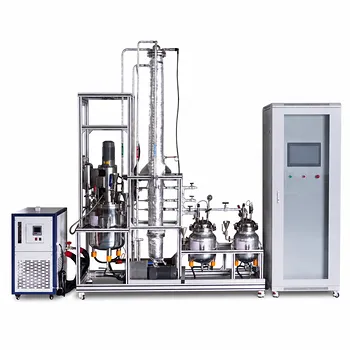
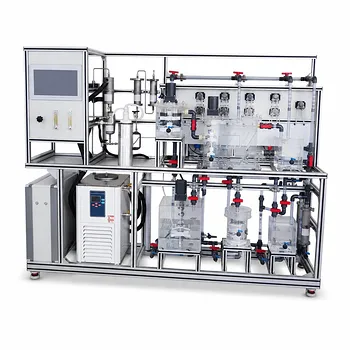
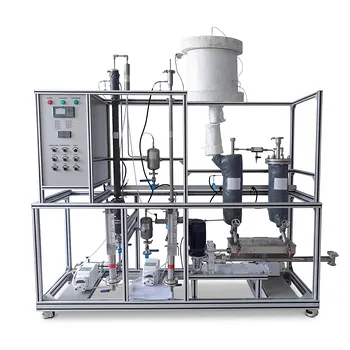
Evaluating biomass processing in an educational pilot plant gives you something no simulation can: real, measurable energy flows under process conditions. By operating scaled-down reactors, separators, and heat recovery units, students and researchers can perform rigorous thermodynamic energy balances, test novel conversion pathways for polysaccharides and lignins, and directly assess whether a process can overcome biomass’s inherently low energy density.
The core insight: pilot plants transform abstract thermodynamic ideals into actionable data, revealing the true energy cost of conversion and the practical scalability of a biomass‐based process before major capital is committed.
Why Biomass Poses a Unique Energy Challenge
The Low Energy Density Barrier
Biomass inherently carries far less energy per unit mass than fossil carbon sources. That means every kilojoule spent on drying, grinding, heating, or separating must be scrutinized—losses that look small on paper can kill a process in practice.
Without physical data, these parasitic energy demands are easy to underestimate. A pilot plant forces you to measure them directly.
The Need for Decentralized, Just-in-Time Processing
Because biomass is bulky and often seasonal, many viable concepts rely on localized or mobile processing units rather than million-tonne centralized plants. This shifts the feasibility question from “can we make this work at mega-scale?” to “can we make it work at the scale that matches the feedstock supply?”
Educational pilot plants—by their bench-to-pilot size—naturally operate at this critical intermediate scale, letting researchers test distributed process architectures that large industrial pilots would ignore.
How Pilot Plants Enable Real Energy Audits
Building a Closed, Measurable System
A well-designed unit operations pilot plant places reactors, heat exchangers, distillation columns, and scrubbers in series, with sensors at every boundary. You can measure:
- Inlet feedstock mass and energy content.
- Electrical and thermal energy inputs.
- Heat losses to the environment.
- Product and by-product streams and their heating values.
This closed-loop metrology makes it possible to perform a complete first-law energy balance across the whole process, a level of fidelity no desktop study can match.
Testing Thermodynamic Hypotheses Under Controlled Conditions
Novel catalytic routes or solvent systems often promise lower activation energy and reduced steam demand. In the pilot plant, students can vary temperature, pressure, and residence time while recording real-time energy loads.
For example, a team investigating acid-catalyzed hydrolysis of lignocellulose can directly compare the heating duty and quenching losses of two different pretreatment regimens. The result is not a theoretical yield; it is a verifiable net energy ratio for that step.
Studying Thermochemical and Biochemical Pathways Side-by-Side
Biomass can be converted via anaerobic fermentation (producing methane and CO₂) or pyrolysis (producing syngas and bio-oil). Pilot-scale fermenters and thermal pyrolysis reactors, coupled with gas-liquid separation and CO₂ scrubbing columns, allow head-to-head evaluation.
Research groups can optimize process conditions for each pathway—say, adjusting the temperature profile of a pyrolysis auger or the organic loading rate of a digester—and immediately measure how the change shifts the yield of pipeline-grade biomethane or the energy content of the bio-oil. This direct comparison grounds feasibility decisions in empirical energy performance.
Bridging Chemistry and Scalable Process Design
From Bench Reactions to Continuous Operations
A benchtop beaker can demonstrate that a catalyst converts glucose to a platform molecule. But only a continuous pilot rig with recycle loops reveals the real energy penalty: how much energy is required to recover unreacted feedstock, regenerate the solvent, or purify the product to a commercial specification.
Pilot units let students model separation trains—distillation, extraction, evaporation—and track the cumulative thermal load as the target purity increases. That cumulative load often becomes the make-or-break number for energy feasibility.
Heat Integration and Pinch Analysis in Action
Energy-efficient biomass processes recover heat wherever possible. Pilot plants equipped with heat exchanger networks allow students to implement heat integration strategies directly.
By mapping hot and cold streams (e.g., using hot reactor effluent to preheat incoming feedstock), teams can calculate pinch points and measure the reduction in external utility demand. This hands-on experience transforms abstract process integration theory into an intuitive, data-backed design practice.
Incorporating Green Extraction and Solvent Recovery
Many biomass valorization strategies rely on separating valuable components—lignin, oils, nutraceuticals—using solvents. Pilot-scale extraction units allow a concrete comparison of steam distillation, solvent extraction, and advanced green methods (e.g., supercritical CO₂).
The critical metric is not just extraction yield; it is the energy required to recover and recycle the solvent. A pilot plant’s utility meters and solvent make-up rates make this trade-off explicit, guiding decisions toward truly sustainable process configurations.
Linking Energy Efficiency to Economic Feasibility
Turning Operating Data into a Techno-Economic Model
Energy consumption drives operating cost. When a pilot plant produces a continuous data stream—feedstock consumption per hour, kW·h per kg of product, cooling water usage—students can build a bottom-up cash flow model.
You can directly test a process improvement: increasing yield from 70% to 75% might save a specific quantity of raw material per year. The pilot plant data tells you whether the energy cost to achieve that yield increase is justified. From there, calculating a simple payback period (total investment divided by annual savings) becomes a straightforward exercise, showing exactly how physical process changes translate into economic viability.
Modeling the Cost Curve at a Realistic Scale
Industrial operations teach that the lowest-cost producers are large-scale facilities near cheap raw materials. By operating a pilot plant, students can measure actual utility consumption, raw material inputs, and labor effort at a specific throughput.
This data lets them extrapolate how unit costs would shift with scale—and, crucially, identify the point where a localized, medium-scale biomass plant might still be competitive when accounting for feedstock logistics and transport. The pilot plant becomes a laboratory for supply-curve thinking.
Understanding the Trade-offs and Limitations
Capital Cost vs. Educational Fidelity
Even a modest pilot plant represents a significant investment in reactors, instrumentation, and safety systems. The more accurate the energy metering, the higher the cost. Schools must balance the desire for comprehensive data against budget constraints, which can limit the range of unit operations studied in a single semester.
Scale-Down Artifacts
Heat losses per unit volume are inherently larger in small equipment. Students who simply multiply pilot energy consumption by a linear scaling factor will overestimate industrial energy demands. Proper non-dimensional analysis and heat loss modeling are required to translate pilot data to a meaningful feasibility assessment for a larger plant.
Simplification of Feedstock Variability
Real biomass feedstocks vary in moisture, ash content, and composition seasonally, but educational pilots often run on a pre-characterized, uniform surrogate. The pilot reveals the process’s intrinsic energy performance, but external variability must be added back in during feasibility studies through scenario analysis.
Integration Gaps
A pilot plant may run the reactor this week and the separation column next week, using stored intermediates. This decoupling can mask time-dependent degradation or fouling that would elevate energy use in continuous operation. Recognizing these gaps is part of the learning process, but it requires disciplined data interpretation.
How to Apply This to Your Research or Curriculum
- If your primary focus is teaching core thermodynamic principles: Design pilot runs that generate a complete energy balance sheet, forcing students to reconcile measured inputs and outputs rather than rely on textbook assumptions.
- If your primary focus is evaluating a novel biomass conversion pathway: Use the pilot plant to measure the energy requirements of the full separation train—product purification often consumes more energy than the reaction itself and determines overall feasibility.
- If your primary focus is preparing a feasibility study or business case: Instrument the pilot to log every utility flow and raw material mass, then build a techno-economic model that directly connects yield improvements or heat recovery to payback period and return on investment.
- If your primary focus is sustainable process design: Run side-by-side trials of conventional and green solvents or extraction methods, using real-time energy data to avoid the trap of optimizing a chemical metric while ignoring the thermal bill.
By placing biomass processing under the unblinking eye of a well-instrumented pilot plant, you replace assumptions with evidence—and that evidence is what turns a promising bio-based concept into a credible, energy-feasible reality.
Summary Table:
| Biomass Evaluation Focus | Pilot Plant Capability | Real-World Feasibility Value |
|---|---|---|
| Energy Density | Direct measurement of parasitic drying/heating loads | Prevents underestimating energy losses |
| Process Scale | Modeling localized, bench-to-pilot scale operations | Evaluates decentralized supply viability |
| Energy Auditing | Complete first-law energy balances across unit series | Verifies net energy ratios (NER) |
| Heat Integration | Live pinch analysis with heat exchanger networks | Optimizes utility loads for cost reduction |
| Techno-Economics | Bottom-up utility & raw material data collection | Direct input for ROI and payback modeling |
Empower Your Chemical Engineering & Biotech Programs with LABPARK
Bridge the gap between thermodynamic theory and industrial reality. LABPARK provides state-of-the-art Educational and Vocational Unit Operations Pilot Plants in chemical engineering, bioprocess & biotech, and environmental & water treatment. Specially designed for universities, research institutes, and enterprises, our pilot plants enable students and researchers to perform precise energy audits, test green solvent recovery, and validate process scalability.
Ready to elevate your laboratory capabilities and prepare the next generation of engineers? Contact us today to explore our custom pilot plant solutions.
Related Products
- Bio-fermentation Ethanol Production Practical Training Unit Operations Pilot Plant
- Natural Product Extraction Unit Operations Training Pilot Plant
- High-Gravity Emulsification and Mass Transfer Educational Pilot Plant
- Polymerization Granulation and Pellet Processing Educational Unit Operations Pilot Plant
- Continuous Batch Extractive Distillation Educational Pilot Plant
People Also Ask
- Why Use PTFE & Hastelloy in Chemical Pilot Plants? Prevent Corrosion & Ensure Safety
- Why Compare Predicted and Experimental Excess Enthalpy? Key to Accurate Pilot Plant Scale-up
- Why is the chemical plant startup schedule crucial? De-risk scale-up with pilot plants.
- When to transition from PID to adaptive control in pilot plants? Key process indicators.
- Why must batch and fed-batch fermentation pilot plants be designed to accommodate changing rheological conditions?