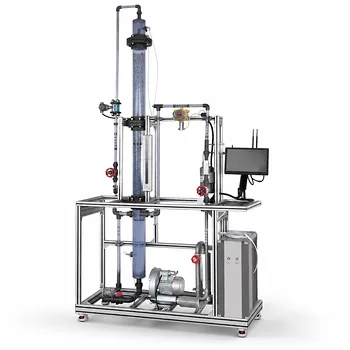
Integrate DNA-based fluorescence directly into your pilot plant’s unit operations. This technology transforms a laboratory assay into a real-time, in-situ monitoring solution for polycyclic aromatic hydrocarbons (PAHs). By immobilizing double-stranded DNA and tracking the signal of a fluorescent intercalating dye, you can detect carcinogenic pollutants at parts-per-billion levels directly in your process streams—enabling immediate evaluation of bioremediation, filtration, or extraction efficiency without the delays of traditional chromatography.
By harnessing the competitive displacement of a fluorescent dye from DNA, you create a continuous, reagentless sensor that can monitor PAH concentrations inside pipes, vessels, or filtration beds—turning your pilot plant into a self-diagnosing system for hazardous aromatic pollutants.
How the Competitive Binding Mechanism Works
The Role of DNA and the Indicator Dye
At the heart of the sensor lies a simple biomolecular interaction. Double-stranded DNA is first saturated with a fluorescent intercalating dye, such as acridine orange. The dye nestles between the base pairs and emits a strong polarized fluorescent signal when excited.
Detection via Fluorescence Polarization
When a target PAH—a polyaromatic compound with at least two adjacent benzene rings—enters the system, it competes for the intercalation sites. The PAH displaces the dye from the DNA. This displacement reduces the fluorescence polarization intensity. Because the response is proportional to the PAH concentration, you can quantify contaminants within a 10⁻⁵ to 10⁻⁸ mol/L range, which corresponds to parts-per-billion levels for many high‑molecular‑weight PAHs.
Integrating the Sensor into Pilot Plant Unit Operations
Immobilizing DNA for In-Situ Probes
Instead of running samples offline, you immobilize DNA directly onto a solid surface, such as a glass slide or the tip of a fiber optic. This creates a sensing layer that remains stable within a flow cell or bypass loop. The immobilized DNA becomes a renewable capture matrix that continuously samples the process fluid.
Evanescent Wave Fiber Optic Systems for Real-Time Signals
The immobilized DNA is then interrogated with an evanescent wave fiber optic system. Light traveling through the fiber creates an electromagnetic field that penetrates just a few hundred nanometers into the surrounding solution—precisely where the dye‑DNA complex sits. When a PAH displaces the dye, the fluorescence measured at the fiber detector changes within seconds. This optical design isolates the sensor signal from background solution fluorescence, giving you a real‑time, reagent‑free readout of PAH concentration.
Applying the Method Across Bioprocess and Environmental Pilot Plants
You can embed these probes into multiple unit operations:
- Bioreactor monitoring: Observe PAH breakdown by microbial consortia moment by moment, allowing you to adjust nutrient feed or aeration instantly.
- Filtration/Absorption beds: Track the saturation point of activated carbon or biochar columns, signaling when regeneration is needed.
- Effluent compliance testing: Continuously screen treated water for carcinogenic PAHs, providing immediate feedback on process stability and removing the need for grab samples.
This integration transforms pilot plants from black-box operations into transparent systems where process hazard analysis and bioremediation kinetics become directly observable.
Understanding the Trade‑offs and Practical Limitations
Selectivity and Interferences
The sensor responds to any molecule that can intercalate into DNA or displace the dye. While highly sensitive to many PAHs, other hydrophobic aromatic compounds can cause interference. Calibration with the specific PAH mixture expected in your process is essential. In complex waste streams, combining the sensor with a pre‑concentration or clean‑up stage can greatly improve selectivity.
Sensor Stability and Lifetime
The immobilized DNA layer can degrade over time due to nucleases present in environmental samples, or from thermal and chemical stress. This reduces sensitivity and leads to signal drift. Regular recalibration and periodic replacement of the sensing element are necessary to maintain accuracy during long‑term pilot campaigns.
Matrix Effects and Sample Pre‑treatment
Turbid, high‑particulate streams may foul the fiber optic surface, attenuating the optical signal. Additionally, dissolved humic substances or oils can quench fluorescence. While the evanescent wave design partially mitigates matrix effects, in‑line micro‑filtration or a simple shear‑flow cell may be required to keep the sensor surface clean and ensure reliable readings.
Making the Right Choice for Your Monitoring Strategy
Your implementation should match your primary operational goal. Use these guidelines to decide how deeply to integrate the sensor.
- If your primary focus is rapid screening of multiple effluent streams: Deploy a multiplexed fiber optic system with probes at several points. The real‑time data stream allows you to identify PAH breakthroughs without sampling lag, dramatically speeding up process development cycles.
- If your primary focus is in‑depth process optimization and kinetic modeling: Couple the fluorescence sensor directly to a data acquisition system. Track PAH decay curves in real time to fit rate constants and pinpoint the exact operating conditions that maximize bioremediation or adsorption efficiency.
- If your primary focus is operator training and hazard awareness: Use this method as a hands‑on teaching tool. The visible, instantaneous response of the fluorescent dye makes the principles of competitive binding and rapid chemical screening tangible for students or new technicians.
When you embed DNA’s molecular recognition power directly into your pilot plant’s hardware, monitoring moves from a delay‑prone chore to a live, decision‑driving insight.
Summary Table:
| Aspect | Key Details | Practical Benefit / Solution |
|---|---|---|
| Mechanism | Competitive displacement of fluorescent dye from immobilized DNA | Real-time, reagentless detection at parts-per-billion (ppb) levels |
| Integration | Evanescent wave fiber optic probes in flow cells/bypass loops | In-situ monitoring of bioreactors, filtration beds, and effluents |
| Limitations | Potential matrix interference and sensor fouling over time | Address via target calibration, micro-filtration, and regular sensor replacement |
Optimize your research, development, and training with LABPARK! We provide industry-leading Educational and Vocational Unit Operations Pilot Plants in chemical engineering, bioprocess & biotech, and environmental & water treatment. Specifically designed for universities, research institutes, and enterprises, our systems empower you to implement advanced monitoring technologies like real-time sensor integration with ease. Contact our specialists today to discuss how we can customize the ideal pilot plant solution for your organization!
Related Products
- Multifunctional Membrane Separation Educational Pilot Plant with Ultrafiltration, Nanofiltration, Reverse Osmosis
- Packed Bed Absorption Educational Unit Operations Pilot Plant
People Also Ask
- How do PEI, PVDF, and PSU membranes compare in pilot plants? Find the best fit.
- Pervaporation vs. Vapor Permeation: Handling Suspended Solids in Membrane Pilot Plants
- What are the trade-offs of polymer vs inorganic membranes in teaching pilot plants? Key laboratory comparison.
- What are the advantages of membrane separation in pilot plants? Efficient Organic Vapor Recovery
- How can operators optimize operating conditions and cleaning protocols in membrane separation pilot plants to mitigate fouling?