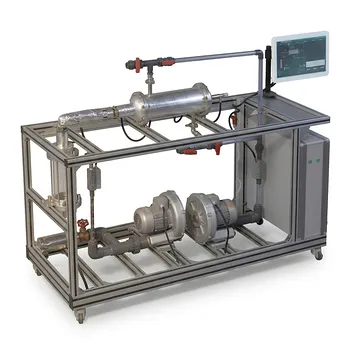
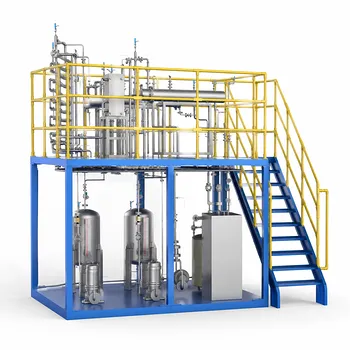
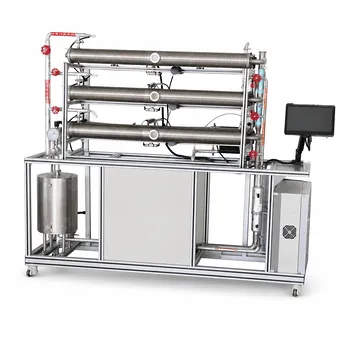
Seawater and halide-rich wastewater demand a fundamentally different material strategy than ordinary process water. For pilot‑plant heat exchangers, choose copper‑nickel (70/30) as a proven, cost‑effective option or titanium for superior, long‑term corrosion immunity. For piping and seals, select chemically inert polymers – uPVC, PP, PVDF, or PTFE – based on the operating temperature and mechanical requirements. Standard stainless steels must be avoided because they pit and crack rapidly in high‑chloride environments.
Copper‑nickel remains a reliable traditional solution for heat exchanger tubes, but titanium’s stable oxide film makes it virtually immune to halide attack, provided trace moisture is always present. Piping systems, on the other hand, achieve full corrosion resistance through plastics like PVDF and PTFE, eliminating metallic degradation entirely. The core principle: isolate halide‑bearing media from common steel, and match both the metal and polymer choices to the specific temperature and wet‑chlorine risks of your pilot plant.
The Aggressive Nature of Halide‑Rich Waters
Understanding why material selection is so critical in these applications goes directly to the deep need: keeping pilot plants running without unplanned downtime, sample contamination, or safety incidents.
Why Halides Attack Common Metals
Chloride ions aggressively break down the passive oxide layer that protects ordinary steels.
This leads to pitting, crevice corrosion, and stress‑corrosion cracking – failures that can occur in weeks, not years.
Stainless steel 316, often used in standard water treatment, contains molybdenum to improve pitting resistance.
Nevertheless, it remains vulnerable to concentrated halides, warm seawater, and wet chlorine, making it an unacceptable risk for quantitative pilot work.
The True Cost of Material Failure in Pilot Plants
A pin‑hole leak in a heat exchanger tube or a failed pipe flange does more than halt an experiment.
It can contaminate expensive membranes, damage instrumentation, and erode confidence in scale‑up data.
Choosing the right material from the start is an investment in data integrity and operational continuity.
Selecting the Right Metal for Heat Exchangers
Heat exchangers are the frontline of thermal duty and fluid contact. The primary reference emphasizes two proven metallic families.
Copper‑Nickel Alloys: The Traditional Workhorse
Alloys like 70% copper / 30% nickel have been the mainstay of seawater service for decades.
They offer excellent resistance to erosion‑corrosion, reasonable biofouling control, and a well‑understood life‑cycle cost.
For many pilot plants handling natural seawater, copper‑nickel exchanger tubes remain a perfectly adequate choice.
They balance corrosion performance against a lower upfront material cost than titanium.
Titanium: The Superior Modern Alternative
Titanium is increasingly the default recommendation for halide‑rich and wet‑chlorine environments.
It forms an extremely stable, self‑healing oxide film that makes the metal virtually immune to seawater and oxidizing chloride solutions.
There is one critical operational caveat: titanium requires trace moisture – at least 0.01% water – to maintain that protective film.
If the process stream ever carries completely dry chlorine gas, titanium can suffer rapid, catastrophic attack. In normal pilot‑plant conditions where water is always present, this is rarely a concern.
Why Stainless Steel Fails in Halide Service
Despite its widespread use in other water treatment systems, stainless steel (304 or 316) is not suitable for these applications.
The halide concentration overwhelms its passive layer, leading to unpredictable pitting and crevice corrosion that compromises both safety and experimental repeatability.
Even high‑alloy super‑austenitic or duplex stainless steels demand careful laboratory evaluation and are rarely the first choice for a pilot plant intended for flexible seawater or brine testing.
Optimizing Piping and Seals with Polymers
Piping, fittings, and seals are equally important. Supplementary references highlight that thermoplastics and fluoropolymers are the go‑to materials, each with distinct temperature and chemical limits.
Unplasticized PVC: Low‑Cost, Low‑Temperature
uPVC is affordable and handles most inorganic acids and salts with ease.
Its ceiling is 60°C, and it swells or softens in many organic solvents – a limitation if cleaning agents or solvent‑laden wastewater are part of the pilot campaign.
Polypropylene (PP): Higher Heat Tolerance
PP extends the operating window to 120°C and offers better mechanical strength than polyethylene.
It works well for continuous seawater piping, provided no strong oxidizers or UV degradation issues are present.
PVDF: The Balanced Engineering Polymer
PVDF delivers chemical resistance close to PTFE, yet is much easier to fabricate and weld.
It withstands temperatures up to 140°C and resists acids, alkalis, and organic solvents, making it an excellent all‑round choice for structural components and process piping in halide pilot plants.
PTFE: The Ultimate Chemical Barrier
PTFE (Teflon) handles nearly every chemical challenge up to 250°C and is the gold‑standard for gaskets, valve stem packings, and linings.
Its low mechanical strength, however, normally requires glass‑ or carbon‑fibre reinforcement, and it carries a higher price tag – best reserved for the most critical sealing points.
Understanding the Trade‑offs
An objective view must balance corrosion performance with practical constraints.
Balancing Cost and Lifetime
Titanium heat exchangers are more expensive than copper‑nickel, and polymer piping can be costlier than standard steel.
However, a single failure and cleanup in a pilot plant can exceed the material premium, especially when valuable catalysts, membranes, or personnel time are at stake.
Temperature Limitations of Polymer Piping
Plastics soften and lose pressure‑bearing capability as temperatures rise.
A system designed for ambient seawater may fail if one test run introduces a hot brine stream – the polymer specification must match the maximum anticipated temperature.
Mechanical Strength and Fabrication Complexity
Titanium requires specialist welding, and PTFE components need careful support.
The easier fabrication of PVDF and the wide availability of copper‑nickel components can accelerate pilot‑plant construction, but only if the chemical environment truly permits their use.
Making the Right Choice for Your Pilot Plant
Tailor the decision to your plant’s specific thermal, chemical, and budgetary profile.
- If your primary focus is cost‑sensitivity and ambient‑temperature seawater: Use copper‑nickel (70/30) heat exchanger tubes and uPVC piping, while keeping halide concentrations and chlorination levels moderate.
- If your primary focus is maximum corrosion assurance and hot/wet‑chlorine exposure: Choose titanium heat exchanger surfaces with PVDF or PTFE‑lined piping and seals to eliminate metallic corrosion risk.
- If your primary focus is a flexible, multi‑chemistry pilot platform: Build heat exchangers from titanium and install piping in PVDF, complementing with PTFE gaskets and packings to safely span acids, alkalis, and halide brines up to 140°C.
A thoughtful material strategy up front turns a fragile pilot plant into a robust, data‑generating asset that can handle whatever seawater or halide‑rich wastewater throws at it.
Summary Table:
| Material | Application | Max Temp | Key Features & Limits |
|---|---|---|---|
| Titanium | Heat Exchangers | N/A | Superior corrosion immunity; requires trace moisture. |
| Copper-Nickel (70/30) | Heat Exchangers | N/A | Traditional, cost-effective; susceptible to high halide levels. |
| uPVC | Piping & Seals | 60°C | Low cost, acid resistant; limited temperature tolerance. |
| Polypropylene (PP) | Piping & Seals | 120°C | Good thermal/mechanical performance; vulnerable to oxidizers. |
| PVDF | Piping & Seals | 140°C | Exceptional chemical resistance, weldable; balanced choice. |
| PTFE | Gaskets & Linings | 250°C | Ultimate chemical resistance; low strength, premium cost. |
Partner with LABPARK for High-Performance Pilot Plant Solutions
Building reliable systems for corrosive environments like seawater and halide-rich wastewater requires expert material selection. LABPARK provides state-of-the-art Educational and Vocational Unit Operations Pilot Plants across chemical engineering, bioprocess & biotech, and environmental & water treatment.
We help universities, research institutes, and enterprises design systems with the optimal mix of titanium, copper-nickel, and advanced polymers to ensure long-term durability, safety, and precise experimental data.
Ready to elevate your research or training capabilities? Contact LABPARK today to discuss your custom pilot plant requirements!
Related Products
- Shell and Tube Heat Exchanger Heat Transfer Coefficient Determination Educational Pilot Plant
- Comprehensive Multi-Modal Heat Transfer Unit Operations Pilot Plant for Engineering Training
- Three-Tube Heat Transfer Educational Pilot Plant for Unit Operations Training
- Dual Mode Heat Transfer Pilot Plant for Unit Operations Training
People Also Ask
- Why Apply LMTD Correction in Shell-and-Tube Pilot Plants & How to Determine It
- How is the fouling factor (Rd) evaluated? Key Pilot Plant Insights for Students
- How is fouling factor demonstrated using shell and tube pilot plants? Practical Lab Guide
- Why is simulating and calculating fouling factors crucial when operating educational heat exchanger pilot plants?
- How do tube pitches affect equivalent shell diameter (De)? Math & pilot plant impact explained.