The selection of titanium versus graphite for a pilot plant heat exchanger is a battle of chemical niches, not a search for a universally superior metal. Titanium thrives in oxidizing, halide-rich environments like seawater and wet chlorine, relying on a tenacious, self-healing oxide film. Its primary limitation is a catastrophic vulnerability to dry chlorine gas and reducing acids unless alloyed with palladium. Resin-impregnated graphite, conversely, is the premium choice for handling hot, boiling mineral acids—nitric, sulfuric, hydrochloric—where nearly all metals fail. Its key constraints are mechanical brittleness and a lower operating envelope for temperature and pressure, making it less forgiving than a ductile metal.
The core insight for pilot plant designers is that titanium targets specific, aggressive halide chemistries with excellent mechanical integrity, while graphite provides a cost-effective, nearly universal solution for boiling acids. The final decision must balance the precise corrosive species, the required thermal performance, and the economic realities of small-scale equipment.
The Chemical Battlefield: Where Each Material Wins
Titanium's Stronghold: Halides and Oxidizing Environments
Titanium owes its legendary corrosion resistance to a stable, protective oxide film that forms spontaneously in the presence of oxygen or water.
This film makes it virtually immune to chloride-induced pitting and stress corrosion cracking, the banes of stainless steel in seawater or brackish water pilot lines. It is, therefore, the material of choice for heat exchangers processing wet chlorine, chlorinated brines, or marine cooling water.
The primary reference highlights that even trace moisture—as little as 0.01% water in chlorine gas—sustains the protective oxide. Strip that moisture away with dry chlorine, and the metal corrodes rapidly and violently. Furthermore, adding 0.15% palladium to titanium significantly expands its resistance into reducing acid territory, allowing it to replace expensive copper-nickel alloys in marine heat exchangers handling hydrochloric acid.
Graphite's Domain: The Boiling Acid Frontier
Resin-impregnated impermeable graphite is engineered specifically for thermal unit operations where hot, highly corrosive acids make metal selection impossible.
Unlike a metal that resists corrosion through a passive film, impermeable graphite acts as a barrier. The synthetic graphite is infused with a resin that fills its natural porosity, creating a solid that conducts heat efficiently while preventing fluid leaks. This structure is overwhelmingly recommended for boiling nitric, sulfuric, and hydrochloric acids—environments where even exotic alloys degrade.
The primary reference positions graphite as a cost-effective and highly corrosion-resistant alternative for these extreme chemical duties. In a pilot plant setting, where a single unit may need to handle multiple aggressive reagents over time, this broad-spectrum resistance is a powerful asset.
The Failure Zones: Critical Limitations of Each Material
Titanium's Achilles' heel is its reactivity with reducing, oxygen-starved media. Without moisture to regenerate its oxide film, it falls prey to dry halogen gases and strong reducing acids like hot, concentrated hydrochloric acid (unless palladium-alloyed).
In addition, titanium's mechanical strength and corrosion resistance decline at elevated temperatures, a common condition in heat exchangers. While still serviceable, its upper temperature limit for handling certain corrosive brines is lower than what its raw melting point might suggest.
Graphite's fundamental constraint is mechanical. Impervious graphite is brittle, exhibiting low tensile strength and poor resistance to thermal shock. Rapid temperature changes can crack the material. The resin binder also imposes a maximum service temperature ceiling, typically well below that of titanium, limiting its use in very high-temperature acid streams. For pilot plants, this demands careful operational control to avoid pressure surges or uneven heating that could cause catastrophic brittle failure.
Beyond Chemistry: The Thermal and Mechanical Reality
Thermal Conductivity and Its Impact on Design
Material choice directly dictates the size and efficiency of a pilot plant heat exchanger. Supplementary references note that titanium's thermal conductivity is relatively low, around 21 W/(m·°C), far below copper. This means a titanium heat exchanger requires more surface area to transfer the same heat load as a high-conductivity metal.
Impermeable graphite, by contrast, typically offers thermal conductivity several times higher than titanium, often in the range of 100–150 W/(m·°C). This makes graphite an efficient heat transfer medium for its corrosion class, helping offset the cost of the material and simplifying the exchanger's footprint.
For educational pilot plants, this contrast is a valuable teaching tool. Students must explicitly incorporate plate thickness, film coefficients, and the material's unique conductivity into their overall heat transfer coefficient (U) calculations, vividly illustrating the trade-off between chemical durability and thermal efficiency.
Mechanical Strength and Operating Envelope
Titanium competes favorably with many stainless steels in terms of strength-to-weight ratio and can be designed for significant pressure loads. This makes it suitable for high-pressure pilot plant operations involving halide streams.
Graphite's mechanical limitations mean it is typically restricted to lower-pressure, lower-to-moderate temperature applications. Pilot plant designs using graphite heat exchangers must include robust pressure relief and gradual heating/cooling ramps to prevent thermal shock. The operational envelope is narrower, but within its bounds, it eliminates corrosion as a failure mode entirely.
The Economics of Extreme Corrosion Resistance
How Cost Multipliers Shape Pilot Plant Budgets
Pilot plants are intensely budget-conscious, and material choice can multiply base equipment costs dramatically. The supplementary references provide a clear cost baseline for small-scale (100 ft²) units: a carbon steel shell with titanium tubes carries a material cost factor of 5.0, while an all-titanium unit jumps to a staggering 11.0. These factors escalate further with larger surface areas.
While explicit cost factors for graphite are not provided in the table, the primary reference explicitly labels it a cost-effective alternative for acid service. For a small pilot plant handling boiling sulfuric acid, an impermeable graphite exchanger will almost always represent a lower capital outlay than an equivalent titanium unit, which would also be chemically unsuitable in that reducing environment.
The true economic comparison must weigh the high upfront cost of titanium against its ductility, robustness, and long life in its ideal chemical niche. Graphite trades mechanical ruggedness for a lower price of entry and uncompromising chemical resistance where acids are concerned.
Practical Implications for Pilot Plant Operations
Safety and Longevity in an Educational Setting
Pilot plants in academic or R&D labs frequently rotate between different chemical processes. This places a premium on materials that guarantee safety and minimize failure risk.
Non-metallic materials, including graphite, PTFE, and glass, are specifically recommended in the supplementary references for extreme chemical resistance to ensure experimental safety. They eliminate the risk of pin-hole corrosion leaks that can occur in metals. However, their fragility demands rigorous operating discipline from students and researchers.
Titanium, with its excellent film-healing and high strength, provides a different kind of operational safety—robustness against mechanical mishandling and pressure spikes. It is the safer choice when pilot plant operators are less experienced, provided the chemical environment is strictly oxidizing and halide-rich.
Teaching the Industrial Trade-off
Using titanium plates forces students to grapple with the core industrial dilemma: the best chemical resistance often comes with a thermal penalty. Calculating fouling factors, film coefficients, and wall resistances for a low-conductivity titanium plate ingrains the concept that material selection is a multidisciplinary optimization, not a simple compatibility checklist.
Graphite, meanwhile, simplifies the corrosion puzzle while introducing structural constraints. Students learn that "chemically compatible" does not automatically mean "mechanically suitable," a lesson in holistic design thinking essential for any process engineer.
Understanding the Trade-offs
When to Choose Titanium Over Graphite
The decision is never about one material being "better" than the other. It rests on a clear-eyed assessment of your pilot plant's specific duty.
- Titanium is the undisputed champion in oxidizing halide environments. Seawater, hypochlorite solutions, and wet chlorine are its natural habitats. It offers high strength, ductility, and resistance to mechanical stresses that would shatter graphite.
- Graphite is the default recommendation for boiling, highly corrosive reducing or oxidizing acids. It provides near-universal chemical immunity in acid services where titanium would corrode rapidly (unless heavily alloyed). Its lower cost and higher thermal conductivity make it an efficient choice for these aggressive duties.
- Titanium's lower thermal conductivity forces a larger exchanger size, which can be a deal-breaker in space-constrained pilot plants. Graphite's higher conductivity mitigates this penalty.
- Graphite's brittleness demands careful thermal and mechanical management, potentially increasing operational complexity. Titanium's tolerance for handling and thermal gradients simplifies day-to-day operations.
Making the Right Choice for Your Pilot Plant Goal
Your material strategy must align with your pilot plant's primary purpose—research output, educational value, or budget control.
- If your primary focus is handling halide brines or seawater: Select titanium. Its pitting immunity and mechanical integrity make it the only practical metallic choice for a long-term, trouble-free installation in this specific niche.
- If your primary focus is conducting experiments with boiling mineral acids: Choose resin-impregnated graphite. It offers a cost-effective, broad-spectrum resistance that eliminates corrosion as an experimental variable, letting you focus on thermal performance.
- If your primary focus is teaching chemical engineering principles: Consider using both. An all-titanium exchanger alongside a graphite unit perfectly illustrates the real-world trade-off between mechanical robustness, thermal conductivity, and chemical compatibility, enriching student learning far beyond a single-material setup.
- If your primary focus is minimizing capital expenditure for an aggressive acid service: Graphite is almost certainly the more economical route, provided you design your procedures to respect its mechanical constraints.
The best pilot plant heat exchanger material is the one that faithfully solves your specific corrosion problem while transparently teaching the economic and physical compromises that define process design.
Summary Table:
| Parameter | Titanium Heat Exchangers | Graphite Heat Exchangers |
|---|---|---|
| Primary Applications | Oxidizing halides, seawater, wet chlorine | Boiling mineral acids (nitric, sulfuric, hydrochloric) |
| Thermal Conductivity | Low (~21 W/m·°C) | High (100–150 W/m·°C) |
| Mechanical Strength | High strength, ductile, pressure-resistant | Brittle, low tensile strength, vulnerable to shock |
| Key Limitations | Vulnerable to dry chlorine and reducing acids | Temperature and pressure ceilings, fragile |
| Relative Cost | High (Cost factor up to 11.0 for all-titanium) | Cost-effective alternative for aggressive acid services |
Optimize Your Unit Operations with LABPARK
Selecting the right materials is critical for safe, efficient, and educational pilot plant operations. LABPARK designs and manufactures high-performance Educational and Vocational Unit Operations Pilot Plants in chemical engineering, bioprocess & biotech, and environmental & water treatment.
We help universities, research institutes, and enterprises worldwide build robust, industry-aligned training systems with the ideal balance of chemical durability, thermal efficiency, and safety.
Ready to elevate your engineering lab? Contact the LABPARK experts today to find the perfect pilot plant configuration for your requirements!
Related Products
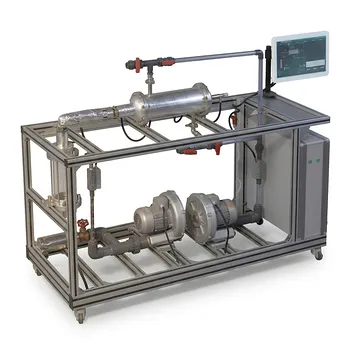
- Shell and Tube Heat Exchanger Heat Transfer Coefficient Determination Educational Pilot Plant
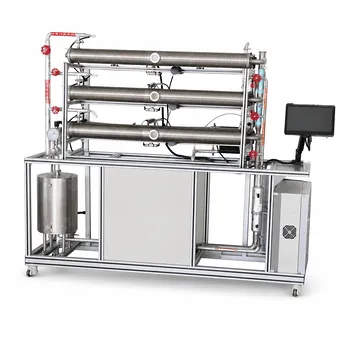
- Three-Tube Heat Transfer Educational Pilot Plant for Unit Operations Training
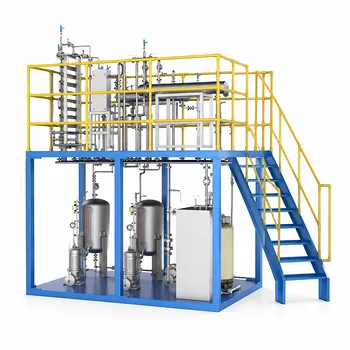
- Dual Mode Heat Transfer Pilot Plant for Unit Operations Training
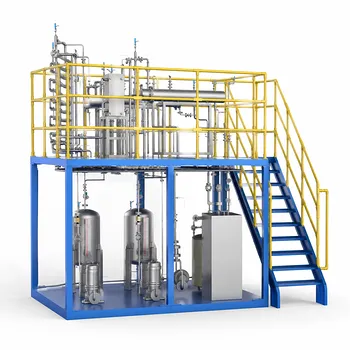
- Comprehensive Multi-Modal Heat Transfer Unit Operations Pilot Plant for Engineering Training
People Also Ask
- Why Apply LMTD Correction in Shell-and-Tube Pilot Plants & How to Determine It
- How is the fouling factor (Rd) evaluated? Key Pilot Plant Insights for Students
- How is fouling factor demonstrated using shell and tube pilot plants? Practical Lab Guide
- Why is simulating and calculating fouling factors crucial when operating educational heat exchanger pilot plants?
- Why Estimate Tube Wall Temp in Heat Exchangers? Master Pilot Plant Thermal Resistance