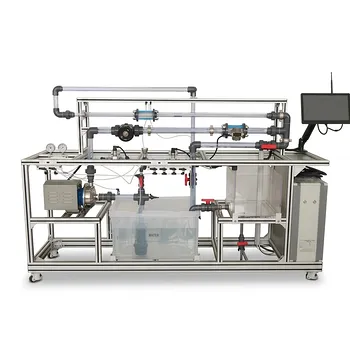
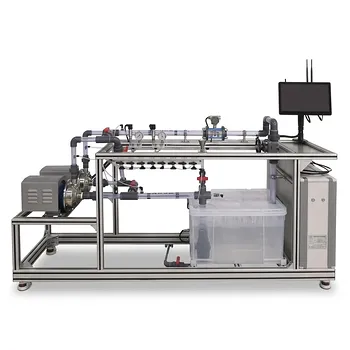
The heart of reliable pilot plant dosing lies in isolation. Diaphragm metering pumps excel because they place an elastic diaphragm between the reciprocating drive and the process fluid, completely segregating abrasive particles or corrosive chemicals from the precision piston assembly. This prevents mechanical wear and contamination, while flow control is achieved by mechanically adjusting the piston’s stroke length—delivering repeatable, proportional dosing directly into your bioreactor or reactor.
Diaphragm isolation protects the pump’s internal mechanism, making it the go-to choice for harsh fluids. Volumetric precision comes from varying the stroke length via an eccentric crank, giving linear control at constant speed. However, true pilot-plant accuracy requires managing the oscillation inherent in single-piston designs through pulsation dampeners and, ideally, closed-loop mass‑flow feedback.
Why Diaphragm Pumps Excel in Harsh Pilot‑Plant Environments
Complete Isolation of the Drive Mechanism
A flexible diaphragm physically separates the piston and cylinder from the fluid. The process medium only touches the pump head and the diaphragm, never the sliding, close‑tolerance piston parts.
Eliminating Wear from Corrosives and Particulates
Without this barrier, corrosive acids would attack metal seals and packing in minutes. Abrasive slurries would score and erode the precision piston surfaces, immediately destroying metering accuracy. The diaphragm acts as a consumable wear part that can be replaced without rebuilding the entire pump.
Mastering Flow Control: The Stroke Length Mechanism
The Principle of Fixed Displacement
Each stroke displaces a fixed volume equal to the piston area multiplied by the stroke length. At a constant operating frequency, the average flow rate is directly proportional to that displaced volume. Changing the stroke length therefore changes the flow linearly, with no need for complex variable‑speed drives.
Mechanical Adjustment via Eccentric Crank
An eccentric mechanism converts rotary motion into reciprocating motion. Adjusting the eccentric offset alters the distance the piston travels—the stroke length. This adjustment can be made manually while the pump is running, allowing fine‑tuning of dosing without stopping the reaction.
Why Stroke Adjustment Trumps Speed Control Alone
Varying stroke length changes the volume per stroke, while the motor speed remains fixed. This maintains optimal suction dynamics and prevents the cavitation or hold‑up time issues that can occur when simply slowing a motor. The result is a more robust, repeatable dosing rate across a wide turndown.
The Hidden Challenge: Managing Flow Pulsation
Pulsation’s Impact on Stoichiometry and Residence Time
In continuous‑flow reactors, the total feed rate determines the residence time, and the ratio of feed streams sets the stoichiometry. A single‑piston diaphragm pump produces a highly pulsating flow, with instantaneous rates swinging from zero to peak. These surges can cause local stoichiometric imbalances and inconsistent conversion, even if the time‑averaged flow is correct.
Dampening Solutions and Pump Configuration
Pulsation dampeners placed on the discharge line absorb the peaks and smooth the flow profile. Pressurized feed tanks with control valves or the use of multi‑piston pulseless metering pumps are common in research pilot systems. Synchronized multi‑piston heads overlap discharges to create a near‑continuous, ripple‑free stream.
Closing the Loop: Integrating Mass Flow Meters for True Precision
A Coriolis mass flow meter measures actual mass flow and density in real time, independent of fluid temperature, pressure, or viscosity changes. Integrating it with a feedback controller allows the system to automatically trim the stroke length (or pump speed) to maintain a target mass delivery rate. This combination turns a mechanically precise volumetric pump into a process‑reliable dosing system that corrects for pulsation effects and fluid property shifts.
Understanding the Trade‑offs and Limitations
Inherent Pulsation Must Be Mitigated
The isolation advantage comes with the cost of a non‑continuous flow. Without dampeners or multi‑piston heads, delicate reactions may suffer from inconsistent feed ratios.
Mechanical and Material Limits
Diaphragms have finite life and must be chemically compatible with the fluid; PTFE, EPDM, or FKM are common choices, each with its own temperature and pressure ceiling. While the drive side can handle high loads, the diaphragm itself limits the maximum discharge pressure—exceeding it can rupture the barrier.
Cost of Precision
High‐quality metering pumps with adjustable stroke and robust diaphragms are more expensive than simple centrifugal alternatives. Adding a pulsation dampener and a Coriolis meter increases upfront capital, but delivers the accuracy and traceability that pilot‑scale development demands.
Making the Right Choice for Your Pilot Plant
- If your primary focus is handling highly corrosive or abrasive slurries: Choose a diaphragm metering pump with a PTFE or elastomer diaphragm and accept that you must integrate a dampener to mitigate pulsation.
- If your primary focus is achieving ripple‑free continuous flow for sensitive kinetic studies: Opt for a multi‑piston pump head or pair a single‑piston pump with a large‑volume dampener and a Coriolis mass flow controller to close the loop.
- If your primary focus is simple, repeatable batch dosing: A single‑stroke adjusted diaphragm pump with a timer or totalizing meter is often sufficient, without the added cost of high‑end flow instrumentation.
- If your process demands both corrosive resistance and ultra‑high accuracy under pulsation: Combine the diaphragm pump with a Coriolis meter and an automated stroke adjustment system to dynamically correct for any mechanical drift or fluid variability.
By matching the pump’s isolation capabilities to your fluid challenges and actively managing the pulsation that defines single‑piston designs, you can achieve the exacting dosing fidelity that modern pilot‑plant reactions require.
Summary Table:
| Key Feature | Mechanism / Benefit | Best Practice / Application |
|---|---|---|
| Diaphragm Isolation | Separates drive parts from fluid | Ideal for abrasive slurries and corrosive chemicals |
| Stroke Adjustment | Varies displacement linearly | Use for precise, repeatable volumetric dosing without cavitation |
| Pulsation Management | Dampeners or multi-piston setups | Critical for continuous-flow systems to maintain stoichiometry |
Scale Up Your Research with LABPARK
Precise fluid dosing is vital for accurate process development. LABPARK delivers high-performance Educational and Vocational Unit Operations Pilot Plants in chemical engineering, bioprocess & biotech, and environmental & water treatment for universities, research institutes, and enterprises.
Ready to equip your facility with advanced dosing technology and robust pilot plant systems? Contact the LABPARK team today for expert guidance and tailored solutions!
Related Products
- Centrifugal Pump Performance and Orifice Flowmeter Calibration Educational Pilot Plant
- Centrifugal Pump Performance Determination Educational Unit Operations Pilot Plant
People Also Ask
- What features should instructors look for in pump & flowmeter pilot plants? Key Selection Guide
- Why start a centrifugal pump with a closed outlet valve? Protect your pilot plant motors.
- How to update chemometric calibration models in pilot plants? Best practices for process engineers.
- How can cavitation and slurry erosion be studied and mitigated using fluid transport and centrifugal pump pilot plants?
- How do pilot plants demonstrate siphon pressure variations? Visualizing Bernoulli's Energy Balance