For a curriculum rooted in real-world formulation science, the physicochemical nature of the active ingredient becomes the decision tree itself: if the API is moisture‑ or heat‑sensitive, the curriculum must pivot to dry granulation; if it is chemically stable but physically deficient, wet granulation becomes the primary teaching track. For amorphous drugs specifically, any wet granulation using water is explicitly avoided because it can lower the glass transition temperature and trigger recrystallization. This means the classroom becomes a laboratory for material‑centered decision‑making, not just a tour of equipment.
The core teaching imperative is to show that granulation choice is not a preference but a material‑driven mandate. Sensitivity to moisture or heat forces the dry route; absence of sensitivity opens the door to wet granulation‑based content. The amorphous state adds a critical exception that every curriculum must highlight—water can destroy the very amorphous nature you may want to preserve.
Why the API’s Physicochemical Profile Dictates the Teaching Agenda
A solid dosage curriculum lives or dies by its ability to connect a powder’s material properties to a processing decision. Unless students learn to read the API first, they will see granulation as a rote sequence rather than a risk‑mitigation strategy. The physical and chemical nature of the drug substance creates a natural case‑based framework that separates the dry granulation module from the wet granulation one.
The Gatekeeper: Moisture and Thermal Sensitivity
When the API degrades upon exposure to moisture or elevated drying temperatures, the instructor must immediately shift the focus to dry granulation (slugging or roller compaction). This is a non‑negotiable safety rule.
Pilot‑scale teaching moments arise precisely here. Students can test the theoretical boundary by characterising an API’s sensitivity and then observing why a wet massing step would be destructive.
The Crystalline‑Versus‑Amorphous Fork in the Road
Crystalline materials that are simply poorly flowing or have low bulk density generally thrive in a wet granulation pathway—provided they are not sensitive. The curriculum can thus explore high‑shear or fluid‑bed processing.
The instruction must pivot sharply with amorphous drugs. Even if the amorphous API is not chemically sensitive to moisture, the presence of water can plasticize the matrix, lower the glass transition temperature, and cause uncontrolled recrystallization. Any curriculum that teaches wet granulation for amorphous systems without this warning is incomplete.
Flow and Compactability as the Initial Trigger
An API with adequate flow and mechanical properties might not need granulation at all. The primary reference makes clear that the first question is whether the drug is a high‑dose compound with poor flow—if so, some form of granulation becomes mandatory.
The choice between dry and wet granulation then follows the sensitivity and amorphicity assessments. The curriculum should teach this hierarchy explicitly: need for granulation first, then route selection based on physicochemical stability.
Building the Pilot‑Scale Curriculum Around the Decision Logic
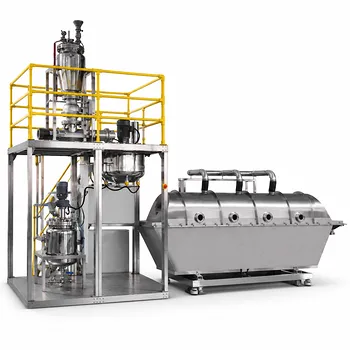
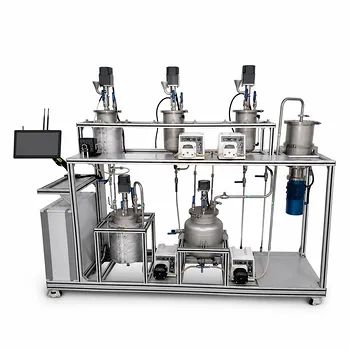
When both dry and wet granulation units sit side by side in a chemical engineering pilot plant, the teaching opportunity is to make the API the sole variable. The equipment becomes the physical expression of the material’s constraints.
Teaching Dry Granulation as a Protective Strategy
In the dry granulation module, the instructor emphasizes roller compaction or slugging as the aggregation mechanism of choice for moisture‑ or heat‑labile compounds. Students learn that high pressure substitutes for binder liquid, creating ribbons or slugs that can be milled into granules without ever introducing a drying step.
The lesson is clear: protection of the drug substance overrides granule perfection. Students can compare granules from dry and wet routes for the same placebo, then discuss why a sensitive API would forfeit the potentially better flow of a wet granulate.
Teaching Wet Granulation as an Enabler for Robust Formulation
When the drug is not sensitive, the curriculum can dive into low‑shear, high‑shear, and fluid‑bed granulators. The presence of a binder fluid introduces a new dimension of process control—mixing intensity, spray rate, end‑point determination—that dry granulation simply does not offer.
Here, the pilot plant demonstrates how wetting and subsequent drying improve particle size uniformity and compressibility, giving students a direct feel for why this route is attractive if the chemistry allows it.
Anchoring Theory with Pilot‑Scale Experiments
A critical teaching moment is to deliberately run a borderline case: an amorphous compound that, if wetted, visibly recrystallizes. The available pilot equipment—roller compactor versus a high‑shear granulator/dryer combo—lets the instructor turn textbook warnings into a tangible comparison of granules and dissolution profiles.
The result is a lasting lesson that process selection is a material‑science act, not a matter of available machinery.
Understanding the Trade‑offs in Granulation Selection
Every curriculum must openly discuss what is gained and lost with each route. Failure to do so creates engineers who see choices as absolute rather than balanced.
Dry granulation fails to match the granule uniformity that can be achieved with a well‑optimized wet process. The high‑pressure compaction may also produce fines that hurt downstream tabletability if the material is brittle.
Wet granulation introduces a risk of chemical degradation even for seemingly robust APIs if residual moisture remains, and it adds the substantial cost and time of a drying step.
Amorphous materials present a singular hazard: the very process students might logically choose based on flow improvement—wet granulation—can destroy the amorphous character they are trying to exploit. The curriculum must therefore position amorphous solid dispersions as a special case where alternative technologies (like hot‑melt extrusion or spray drying) may supersede traditional granulation entirely.
Making the Right Choice for Your Curriculum Goal
How you sequence and emphasize these modules depends on the intended learning outcome. Below are focused recommendations for different educational priorities.
- If your primary focus is fundamental material science: Lead with sensitivity and amorphicity testing. Structure the entire lab around the question: “Given this API’s profile, which route preserves its structure?” Use the pilot equipment only to validate the pre‑determined decision.
- If your primary focus is process engineering and scale‑up: Let students start with a non‑sensitive crystalline model drug for wet granulation, then introduce a moisture‑sensitive one to show process constraints. This contrast teaches that the same unit operation cannot be applied blindly.
- If your primary focus is risk mitigation and QbD: Emphasize the failure costs. Have students dry granulate a sensitive API and wet granulate an amorphous one (with immediate characterisation) to build a visceral understanding of what goes wrong when material science is ignored.
Design the curriculum so that the drug substance itself writes the syllabus—when students leave knowing that the API’s stability and solid‑state form rule the granulation route, they take with them a principle that no equipment catalog can replace.
Summary Table:
| API Characteristic | Recommended Granulation Route | Key Equipment | Core Teaching Focus |
|---|---|---|---|
| Moisture or Heat Sensitive | Dry Granulation | Roller Compactor / Slugging | Protecting the active ingredient from degradation |
| Stable Crystalline (Poor Flow) | Wet Granulation | High-Shear / Fluid-Bed | Optimizing binders, drying, and size uniformity |
| Amorphous Drug | Dry / Specialized Route (Avoid Water) | Roller Compactor / HME | Preventing recrystallization and phase transitions |
Equip Your Lab for Material-Driven Process Education
To effectively teach the critical decision-making process behind dry and wet granulation, hands-on experience with industrial-grade, pilot-scale equipment is essential.
LABPARK provides state-of-the-art Educational and Vocational Unit Operations Pilot Plants in chemical engineering, bioprocess & biotech, and environmental & water treatment. Designed specifically for universities, research institutes, and enterprises, our systems bridge the gap between theoretical material science and real-world pharmaceutical manufacturing.
Ready to elevate your curriculum or research capabilities? Contact LABPARK today to explore our custom pilot plant solutions!
Related Products
- Polymerization Granulation and Pellet Processing Educational Unit Operations Pilot Plant
- High-Gravity Emulsification and Mass Transfer Educational Pilot Plant
People Also Ask
- How do educational unit operations pilot plants bridge theory and design? Bridge the Engineering Gap
- How do educational unit operations pilot plants address safety and waste management when scaling up?
- Why Compare Predicted and Experimental Excess Enthalpy? Key to Accurate Pilot Plant Scale-up
- When to transition from PID to adaptive control in pilot plants? Key process indicators.
- Why Use PTFE & Hastelloy in Chemical Pilot Plants? Prevent Corrosion & Ensure Safety