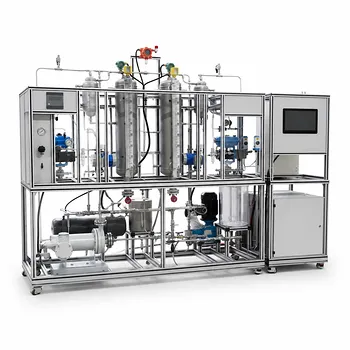
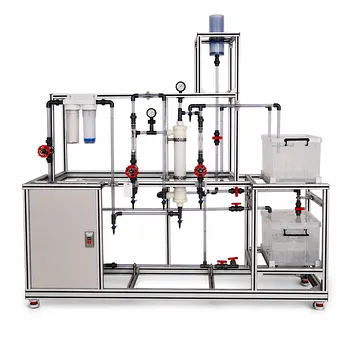
Hydrophobic silicone and fluoropolymer membranes like PDMS and PTMSP are the front-line candidates for recovering bio‑alcohols from dilute fermentation broths. In pilot-scale pervaporation units, materials such as polydimethylsiloxane (PDMS), poly(1‑trimethylsilyl‑1‑propyne) (PTMSP), PTFE, PVDF, polypropylene, and styrene‑butadiene block copolymers (SBS) are routinely tested because they preferentially let ethanol or butanol pass through while blocking water. These polymers form the core toolkit for any biofuel pilot plant aiming to concentrate alcohols without distilling massive volumes of water.
The real challenge isn’t just finding a hydrophobic polymer – it’s choosing a material that maintains its selectivity and mechanical integrity after weeks of exposure to hot, acidic fermentation broth. PDMS gives the best balance of manufacturability and alcohol affinity, while glassy super‑hydrophobic materials like PTMSP offer extreme flux but require careful handling. The “suitable” list must therefore be filtered through the lens of chemical stability, fouling resistance, and practical pilot‑plant operability.
The Core Toolkit: Hydrophobic Polymers That Work Today
Silicone Rubbers: PDMS and Its Variations
PDMS is the undisputed workhorse for organophilic pervaporation. Its backbone of repeating –Si‑O– units creates a polymer with extremely low glass transition temperature and high free volume, giving ethanol and butanol molecules a fast diffusion path while rejecting water.
Most pilot‑plant trials use crosslinked PDMS thin‑film composites. Crosslinking boosts mechanical strength and prevents the membrane from swelling excessively in solvent‑rich environments. Without crosslinking, pure PDMS can turn into a sticky gel when the alcohol concentration climbs above a few percent.
Glassy Super‑Hydrophobic: PTMSP
PTMSP delivers the highest ethanol‑water separation factor ever reported for a pure polymer, often double that of PDMS. Its rigid, substituted‑acetylene backbone creates an enormous fractional free volume (up to 30%), so alcohol permeates almost as if through a molecular sieve.
The catch is physical aging. PTMSP’s free volume collapses over days to weeks, especially under thermal or sorptive stress. Pilot‑plant operators must frequently recondition or replace modules – a serious cost factor that makes PTMSP a lab star but a manufacturing headache. It is suitable only when ultra‑high enrichment is needed for short‑duration campaigns.
Fluoropolymers: PTFE and PVDF
PTFE (Teflon®) and PVDF membranes are prized for their near‑universal chemical inertness. Fermentation broths are corrosive, containing organic acids, salts, and live microorganisms. Fluoropolymers shrug off this chemical attack, preventing pore wetting and irreversible fouling.
However, their intrinsic hydrophobicity is only moderate compared to PDMS. In pervaporation, microporous PTFE or PVDF layers often serve as structural supports for a thin PDMS or organophilic coating. When used alone, they can dewater the broth via membrane distillation but offer far lower alcohol‑water selectivity. For pilot plants, PVDF is often preferred over PTFE because it can be easily cast into asymmetric porous sheets and sterilized with steam.
Polypropylene and SBS: Budget‑Friendly Alternatives
Polypropylene hollow fibers are the low‑cost entry point. Their high chemical resistance and ability to be spun into large surface‑area modules make them attractive for stripping ethanol in a first‑pass concentration step. However, polypropylene is strictly microporous; it lacks the dense selective skin of PDMS. The separation relies on vapor‑liquid equilibrium differences, so enrichment factors are modest.
Styrene‑butadiene block copolymers (SBS) represent a tunable class of thermoplastic elastomers. The butadiene segments confer flexibility and affinity for alcohols, while styrene domains provide physical crosslinks. Early pilot studies show SBS membranes can match PDMS selectivity at a fraction of the material cost, though long‑term resistance to fouling by fermentation by‑products is still under investigation.
The Polyamide Pitfall: Why “Suitable” Needs a Second Look
Conventional Polyamide is Not Hydrophobic Enough
Some reference lists include polyamide alongside PDMS and PTFE. This is misleading for bio‑alcohol recovery. Standard aromatic polyamides (the type used in reverse osmosis membranes) are designed to be water‑selective. When exposed to ethanol‑water mixtures, they swell, lose their dense rejection layer, and can even dissolve partially. In a fermentation pilot plant, a conventional polyamide membrane will fail within hours, contaminating the product stream and turning into a cleaning nightmare.
Only Solvent‑Stable Specialties Survive
The only polyamide‑type materials that belong in this conversation are crosslinked or chemically modified variants – for example, thin‑film composites built on a solvent‑resistant support, or fully aromatic crosslinked polyamide‑imides designed for organic solvent nanofiltration (OSN). These rare, expensive membranes can handle ethanol but are overkill for simple biofuel pervaporation where PDMS already excels. If your pilot plant brochure mentions polyamide, verify that it is a purpose‑built solvent‑resistant grade, not a standard RO membrane.
Expanding the Horizon: When the Broth Gets Aggressive
Inorganic Membranes: High Stability at a High Price
Zeolite and silica‑based ceramic membranes laugh at extreme pH, temperatures, and solvents. A silicalite‑1 zeolite membrane, for instance, can selectively adsorb ethanol from water with separation factors exceeding PDMS if the crystal layer is defect‑free. For pilot plants dealing with hot, acidic, or oxygenated fermentation streams, inorganic tubes offer a “set‑and‑forget” stability that no polymer can match.
The brutal trade‑off is fragility and capital cost. A single cracked module can derail a campaign, and the per‑square‑meter price is 10–50 times that of polymeric sheets. Most pilot facilities therefore keep a small inorganic loop parallel to the main polymeric system, using it to benchmark the organic membranes’ performance degradation.
Advanced Solvent‑Stable Polymers
The supplementary reference correctly highlights polymers like polyphenylene oxide derivatives, crosslinked polyimides, and polybenzimidazoles (PBI). These were developed for separating harsh organic mixtures, not water‑alcohol feeds. Their niche in a biofuel pilot is recovering butanol from acetone‑butanol‑ethanol (ABE) streams, where the solvent cocktail attacks PDMS more aggressively. A crosslinked polyimide membrane will maintain a sharp molecular weight cut‑off even when the butanol titer reaches inhibitory levels, something no silicone rubber can guarantee over months.
Understanding the Trade‑offs
Flux vs. Selectivity – The Real‑World Balance
In pilot‑scale pervaporation, the membrane that gives the highest separation factor on a spec sheet often loses on overall process economics. A hyper‑selective PTMSP membrane that requires vacuum‑side condensation at cryogenic temperatures may be less viable than a moderate‑selectivity PDMS module that works with simple chilled water. Always evaluate membrane candidates inside your full process flow, including downstream condensation and recycle loops.
Chemical Stability is Not Static
Broth composition changes dramatically over a fermentation campaign. Early‑stage broth has sugars, nutrients, and live cells; late‑stage broth accumulates ethanol, organic acids, and lysed cell debris. A membrane that handles 2% ethanol might swell unacceptably at 8%. Pilot‑plant protocols must include long‑duration exposure tests, not just clean‑water contact angles. Fluoropolymers and crosslinked silicones score highest here.
Cost of Ownership Runs Beyond the Membrane Price Tag
Polypropylene modules are cheap to buy but expensive to operate if you factor in frequent backflushing, reduced feed throughput due to pore plugging, and the need for a secondary concentration step. PDMS composites have a higher upfront cost but typically last 1–2 years in a well‑maintained broth, giving far lower total cost per liter of concentrated biofuel.
Making the Right Choice for Your Pilot Plant
Your ideal membrane set depends on the bio‑alcohol target, budget, and experimental goals.
- If your primary focus is demonstrating a scalable, robust ethanol line: Start with crosslinked PDMS thin‑film composites on a PTFE or PVDF support. This pairing gives reliable selectivity, chemical tolerance, and maximum data transferability to future commercial plants.
- If your primary focus is pushing butanol or ABE titers to the limit: Use a modular system that lets you screen SBS block copolymers and crosslinked polyimides side‑by‑side. These advanced organics can survive the aggressive solvent environment while you dial in the perfect enrichment factor.
- If your primary focus is benchma rking membrane lifetime under real broth conditions: Install a small‑area PTMSP test cell and an inorganic ceramic loop alongside your PDMS baseline. The rapid aging of PTMSP and the invariant stability of the ceramic will give you an immediate “worst‑case vs. best‑case” map for material degradation.
- If your primary focus is lowest possible capital outlay for teaching or early feasibility: Choose microporous polypropylene hollow‑fiber modules. Acknowledge the modest enrichment and plan a downstream distillation polish, but gain invaluable hands‑on pervaporation experience with an affordable, nontoxic polymer.
The membrane that solves your pilot‑plant challenge is the one that keeps performing after the hundredth hour in a soup of acid, sugar, microbes, and alcohol – always validate any “suitable” material under your own fermentation broth before scaling up.
Summary Table:
| Membrane Material | Main Advantage | Key Limitation | Best Use Case |
|---|---|---|---|
| PDMS (Silicone) | Good selectivity/flux balance, robust | Swells at high alcohol levels | Standard ethanol recovery |
| PTMSP | Extremely high initial flux/selectivity | Rapid physical aging | Short-term high enrichment |
| PTFE / PVDF | Excellent chemical inertness & stability | Moderate selectivity | Support layer / harsh broths |
| Polypropylene | Low cost, high surface area modules | Low selectivity | Budget/educational trials |
| Inorganics (Zeolite) | Extreme thermal & chemical stability | Fragile, very high cost | Benchmark loops / harsh broths |
Optimize Your Biofuel Separation Processes with LABPARK
Ready to validate membrane performance under real-world conditions? LABPARK provides premium Educational and Vocational Unit Operations Pilot Plants in chemical engineering, bioprocess & biotech, and environmental & water treatment for universities, research institutes, and enterprises.
Our highly customizable pilot systems allow you to test various membrane configurations and optimize separation efficiency. Contact us today to find the ideal pilot plant solution for your lab or training facility!
Related Products
- Alkaline Membrane Water Electrolysis Educational Pilot Plant Unit Operations Training System
- Multifunctional Membrane Separation Educational Pilot Plant with Ultrafiltration, Nanofiltration, Reverse Osmosis
- Multi-Functional Membrane Separation Educational Pilot Plant for Unit Operations Lab
- Ultrafiltration Membrane Separation Educational Pilot Plant
People Also Ask
- How do chemical engineering pilot plants demonstrate electrolysis? Bridge Theory & Industrial Scale
- How do alkaline and PEM electrolysis technologies differ in pilot plant operations?
- Why is the selection of electrode materials critical when configuring or operating educational electrolysis pilot plants?
- Bipolar vs Monopolar Electrolysis: Key Configuration Details to Analyze in Pilot Plants
- Which Electrolysis Pilot Plant Parameters Ensure Safety & Efficiency? Key Controls Explained