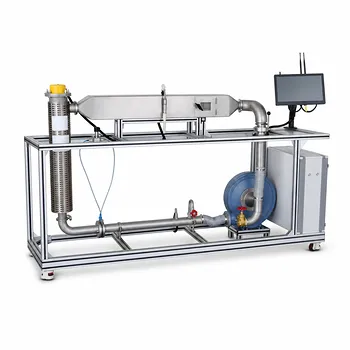
Selecting a dryer for a chemical or bioprocess pilot plant is not about picking the most advanced technology—it’s about methodically aligning the equipment’s capabilities with the material’s physical state, thermal sensitivity, and the experimental or scale-up objectives.
The foundational factors are feed condition (liquid, slurry, or solid), the required operation mode (batch vs. continuous), the solids transport mechanism (e.g., belt, rotary, fluidized), and the heat transfer method (conduction, convection, or radiation). Beyond these, thermal stability, shear tolerance, containment needs, and control system architecture directly determine whether the pilot plant will generate representative data, operate safely, and remain economically viable.
The core challenge of pilot-scale drying is bridging the gap between laboratory benchtop experiments and full-scale production. Every selection—from dryer type to pre-treatment strategy—must be evaluated against the material’s degradation temperature, its physical form, and the plant’s safety envelope. Getting this right avoids distorted scale-up data and catastrophic product failure.
The Four Foundational Selection Criteria
Any dryer configuration starts with four intertwined decisions drawn from the primary reference. They form the skeleton of the selection process and directly constrain what types of dryers are feasible.
Operation Mode: Batch vs. Continuous
Batch dryers (tray, rotary cone, tumble) are standard when the pilot plant processes small, high-value batches or when drying time must be precisely controlled to map kinetics.
Continuous dryers (spray, flash, belt) become necessary once throughput demands or a steady-state process simulation is required for scale-up.
The choice hinges on laboratory precedent and the ultimate production goal—a pilot plant designed to mimic a continuous commercial line must adopt continuous drying, even if batch would be simpler.
Physical State of the Feed
Liquids and pumpable slurries point toward spray, drum, or flash dryers, which can directly atomize or coat the material.
Wet solids, pastes, or filter cakes require mechanical transport mechanisms to move the material through the drying zone.
Feeding a slurry to a dryer designed for granular solids leads to clogging, non-uniform drying, and invalid data. Matching the dryer to the feed’s physical state is the very first filter in the selection process.
Solid Transport Mechanism
How the material moves through the dryer dictates residence time distribution, particle attrition, and heat exposure uniformity.
Rotary dryers tumble the material, suitable for free-flowing granules but prone to dusting. Fluidized beds suspend particles, achieving extremely high heat transfer rates and uniform product moisture. Belt dryers gently convey the material, ideal for fragile or sticky cakes. Pneumatic/flash dryers use high-velocity gas to simultaneously transport and dry, limiting contact time to seconds.
Heat Transfer Method
Convection (hot gas sweeping across the material) is the most common, offering simplicity and high drying rates but often low thermal efficiency.
Conduction (jacketed vessels, heated trays) is more energy-efficient and can operate under vacuum, making it essential for heat-sensitive or easily oxidized products.
Radiation is niche for pilot plants, typically limited to thin films or surface-curing applications. The heat transfer method directly sets the drying rate and the temperature the product experiences.
Material Properties: The Hidden Decision Drivers
Selection criteria from the supplementary references reveal that what the material can tolerate often overrides what is mechanically convenient.
Thermal Sensitivity and Degradation
For stable inorganics or organic solids, hot air oven drying at atmospheric pressure and sub-100°C may be sufficient.
Vacuum drying becomes necessary when the product decomposes or oxidizes at elevated temperatures; reducing pressure lowers the solvent boiling point, enabling drying at 60°C or lower.
Freeze drying (lyophilization) is the gold standard for highly temperature-sensitive bioprocess products, pharmaceuticals, or nanomaterials. By freezing the material and sublimating the ice under vacuum, it preserves microscopic structure, prevents foaming, and avoids collapse—critical where product morphology dictates function.
Shear Sensitivity and Particle Integrity
Needle-like crystals or fragile agglomerates shatter in highly agitated systems like conical screw dryers or filter dryers.
Here, tumble dryers or static tray dryers provide gentle, low-shear movement, preserving the original particle size distribution and bulk density. For pilot plants generating characterization samples, shear-induced fines can misrepresent the product’s flowability and downstream behavior.
Toxicity and Containment Requirements
Open tray dryers are unacceptable for potent, toxic, or high-value compounds where operator exposure must be minimized.
Closed, agitated systems such as conical dryers, filter dryers, or contained fluid beds become mandatory. These units integrate drying, filtering, and discharging in a sealed environment, and their active agitation further reduces drying cycle time—an important trade-off when containment is non-negotiable.
Configuring for Energy, Control, and Scalability
Pilot plants are not just research tools; they are energy-intensive assets whose design must anticipate scale-up economics and data integrity.
Pre-Treatment to Master the Energy Equation
Thermal drying is inherently inefficient compared to mechanical dewatering. A pilot plant that feeds a dilute slurry directly to a spray dryer wastes enormous energy and can skew residence time data.
Integrating hydrocyclones, centrifuges, or press filters upstream concentrates the feed, drastically reducing the thermal load and mirroring best-practice industrial configurations. This step ensures the pilot plant data reflect realistic process efficiency, not just laboratory curiosity.
Control System Hardware: The Configurator’s Checklist
While not part of the dryer’s physical mechanism, the supporting control architecture can determine whether a pilot campaign succeeds. Configuration must answer:
- I/O mapping: Analog inputs for dew point, temperature, and pressure; digital outputs for valves and motors—always with spare capacity.
- Safety integration: For solvents or combustible dusts, intrinsic safety barriers and appropriate explosion-proof cabinets are non-negotiable.
- Maintainability: Terminal boards and relay modules must be arranged for rapid troubleshooting, because pilot plant downtime during a campaign can ruin product stability.
The control system is the bridge between the dryer’s mechanical design and the actionable process data that justify scale-up.
Understanding the Trade-offs
No single dryer type is universally optimal. Pilot plant teams must consciously navigate conflicting priorities to avoid building a facility that cannot answer their key questions.
- Gentle handling vs. drying speed: Tumble and tray dryers protect product morphology but operate slowly. Conical dryers with heated agitation dry faster but can break particles. For shear-sensitive, heat-labile materials, accept longer cycle times to preserve quality.
- Energy efficiency vs. product quality: A high-temperature convective flash dryer is quick and energy-smart for stable materials, but it will destroy any heat-sensitive molecule. For delicate products, the energy penalty of vacuum or freeze drying is the price of viability.
- Open simplicity vs. closed containment: Open tray dryers are inexpensive and ideal for teaching drying kinetics, but they are unsafe for toxic APIs. Closed systems require capital investment and more complex cleaning validation but are mandatory when operator health or product cross-contamination is a risk.
- Batch flexibility vs. continuous representativeness: A batch rotary cone dryer allows deep study of drying curves, but a continuous fluid bed generates the steady-state data that scale-up engineers demand. Running both in sequence is often the most robust approach, but it multiplies cost and footprint.
Making the Right Choice for Your Pilot Plant Goal
Align each factor with the primary purpose of your pilot plant. Here is how to narrow your focus:
- If your primary focus is scaling up for a continuous commercial process: Select a continuous dryer (fluid bed, spray, or flash) whose transport and heat transfer mechanisms mirror the intended production unit. Include mechanical pre-dewatering and design the control system for steady-state data logging.
- If your primary focus is characterizing drying kinetics for a new product: Choose a batch system like a vacuum tray or rotary cone dryer. Prioritize precise temperature, pressure, and weight monitoring to construct accurate drying curves, even at the cost of lower throughput.
- If your primary focus is preserving a fragile bioproduct or nanomaterial: Lock in freeze drying or low-temperature vacuum drying early. Accept the longer cycle times and higher capital cost as necessary to maintain product morphology and bioactivity.
- If your primary focus is handling a potent or toxic compound: Select a closed, contained system (filter dryer, conical dryer, or contained fluid bed). Dedicate design effort to intrinsic safety controls, glove-box interfaces, and validated cleaning protocols to protect operators and meet pilot plant safety standards.
- If your primary focus is operator training or education: Implement a versatile batch tray dryer for visualizing drying curves, complemented by a fluid bed to demonstrate heat and mass transfer principles. Simplicity and observability trump throughput.
A well-chosen pilot plant dryer transforms an uncertain scale-up into a predictable engineering exercise—by respecting the material, the data, and the people who will operate it.
Summary Table:
| Dryer Type | Feed State Compatibility | Heat Transfer Method | Key Advantage / Primary Use Case |
|---|---|---|---|
| Spray Dryer | Liquids & Slurries | Convection | Fast, ideal for continuous scale-up simulation |
| Vacuum Tray / Cone | Wet Solids & Pastes | Conduction | Gentle, protects heat-sensitive or toxic materials |
| Fluidized Bed | Free-flowing Granules | Convection | High heat transfer rates & uniform moisture control |
| Freeze Dryer (Lyophilizer) | High-value Liquids/Suspensions | Sublimation | Preserves biological structure & fragile nanomaterials |
Optimize Your Process Scale-Up with LABPARK
Configuring the right drying system is critical to generating reliable scale-up data and protecting sensitive materials. LABPARK provides premium Educational and Vocational Unit Operations Pilot Plants in chemical engineering, bioprocess & biotech, and environmental & water treatment. Designed specifically for universities, research institutes, and enterprises, our systems ensure precise process control, safety, and scalable results.
Ready to select the ideal drying system or configure a custom pilot plant for your facility? Contact our engineering experts today to discuss your application requirements.
Related Products
- Multi-Functional Drying Educational Unit Operations Pilot Plant
- Circulating Wind Tunnel Drying and Convective Heat Transfer Coefficient Determination Educational Pilot Plant
- Green Anhydrous Ethanol Refining Practical Training Pilot Plant
- Rising and Falling Film Evaporation Educational Unit Operations Pilot Plant
- Multi-Functional Special Distillation Educational Pilot Plant
People Also Ask
- Vacuum vs. Atmospheric Drying: How to Choose the Right Pilot Plant Configuration for Your Lab
- Why is dry-basis moisture content preferred over wet-basis? Simplify your drying pilot plant balances.
- How do seasonal changes affect drying pilot plant blower requirements? Key sizing tips.
- How can pilot plants demonstrate a control strategy in a design space? Practical QbD implementation.
- How to study gasification in pilot plants? Compare exit gas composition & efficiency