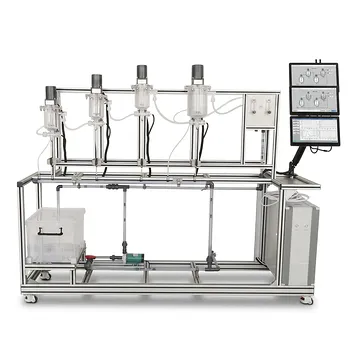
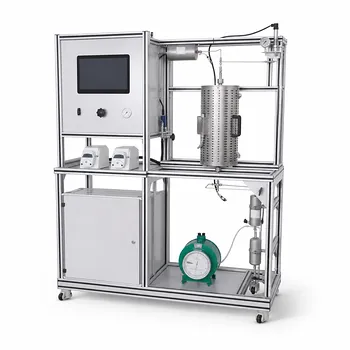
Scaling up is where most promising bioprocesses unravel. Traditional stirred-tank bioreactors grapple with a cluster of technical and economic limitations that intensify as vessel size increases—primarily inadequate heat removal, excessive power consumption, mechanical shear damage to cells, and substrate losses that lower overall yields. Educational pilot plants expose these pain points directly, then pivot to a suite of alternative reactor designs—from airlift mammoth loops to packed-bed systems—that re‑engineer how energy is delivered to the broth and how mass transfer is sustained.
While stirred-tank reactors remain the universal baseline, their scale‑up trajectory is bounded by diminishing heat‑transfer capacity and rapidly climbing agitation power. Educational pilot plants respond by demonstrating alternative configurations that separate mixing from high‑shear mechanical internals, thereby slashing energy costs and shielding shear‑sensitive cells while preserving oxygen transfer and productivity.
Why Stirred-Tank Bioreactors Hit a Wall During Scale‑Up
The very features that make a bench‑top stirred vessel predictable become liabilities at pilot and production scales. The primary mechanism—a rotating impeller—creates a cascade of interdependent problems that no single design tweak can fully resolve.
The Heat‑Removal Bottleneck
Metabolic activity and agitated mixing generate heat that must be stripped away to maintain a stable temperature. As vessel volume grows, the surface‑to‑volume ratio collapses. Jacketed walls that suffice at 5 liters become inadequate at 500 liters, because heat generation scales with volume (≈L³) while heat‑transfer area scales with surface (≈L²). Pilot‑scale jacketed vessels often require elaborate external heat exchangers or cooling coils, adding capital cost and cleaning complexity. If jacket design is not carefully integrated, the external pressure on the inner shell can even risk vessel collapse.
The Power‑and‑Cost Spiral
Maintaining a constant power‑to‑volume ratio (P/V) and the resulting oxygen transfer rate (OTR) is the classic scale‑up rule. Yet a geometrically similar larger vessel demands substantially higher impeller power, which in turn generates more heat—a vicious circle. The electrical and utility costs can become prohibitive, particularly when handling high‑viscosity, non‑Newtonian broths that resist mixing. In educational pilot plants, students observe that simply scaling up the impeller rpm to match OTR pushes energy bills and equipment stress beyond practical limits.
Cell Damage from Mechanical Shear
The same energy that disperses gas bubbles into oxygen‑transporting microbubbles can tear apart cells. Impeller tip speed is a critical parameter: above a certain threshold, shear forces lyse mammalian cells, fragment filamentous fungi, or strip away the productivity of plant cells. When a stirred tank is scaled up, local energy dissipation rates near the impeller blades rise dramatically, creating a “kill zone” that reduces viable cell density and overall yield.
Yield Erosion Through Substrate Loss and Micro‑environments
Non‑ideal mixing in large stirred tanks creates concentration gradients, dead zones, and bypass streams. Cells experience feast‑or‑famine conditions that push metabolism toward by‑product formation rather than product synthesis. These substrate losses, coupled with lower overall mass transfer efficiencies, directly erode the yield that was achievable in a well‑mixed small‑scale flask, making the process economically unviable.
The Hidden Costs: Economic Implications of Scale‑Up
Beyond technical performance, stirred‑tank scale‑up imposes economic penalties that are often overlooked until the pilot‑plant stage.
Jacket and Agitator Costs Are Not Linear
Moving from a benchtop glass vessel to a jacketed pilot‑scale stirred tank involves a cost jump that cannot be estimated with a simple pressure‑vessel formula. The heating/cooling jacket, agitator drive, seals, and potential glass‑lining account for a dominant share of equipment expense. Educational pilot plants often reveal that the jacket cost alone matches or exceeds the shell cost, forcing students to balance thermal duty against structural integrity at low operating pressures typical of bioprocessing (mostly <20 bar).
Rethinking Reactor Design: Alternative Configurations for Pilot Plants
To break the stirred‑tank deadlock, educational pilot plants adopt alternative bioreactors that re‑route energy input away from a high‑shear impeller. These designs are grouped by how energy is introduced, giving students a systematic framework for comparison.
Reactors with Mechanically Moved Internals—But Smarter
One class retains mechanically driven parts but re‑engineers the flow pattern. Stirred‑loop reactors and cascade reactors use impellers within a draft tube or multiple compartments to create a directed, orderly circulation. This approach can unify the vessel’s mixing time, lower local shear peaks, and still deliver sufficient power for high‑density microbial cultures. They offer a gentle on‑ramp for those accustomed to stirred tanks while demonstrating improved heat and mass transfer scaling.
External Liquid Pumping: Jet‑Loop and Packed‑Bed Systems
Shifting energy input entirely outside the culture chamber, jet‑loop (plunging jet) reactors use an external pump to recirculate liquid through a nozzle. The plunging jet entrains gas and creates intense mixing at the point of impact, then the loop circulation ensures uniform conditions. This design needs far less power for equivalent oxygen transfer and eliminates the high‑shear impeller zone, making it ideal for shear‑sensitive mammalian or plant cells.
Packed‑bed bioreactors fall into the same category, using external liquid circulation to perfuse a fixed bed of immobilization carriers. The biocatalyst or cells are physically retained, enabling continuous operation, high cell densities, and integrated product recovery without a mechanical agitator inside the bed.
Gas Compression: Bubble Columns and Airlift Loop Reactors
The most radical departure relies on density‑driven circulation triggered by sparged gas. In a bubble column, a simple vertical cylinder, the rising bubbles create mild mixing. Airlift loop reactors go further, using a draft tube or an external loop to organize flow: gas‑sparged riser (lower density), downcomer (higher density), creating a stable, low‑shear circulation. Mammoth‑loop designs extend this principle to very large volumes.
These pneumatically agitated systems virtually eliminate mechanical shear, drastically reduce power draw (only compression work), and scale‑up gracefully because the circulation pattern remains self‑similar. For waste treatment, filamentous fungi, or animal cells, airlift reactors often outperform stirred tanks in both economy and robustness.
More Specialized Designs for Complete Immobilization
Educational pilot plants may also feature hollow‑fiber bioreactors—where cells grow in the extra‑capillary space fed by semipermeable membranes—perfect for integrated product separation and high‑density perfusion. Fluidized‑bed bioreactors suspend particles with an upward fluid flow, providing intense mass transfer for immobilized enzymes or cells, while mechanically stirred photobioreactors bring light into the vessel for microalgae cultivation. These niche units round out the student’s understanding of how the biological system dictates reactor choice.
The Educational Power of Hands‑On Comparison
Having a stirred tank, an airlift, and a packed‑bed reactor side‑by‑side in a pilot plant transforms abstract theory into visceral experience.
Measuring What Matters: kLa, Mixing Time, and P/V
Students can experimentally determine the mass transfer coefficient (kLa) under identical gas flow rates, measure mixing times with tracer pulses, and compute the actual power draw per unit volume. These experiments expose why a 10‑liter stirred tank might boast a kLa of 200 h⁻¹, while the geometrically similar 100‑liter cousin struggles to reach 100 h⁻¹—and why an airlift reactor can match it with half the energy. Pilot plants also let learners study how geometric similarity (aspect ratio, impeller size) and sparger design influence these parameters, bridging the gap between shaker‑flask screening and full‑scale production.
Bridging the Scale‑Up Factor Risk
Not all unit operations scale equally. Gas‑solid fluidized beds might have reliable scale‑up factors of only 50–100, while some columns can handle 1,000–50,000. Bioreactors sit in a riskier middle ground. Educational pilot plants serve as the intermediate step where students isolate the high‑risk mass‑transfer step, gather hydrodynamic and kinetic data at a representative scale, and validate computational simulations—exactly the workflow that reduces failure rates in industrial commercialization.
Understanding the Trade‑offs: No Universal “Best” Reactor
Adopting an alternative design solves some stirred‑tank problems but introduces new compromises. Objective evaluation is the core lesson.
- Airlift reactors offer low shear and low power, but their mixing intensity is limited; they may develop oxygen or pH gradients in tall vessels and can struggle with highly viscous broths.
- Packed‑bed and hollow‑fiber systems achieve extremely high cell densities, yet they are prone to channeling, clogging, and uneven perfusion, making scale‑up to larger bed diameters a complex fluid‑distribution problem.
- Jet‑loop reactors require careful nozzle and loop design to avoid cavitation and to guarantee complete broth circulation without settling, and their external pumps become another maintenance point.
- Fluidized‑bed reactors need a steady, well‑characterized fluidization velocity; changes in particle size or density can collapse the bed or wash out the catalyst.
A pilot plant that houses multiple designs allows students to map these trade‑offs directly onto their process requirements—preparing them not to champion one reactor, but to select the right one for the biology and the business.
Making the Right Choice for Your Educational Pilot Plant
The decision starts not with the hardware but with the curriculum and the cell line. Use the following goals to guide reactor selection:
- If your primary focus is versatile, high‑shear applications and detailed hydrodynamic study: Include a jacketed stirred‑tank pilot unit. It remains the industry workhorse and allows learners to measure impeller power draw, tip speed, and kLa under classic scale‑up rules.
- If your primary focus is teaching low‑shear bioprocessing for animal cells, plant cells, or filamentous organisms: Add an airlift (mammoth loop) or a bubble column. They demonstrate energy‑efficient, pneumatically driven mixing and let students contrast shear‑free performance with mechanical agitation.
- If your primary focus is energy efficiency and continuous waste‑treatment processes: A jet‑loop or tubular‑loop reactor shows how external liquid pumping can sustain high mass transfer at reduced power, a lesson directly transferable to industrial wastewater bioreactors.
- If your primary focus is continuous perfusion culture or enzyme immobilization: Introduce a packed‑bed or hollow‑fiber unit. These teach perfusion principles, biocatalyst retention, and the challenges of distributing flow evenly across a bed of carriers or fibers.
The pilot‑plant experiment that sticks with a student is the one where they face a real scale‑up bottleneck and then, with their own data, choose the reactor that makes that bottleneck disappear. Give them the tools to do that, and you’ve built a capable engineer.
Summary Table:
| Reactor Type | Key Scale-Up Benefit | Ideal Educational Application |
|---|---|---|
| Stirred-Tank | Industry baseline for standard scale-up metrics | Classic hydrodynamic & power studies |
| Airlift Loop | Low shear, energy-efficient density circulation | Shear-sensitive animal & plant cells |
| Jet-Loop | High mass transfer via external pumping | Continuous waste treatment, mammalian cells |
| Packed-Bed | High cell density without mechanical agitation | Continuous perfusion & enzyme immobilization |
Elevate Your Bioprocess Training with LABPARK
Bridge the gap between theory and industrial reality. LABPARK provides state-of-the-art Educational and Vocational Unit Operations Pilot Plants in chemical engineering, bioprocess & biotech, and environmental & water treatment.
Specifically designed for universities, research institutes, and enterprises, our modular pilot systems empower students and researchers to analyze scale-up limits, measure key kinetic parameters, and compare alternative bioreactor configurations side-by-side.
Ready to upgrade your lab and enrich your curriculum? Contact us today to request a quote or custom consultation!
Related Products
- Multi-Stage Stirred Tanks in Series Residence Time Distribution and Mixing Performance Determination Educational Pilot Plant
- Multi-Reactor Educational Pilot Plant for Reaction Engineering Unit Operations
- Multi Functional Catalytic Reaction and Reactor Evaluation Educational Unit Operations Pilot Plant
- Ethylbenzene Dehydrogenation Educational Unit Operations Pilot Plant
People Also Ask
- How does MRF model impeller rotation in CFD? Key Boundary Conditions Explained
- How can a CSTR pilot plant demonstrate reactor staging? Visualize volume savings.
- How does steady-state multiplicity affect the operation and safety of exothermic reactions within a CSTR pilot plant? - Guide
- What parameters to monitor transitioning from Batch to CSTR? Master Pilot Plant Setup
- Why is temperature regulation via a cooling jacket a critical feature in CSTR pilot plants used for laboratory training?