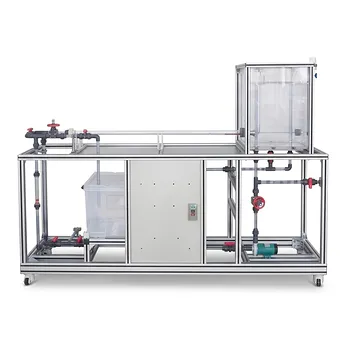
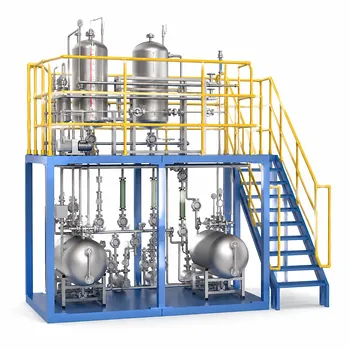
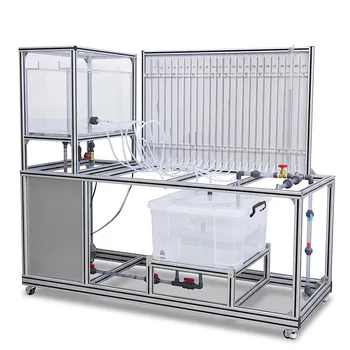
The right flow meter depends on the fluid, the measurement objective, and the operating constraints. Coriolis meters are generally the strongest choice for accurate mass-flow measurement and sanitary bioprocess service; orifice meters offer economical, broadly applicable differential-pressure measurement; magnetic meters suit conductive liquid streams with minimal pressure loss; and rotameters provide simple local volumetric indication. Selection should account for fluid phase and properties, required accuracy and rangeability, allowable pressure drop, sanitary requirements, installation conditions, and total cost.
There is no universally best flow meter. Choose Coriolis when mass balance, dosing accuracy, or hygienic operation dominates; magnetic when the stream is conductive and pressure loss must be minimized; orifice when economical general-purpose measurement is acceptable; and rotameters when simple visual monitoring is sufficient.
Start With the Measurement Requirement
Define What Must Be Measured
The first decision is whether the process requires mass flow, volumetric flow, or only a local indication of flow rate. This distinction matters because Coriolis meters measure mass flow directly, while magnetic meters, orifice meters, and rotameters primarily indicate volumetric flow.
Mass flow is especially valuable for material balances, precise dosing, feed control, and reaction monitoring. Volumetric measurement may be adequate for utility water, constant-composition liquid loops, or instructional demonstrations.
Establish Accuracy and Rangeability
Specify the expected minimum, normal, and maximum flow rates before selecting the meter. A meter that is accurate only near its design point may be unsuitable for pilot plants, where experiments often cover a wide operating range.
The required turndown ratio, repeatability, and response time should be matched to the experiment. High-accuracy Coriolis meters are appropriate for demanding measurements, while rotameters may be sufficient for operator adjustments and approximate monitoring.
Characterize the Process Fluid
Collect the fluid's phase, density, viscosity, temperature, pressure, conductivity, and composition data. For gases and vapors, compressibility and operating conditions are also important.
The Reynolds number and flow regime affect differential-pressure measurements and meter calibration. If density or composition changes significantly during an experiment, the transmitter may require pressure and temperature inputs, and a separate density measurement may be necessary.
How Each Meter Works
Coriolis Meters: Direct Mass-Flow Measurement
A Coriolis meter drives one or more vibrating flow tubes. As fluid passes through the vibrating tubes, Coriolis forces produce a measurable phase shift or tube deflection related to mass flow rate.
Many Coriolis meters also provide density and temperature information. This makes them useful for precise dosing, material balances, reaction monitoring, and streams whose temperature, pressure, viscosity, or composition varies.
Orifice Meters: Differential-Pressure Measurement
An orifice meter places a thin plate with a restricted opening in the pipeline. The restriction creates a pressure difference between the upstream and downstream sides, and the flow rate is calculated from that differential pressure.
The relationship is fundamentally nonlinear: flow is inferred from the square root of the measured pressure difference, subject to the meter geometry, fluid properties, and discharge coefficient. Orifice meters are mature and applicable to liquids, gases, and steam when properly designed.
Magnetic Meters: Electromagnetic Measurement
A magnetic flow meter generates a magnetic field across the flow tube. When a conductive liquid moves through that field, it induces a voltage proportional to velocity, which the meter converts into volumetric flow.
Because the flow path has no internal moving parts or primary obstruction, magnetic meters introduce very little permanent pressure loss. They are well suited to conductive aqueous solutions, corrosive liquids, slurries, and utility or wastewater streams.
Rotameters: Variable-Area Measurement
A rotameter uses a tapered tube and a float. As upward flow increases, the float rises until drag and buoyancy balance its weight, and the float position indicates the volumetric flow rate.
Rotameters are simple, inexpensive, and easy to read locally. They are particularly useful for purge gas, utility liquid, laboratory demonstrations, and manual adjustment of small pilot-plant streams.
Apply the Main Selection Criteria
Sanitary Design and Cleanability
Bioprocess service places high value on smooth, obstructionless, cleanable flow paths. The meter should be compatible with cleaning-in-place and, where required, sterilization-in-place procedures, as well as the process materials and connection standards.
Coriolis meters are often preferred in bioprocess pilot plants because their flow tubes can provide a smooth, enclosed conduit with no conventional internal obstruction. A magnetic meter can also be suitable for hygienic liquid service when its lining, electrodes, seals, connections, and installation meet the process requirements.
Fluid Conductivity
Conductivity is a decisive criterion for magnetic meters. They require a liquid that can conduct electrical current, so they are unsuitable for gases, vapors, hydrocarbons with insufficient conductivity, and many nonconductive organic solvents.
Coriolis meters do not rely on conductivity and can measure many liquid and gas streams, subject to the selected meter's pressure, temperature, phase, and application limits.
Pressure-Drop Tolerance
Orifice meters impose a permanent pressure loss because the restriction converts part of the available pressure into unrecovered loss. This may be acceptable in a standard chemical pilot loop but problematic when pump head, energy use, cavitation margin, or process pressure is limited.
Magnetic meters generally have very low pressure loss, and Coriolis meters provide an unobstructed internal flow path, although their pressure drop still depends on tube geometry, line size, and flow conditions. Rotameters also create a pressure drop that must be included in the system design.
Mechanical Installation
Orifice meters require suitable upstream and downstream piping conditions so the velocity profile is adequately developed. Incorrect straight-run lengths, nearby valves or fittings, poor tapping arrangements, and unsuitable orientation can introduce measurement error.
Rotameters normally require vertical installation with upward flow and clear visibility of the float. Coriolis and magnetic meters also require attention to orientation, full-pipe conditions, supports, vibration, drainage, and access for maintenance.
Fluid State and Flow Regime
For liquids, confirm that the meter remains full where required and that gas entrainment will not compromise the measurement. For gas and vapor service, pressure and temperature changes must be considered because volumetric flow can vary substantially with operating conditions.
Orifice performance depends strongly on flow conditions and calibration parameters, including Reynolds number. Coriolis meters can measure mass directly, but two-phase flow, entrained gas, pulsation, and unstable process conditions may still affect performance.
Cost and Lifecycle Value
Orifice meters usually have a lower initial cost and are widely understood by process engineers and operators. Their total installed cost, however, includes the primary plate, pressure taps, impulse lines, differential-pressure transmitter, valves, calibration, and the energy cost associated with permanent pressure loss.
Rotameters are economical and simple but provide limited automation unless additional signaling is added. Coriolis meters typically cost more initially, but their direct mass measurement and additional density information can justify the investment in high-value or high-accuracy experiments.
Understanding the Trade-offs
Coriolis Accuracy Versus Cost and Installation Sensitivity
Coriolis meters offer strong measurement capability for dosing and mass balances, but they are generally more expensive than orifice meters and rotameters. They may also be sensitive to mounting, vibration, pulsating flow, entrained gas, and two-phase conditions.
Their suitability should be judged against the actual process requirement. A high-accuracy mass-flow meter is unnecessary if the pilot plant only needs a local indication for manual flow adjustment.
Orifice Economy Versus Pressure Loss and Maintenance
Orifice meters are versatile and economical, but the restriction causes permanent pressure loss and can increase pumping or compression requirements. The pressure taps and impulse system also introduce additional installation and maintenance demands.
They are less convenient for highly sanitary applications when the plate, taps, or associated dead spaces conflict with cleaning requirements. Accurate results depend on correct geometry, installation, calibration, and compensation for changing process conditions.
Magnetic Applicability Versus Conductivity Limits
Magnetic meters provide low-loss measurement without moving parts, but they work only with sufficiently conductive liquids. They cannot measure gas streams and are not a general replacement for Coriolis or differential-pressure meters.
The meter must also remain properly filled, and the lining and electrode materials must be compatible with the process chemistry and cleaning regime.
Rotameter Simplicity Versus Limited Data
Rotameters are easy to understand and valuable for local observation, but they normally provide a visual volumetric reading rather than a transmitted process variable. They are therefore less suitable for closed-loop control, automated data acquisition, or rigorous material balances without additional instrumentation.
Their calibration depends on fluid density and other service conditions. A calibration established for one liquid should not be applied directly to a gas or to a substantially different fluid without appropriate correction.
Match the Meter to the Pilot-Plant Duty
Bioprocess Feed and Dosing Lines
Use a Coriolis meter when accurate mass flow, sanitary operation, repeatable dosing, or material-balance closure is important. Confirm compatibility with CIP/SIP, process connections, tube drainage, vibration control, and the expected presence of bubbles or multiple phases.
Conductive Aqueous and Corrosive Liquid Loops
Use a magnetic meter for conductive liquids when low pressure loss and minimal maintenance are priorities. This is often appropriate for aqueous solutions, utility water, wastewater-like streams, and compatible corrosive liquids.
General Chemical Pilot-Plant Streams
Use an orifice meter when the fluid can tolerate pressure loss, the piping can provide suitable installation conditions, and the project benefits from a mature, economical technology. Provide accurate pressure, temperature, density, and calibration data when process conditions vary.
Local Utility and Demonstration Measurements
Use a rotameter when operators need a simple, immediate indication of local volumetric flow. It is well suited to manual setting, purge streams, and educational pilot systems where visual feedback is part of the objective.
Making the Right Choice for Your Goal
The following priorities provide a practical starting point for a pilot-plant specification:
- If your primary focus is sanitary bioprocessing: Select a cleanable Coriolis meter when direct mass flow, dosing accuracy, and material-balance quality are important.
- If your primary focus is low pressure loss: Select a magnetic meter for a full, sufficiently conductive liquid stream.
- If your primary focus is low initial cost and broad chemical applicability: Select an orifice meter after verifying pressure-drop tolerance, straight-run requirements, and differential-pressure instrumentation.
- If your primary focus is simple local operation: Select a rotameter for visual volumetric monitoring, provided its orientation and fluid-specific calibration are controlled.
- If your primary focus is changing composition or density: Favor Coriolis measurement or provide the pressure, temperature, and density compensation needed to preserve the validity of a volumetric measurement.
- If your primary focus is gas or vapor measurement: Exclude magnetic meters and evaluate Coriolis or differential-pressure technology against phase behavior, pressure, temperature, and installation constraints.
A disciplined selection begins with the process fluid and measurement objective, then balances accuracy, sanitary design, pressure loss, installation, rangeability, and lifecycle cost.
Summary Table:
| Flow Meter | Working Principle | Best Applications | Main Limitation |
|---|---|---|---|
| Coriolis | Measures mass flow through vibrating tubes | Sanitary bioprocessing, dosing, mass balances, variable-density fluids | Higher cost; sensitive to vibration, gas entrainment, and two-phase flow |
| Orifice | Calculates flow from differential pressure across a restriction | General chemical liquids, gases, and steam | Permanent pressure loss; requires proper installation and calibration |
| Magnetic | Measures voltage induced by conductive liquid movement | Conductive aqueous solutions, corrosive liquids, wastewater, utility loops | Cannot measure gases or nonconductive fluids; requires a full pipe |
| Rotameter | Indicates volumetric flow using a float in a tapered tube | Local monitoring, purge gas, utility streams, demonstrations | Limited automation and accuracy; requires fluid-specific calibration |
Select the right flow measurement solution for your pilot plant with LABPARK. We provide Educational and Vocational Unit Operations Pilot Plants covering chemical engineering, bioprocess and biotech, and environmental and water treatment applications. Our systems help universities, research institutes, and enterprises evaluate Coriolis, orifice, magnetic, and rotameter technologies while improving process understanding, dosing accuracy, data quality, and operator training. Contact LABPARK to discuss your fluid properties, accuracy requirements, sanitary needs, pressure-drop limits, and pilot-plant objectives.
Related Products
- Orifice and Venturi Flowmeter Calibration Educational Pilot Plant for Fluid Mechanics Laboratory
- Centrifugal Pump Performance and Orifice Flowmeter Calibration Educational Pilot Plant
- Quantitative Dosing and Liquid Flow Control Educational Unit Operations Pilot Plant
- Two Phase Flow Pattern Velocity Resistance Measurement Educational Pilot Plant
- Fluid Reynolds Number Demonstration Educational Unit Operations Pilot Plant
People Also Ask
- What is the difference between static and stagnation pressure? Master Pilot Plant Flow Measurement
- How is the hydrodynamic entrance length estimated for high-Re channel flows? Design accurate pilot-plant measurements
- How do velocity profiles and flow rates differ in Newtonian and power-law fluids? A Pilot Plant Guide
- How do pilot plants demonstrate siphon pressure variations? Visualizing Bernoulli's Energy Balance
- How does high-frequency pressure oscillation affect velocity distribution and boundary layer behavior? Discover Stokes-layer effects