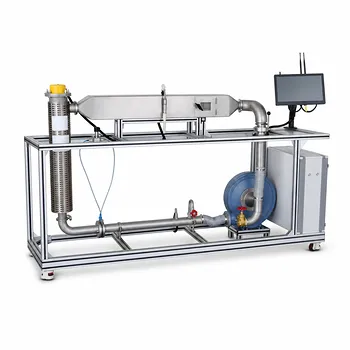
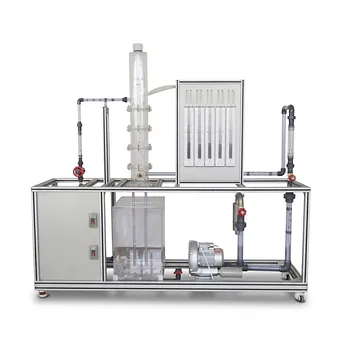
If you are scaling up a process where thermal damage, oxidation, or solvent emissions are unacceptable, the sealed, low-temperature environment of a vacuum tray dryer becomes a non-negotiable choice. In pilot-scale unit operations, the decision to move from an atmospheric convective tray dryer to a vacuum tray dryer hinges on three critical process conditions: the thermal stability of your material, its sensitivity to atmospheric oxygen, and the value or hazard of the liquid being removed. Unlike a standard dryer that blows hot air directly over the product, a vacuum dryer uses conduction heating from steam or hot water circulated through hollow shelves, all while the system is held under negative pressure. This fundamentally lowers the boiling point of moisture or solvents, allowing gentle drying at temperatures where your pilot-scale product remains chemically intact.
Core Takeaway: Select a vacuum tray dryer for your pilot-scale operation whenever the material's degradation temperature falls below the boiling point of the solvent at atmospheric pressure, or when exposure to oxygen will compromise product quality. The decision isn't about preference—it's about preserving the chemical identity of your product from bench scale to pilot scale.
The Real Value of Dropping the Pressure
The surface-level question is "when," but the deeper operational need is understanding why vacuum conditions radically change the drying kinetics and product quality outcomes in a pilot plant. If you are bridging the gap between laboratory synthesis and production, verifying these principles at pilot scale prevents catastrophic failures later.
Lowering the Thermal Stress on Heat-Sensitive Materials
Atmospheric tray dryers rely on convection. To evaporate water at ambient pressure, the circulating air often needs to be heated well above 100°C to provide sufficient driving force. If your active pharmaceutical ingredient (API), fine chemical, or biological sample denatures or degrades at, say, 60°C, you face an impossible trade-off.
In a vacuum system, reducing the chamber pressure to, for example, 50 mbar drops the boiling point of water below 35°C. By circulating low-pressure steam or hot water through the shelves, you can supply the latent heat for evaporation without the material ever exceeding a safe, low temperature. This is essential for pilot-scale work where you need to generate meaningful scale-up data for a heat-labile product.
Preventing Oxidative Degradation and Fire Hazards
Convective drying often means a continuous stream of oxygen-rich air passing over a product. For easily oxidizable compounds, this leads to unwanted by-products, discoloration, or a loss of potency.
A vacuum dryer operates as a sealed unit. The air is evacuated, creating an inert, oxygen-depleted environment. This simultaneously protects the product and eliminates the fire triangle. If your pilot process involves solvents with flammable vapors or materials that ignite on contact with hot air, processing under vacuum is a primary safety engineering control, not just a quality consideration.
Enabling Closed-Loop Solvent Recovery
In an atmospheric dryer, the evaporated solvent is typically vented into the atmosphere or a thermal oxidizer, resulting in environmental emissions and lost value. In many high-value chemical processes, this is unacceptable.
A vacuum tray dryer can be designed as a closed system with a surface condenser. The vapors pulled from the main chamber under vacuum are cooled back into a liquid state. This allows direct recovery of expensive or hazardous solvents at the pilot scale. The recovered solvent can often be re-used, dramatically improving process economics and eliminating environmental exposure risks that are particularly scrutinized during scale-up.
The Underlying Heat Transfer Mechanism
Atmospheric dryers struggle to transfer heat efficiently into the core of a static tray of material because they rely on a hot gas boundary layer. A vacuum dryer's conduction-based design reverses this bottleneck.
Conduction Contact Over Convection
With heated shelves making direct contact with the trays, heat flows straight into the wet material. The absence of air molecules under vacuum does not hinder this contact heat transfer. This becomes a massive advantage when you are drying viscous pastes or powders that offer high resistance to convective airflow. The lower temperature combined with conductive boiling from the bottom up often results in faster, more uniform drying for static tray operations compared to the hot-spot risks of a poorly designed airflow pattern.
Reaching Extremely Low Final Moisture Contents
The supplementary pressure factor also governs residual moisture. In atmospheric drying, the equilibrium moisture content is dictated by the relative humidity of the exhaust air. To get bone-dry product, you often need excessively hot and dry air, which in turn damages the material.
By pulling a hard vacuum at the end of a drying cycle, you physically shift the vapor-liquid equilibrium. This allows you to remove tightly bound moisture to reach a final moisture content that is physically unachievable at atmospheric pressure without overheating. For a pilot plant aimed at producing a hygroscopic powder for a stability study, this capability is decisive.
Understanding the Trade-offs
A vacuum tray dryer is not an automatic upgrade over a convective dryer. An objective pilot-plant selection must account for its significant limitations.
Higher Capital and Maintenance Costs
The vessel must withstand full vacuum, requiring thick walls, reinforcing ribs, a vacuum pump package, and precision-sealing doors. This makes the upfront capital cost substantially higher than a simple atmospheric oven.
Batch Containment and Operational Complexity
Loading and unloading are more labor-intensive. The drying run cannot be monitored by simply opening a port—doing so breaks the vacuum and disrupts the process. The cycle time is also extended by the pump-down phases and the careful break of vacuum at the end of the run, often requiring nitrogen injection to prevent moisture regain.
Overkill for Robust Materials
If your material is stable at 120°C and the solvent is water with no recovery value, an atmospheric convective dryer is cheaper, simpler, and mechanically more robust. Using a vacuum dryer for a robust food ingredient introduces unnecessary complexity without a quality payoff.
Making the Right Choice for Your Pilot Plant Goal
Your selection should be driven entirely by the sensitivity of the product and the value of the vapor stream, not by a general preference for advanced technology.
- If your primary focus is scaling a heat-labile or easily oxidized product: Choose the vacuum tray dryer. The lower operating temperatures and oxygen-deprived environment are essential to recreate pharma-grade quality outputs in a pilot setting.
- If your primary focus is recovering a high-value or hazardous solvent: Choose the vacuum tray dryer. The closed-loop operation provides a clear economic and regulatory advantage during pilot runs.
- If your primary focus is drying a thermally robust, inert commodity material: Choose the atmospheric convective tray dryer. It offers superior simplicity, lower cost, and faster turnaround for non-sensitive pilot trials.
- If your primary focus is demonstrating process fundamentals for a learning laboratory: Install both. A comprehensive pilot facility will map how pressure reduction shortens drying time for temperature-limited products, creating a powerful side-by-side teaching comparison.
In the end, the right dryer aligns with the chemical limits of your product, not just the water on its surface.
Summary Table:
| Feature / Condition | Vacuum Tray Dryer | Atmospheric Convective Dryer |
|---|---|---|
| Heat Transfer Method | Conduction (heated shelves) | Convection (circulating hot air) |
| Operating Temperature | Low (vacuum lowers boiling point) | High (requires atmospheric boiling) |
| Oxygen Exposure | Extremely Low (inert environment) | High (continuous airflow) |
| Solvent Recovery | Easy (closed-loop with condenser) | Difficult (typically vented) |
| Ideal Materials | Heat-sensitive, toxic, or oxidizable | Thermally stable, non-hazardous |
Optimize Your Unit Operations with LABPARK
Are you looking to equip your laboratory with advanced drying and scaling technology? LABPARK provides premium Educational and Vocational Unit Operations Pilot Plants in chemical engineering, bioprocess & biotech, and environmental & water treatment. Designed specifically for universities, research institutes, and enterprises, our pilot plants bridge the gap between theory and industrial practice.
Contact LABPARK today to find the perfect pilot-scale solution for your research and training needs!
Related Products
- Multi-Functional Drying Educational Unit Operations Pilot Plant
- Continuous Sieve-Plate Distillation Pilot Plant for Unit Operations Laboratory Education
- Circulating Wind Tunnel Drying and Convective Heat Transfer Coefficient Determination Educational Pilot Plant
- Plate Column Hydrodynamics Tray Demonstration Educational Pilot Plant
- Multi-Functional Special Distillation Educational Pilot Plant
People Also Ask
- Vacuum vs. Atmospheric Drying: How to Choose the Right Pilot Plant Configuration for Your Lab
- How do seasonal changes affect drying pilot plant blower requirements? Key sizing tips.
- Why is dry-basis moisture content preferred over wet-basis? Simplify your drying pilot plant balances.
- Why Does a Pilot Plant Solver Return a Singular Matrix Error, and How Can You Resolve It?
- How can pilot plants demonstrate a control strategy in a design space? Practical QbD implementation.