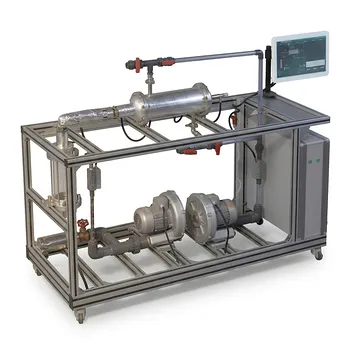
For pilot-scale heat exchangers handling aggressive chemistries, material selection is a make-or-break decision. Impermeable, resin-impregnated graphite is the go-to choice when your process stream contains corrosive non-oxidizing acids (like hydrochloric, sulfuric, or phosphoric acid) and a broad range of organic solvents—provided you stay away from highly oxidizing acids (e.g., nitric acid) at concentrations above 30%. Its combination of exceptional thermal conductivity and near-universal chemical inertness makes it uniquely suited for pilot plant heat transfer where flexibility and safety are paramount.
The core takeaway: Resin-impregnated impermeable graphite shines in pilot plant heat exchangers operating with corrosive, non-oxidizing liquids at moderate temperatures. It bridges the gap between expensive exotic alloys and limited-service metals, but it demands careful boundary-setting around oxidizing agents and thermal limits to prevent catastrophic failure.
The Chemical Compatibility Sweet Spot
Impermeable graphite’s defining strength lies in its ability to handle fluids that would rapidly corrode stainless steel or even high-nickel alloys. This is particularly valuable in pilot plants, where experimental campaigns often swing between different chemistries.
Broad Resistance Across Acid and Solvent Families
The resin-impregnated structure seals the natural porosity of graphite, creating a solid, non-permeable barrier. It resists attack from non-oxidizing acids (HCl, H₂SO₄ up to certain concentrations, H₃PO₄), alkalis, salt solutions, and nearly all organic solvents. This makes it a single-material solution for multipurpose pilot units.
The Line You Must Not Cross: Oxidizing Acids
The primary chemical red line is nitric acid (HNO₃) above 30% concentration. Other strong oxidizers, like hot concentrated sulfuric acid or chromic acid, also spell disaster. Even brief exposure can degrade the resin binder and attack the graphite substrate, leading to structural failure and leaks—exactly the kind of hazard emphasized in pilot plant safety protocols.
Beyond Chemistry: Temperature and Pressure Limits
Chemical compatibility alone doesn’t govern the recommendation. The process conditions of pilot plants often push temperature, and impermeable graphite has a distinct thermal ceiling.
The Thermal Ceiling of Resin-Impregnated Graphite
While graphite itself is highly refractory, the impregnating resin limits the maximum service temperature. Typical phenolic or furan resin systems cap useful life around 180–220°C (350–430°F). Exceeding this threshold causes resin degradation, loss of impermeability, and rapid corrosion-mess. For truly high-temperature pilot operations—where ceramics like alumina or zirconia take over—graphite is not the answer.
Moderate Pressure, High Responsibility
Pilot plants often operate at lower pressures than full-scale production, but thermal cycling and gasket integrity still matter. Impermeable graphite heat exchangers (especially shell-and-tube) handle moderate pressures well, yet their brittleness requires careful mechanical design. Every flange, gasket, and tube-sheet seal becomes a potential leak path, so the system’s safety relief and sealing integrity must be rigorously designed.
Understanding the Trade-offs
No material is perfect. Recommending impermeable graphite means acknowledging where it falls short and why alternatives might be chosen.
When Ceramics or Metals Win
For extreme temperatures and highly oxidizing environments (e.g., high-temperature nitric acid service or furnaces), ceramics like alumina and zirconia are superior, despite lower thermal conductivity. If your pilot plant’s heat exchanger must handle nitric acid above 30% at any temperature, graphite is immediately ruled out—exotic alloys or ceramic-lined units become necessary.
The Flexibility Limit
Impermeable graphite’s brittleness makes it less forgiving to rough handling or rapid thermal shocks than metallic exchangers. In a pilot plant where setups change frequently, the risk of mechanical damage during reconfiguration is real. Additionally, while double-pipe exchangers offer flexibility for small loads, scaling up graphite shell-and-tube units to much larger areas is cost-effective but requires careful piping and support to avoid stress cracking.
Making the Right Choice for Your Pilot Plant
Your decision hinges on the fluids you plan to run and the temperature envelope you must maintain.
- If your process fluid is a corrosive, non-oxidizing acid or a blend of aggressive solvents at moderate temperatures (below 200°C): Impermeable graphite is your safest, most durable, and thermally efficient choice. It will minimize maintenance and corrosion-induced failures across multiple experimental campaigns.
- If your process involves nitric acid above 30% or other strong oxidizers: Do not use graphite. Explore high-chromium alloys, tantalum, or ceramic-lined exchangers designed specifically for such oxidizing conditions.
- If you need extreme high-temperature capability together with corrosion resistance: Choose advanced ceramics (alumina, zirconia) for the heat exchanger, accepting a trade-off in thermal conductivity and a higher upfront cost.
- If your pilot plant is for educational or fundamental demonstration purposes with non-oxidizing systems: A simple double-pipe impermeable graphite exchanger offers visibility, ease of cleaning, and safe demonstration of co-current and counter-current flow principles, all while teaching material compatibility.
Selecting impermeable graphite is about defining your chemical boundaries and respecting its thermal limits. Do that, and it becomes one of the most reliable, plug-and-play materials for corrosive heat transfer in a pilot environment.
Summary Table:
| Process Parameter | Recommended Conditions (Use Graphite) | Excluded Conditions (Avoid Graphite) |
|---|---|---|
| Chemical Compatibility | Non-oxidizing acids (HCl, H₂SO₄, H₃PO₄), alkalis, organic solvents | Oxidizing acids (HNO₃ > 30%), hot concentrated sulfuric acid, chromic acid |
| Temperature Range | Moderate temperatures (under 180°C – 220°C / 350°F – 430°F) | High temperatures exceeding 220°C (requires ceramics like alumina/zirconia) |
| Mechanical Design | Low to moderate pressures, stable configurations | Rapid thermal shock, high mechanical stress, frequent physical reconfigurations |
| Key Alternatives | Stainless steel or basic alloys (for non-corrosive media) | Exotic alloys (tantalum), ceramic-lined units (for strong oxidizers) |
Optimize Your Unit Operations with LABPARK
Choosing the right materials for heat transfer is critical to pilot plant safety and learning outcomes. LABPARK provides premium Educational and Vocational Unit Operations Pilot Plants in chemical engineering, bioprocess & biotech, and environmental & water treatment tailored for universities, research institutes, and enterprises.
Whether you need robust corrosion-resistant pilot systems or expert guidance on material selection, we are here to help. Contact our technical team today to configure the perfect pilot plant for your lab!
Related Products
- Shell and Tube Heat Exchanger Heat Transfer Coefficient Determination Educational Pilot Plant
- Three-Tube Heat Transfer Educational Pilot Plant for Unit Operations Training
- Comprehensive Multi-Modal Heat Transfer Unit Operations Pilot Plant for Engineering Training
- Dual Mode Heat Transfer Pilot Plant for Unit Operations Training
People Also Ask
- Why Apply LMTD Correction in Shell-and-Tube Pilot Plants & How to Determine It
- How is the fouling factor (Rd) evaluated? Key Pilot Plant Insights for Students
- How is fouling factor demonstrated using shell and tube pilot plants? Practical Lab Guide
- Why is simulating and calculating fouling factors crucial when operating educational heat exchanger pilot plants?
- Why Estimate Tube Wall Temp in Heat Exchangers? Master Pilot Plant Thermal Resistance