For rapid, low-level sulfate quantification in water treatment unit operation experiments, the turbidimetric method offers a practical solution. It works by precipitating sulfate as barium sulfate (BaSO₄) from an acidified water sample, then stabilizing the fine crystals with a special agent so the suspension’s turbidity can be measured. Accuracy hinges on four key operational steps: acidifying the sample to prevent interferences, adding a stabilizer to limit sedimentation, completing the photometric reading within 10 minutes, and concentrating the sample if the sulfate level drops below 10 ppm.
This method is ideal for sulfate concentrations under 100 ppm, delivering quick results that support real‑time process control. But the suspension is only stable for about ten minutes and samples below 10 ppm must be pre‑concentrated – overlooking either detail can compromise accuracy completely.
How the Turbidimetric Method Determines Low Sulfate Levels
The Precipitation‑Measurement Principle
The core chemistry is simple. In an acidified water sample, added barium chloride (BaCl₂) reacts with sulfate ions (SO₄²⁻) to form a white precipitate of barium sulfate. That precipitate is then held in suspension by a stabilizing agent rather than being allowed to settle.
You then quantify the turbidity – the cloudiness – of the suspension. The light blocked or scattered by the tiny BaSO₄ crystals is directly proportional to the sulfate concentration. The reading is taken on a turbidimeter, nephelometer, or spectrophotometer set to a wavelength of 240 mµ (240 nm), where the crystalline suspension absorbs and scatters light effectively.
The Role of the Stabilizing Agent
Without a stabilizer, the barium sulfate precipitate would settle rapidly, giving inconsistent signals. A stabilizing agent – often a glycerol or gelatin‑based solution – coats the crystal surfaces and prevents rapid flocculation. It promotes the formation of uniform, small crystals that stay suspended long enough for a reproducible measurement. This step is non‑negotiable for accuracy.
Critical Operational Steps That Ensure Measurement Accuracy
Acidifying the Sample Before Precipitation
The water sample must be acidified before adding barium chloride. Acidification – typically with dilute hydrochloric acid – prevents the precipitation of barium carbonate (from dissolved CO₂) and other interfering solids that would falsely elevate turbidity. It also sharpens the BaSO₄ precipitation, yielding a more uniform crystal size and a steadier signal.
Adding the Barium Chloride and Stabilizer in the Right Order
Operate in a sequence that guarantees a controlled precipitation. First, acidify a measured aliquot of the sample. Then add the barium chloride solution while gently swirling. Immediately afterward, introduce the stabilizing agent. The stabilizer must be present before large aggregates can form, so do not delay this step. Swirl thoroughly but avoid vigorous shaking that could shear the fragile crystals.
Measuring Within the 10‑Minute Stability Window
The suspension is only optically stable for approximately ten minutes. After that, crystal growth and settling reduce turbidity, resulting in a falsely low reading. Practically, this means you should:
- Prepare one sample at a time if you are working manually.
- Zero your instrument with a blank containing all reagents except sulfate just before measurement.
- Read the turbidity within 5–8 minutes, well within the safe window.
Concentrating Samples Below 10 ppm Sulfate
The detection limit for direct measurement is around 10 ppm. If the sulfate content is lower, the turbidity signal becomes too weak to distinguish from noise. In that case, you must concentrate the sample by gentle evaporation before analysis. The primary reference notes that a maximum sample size of 40 ml is typical; evaporate a known volume to a smaller volume (e.g., 10 ml) without boiling, then run the turbidimetric test. Always compare against a similarly concentrated blank to correct for any reagent‑borne turbidity.
Understanding the Trade‑offs and Limitations
Speed vs. Ultimate Precision
The turbidimetric approach is rapid and well‑suited for frequent, low‑range checks. However, it is inherently less precise than the gravimetric method (ignition and weighing of BaSO₄). Where regulatory or certification‑grade accuracy is mandatory, the gravimetric path remains the gold standard. Turbidimetry is at its best as a process‑control or teaching‑lab tool, not as a referee method.
Sensitivity to Sample Handling
Every manipulation affects the suspension. Variations in mixing speed, temperature, or stabilizer concentration change the crystal size distribution and, therefore, the measured turbidity. Consistency is paramount: use a fixed protocol, identical reagent volumes, and a single spectrophotometer. Even small deviations in timing or swilling technique can shift the reading outside acceptable error.
Natural Interferences and Background Turbidity
The method assumes that any turbidity comes only from barium sulfate. Real water samples can be tinted or carry suspended solids that scatter light at 240 nm. Always filter the sample if it is visibly cloudy, and run a sample blank (acidified, stabilized, but no barium chloride) to subtract the background. If organic color is high, consider a pre‑treatment step like digestion – though that goes beyond the basic turbidimetric scope.
Applying These Steps to Your Lab or Training Exercise
Once you understand the operational essentials, tailoring your approach to the specific measurement goal is straightforward.
- If your primary focus is measuring sulfate below 10 ppm: Always evaporate a known sample volume (up to 40 ml) to a small, accurately measured final volume before running the test. Factor in the concentration ratio when calculating the result, and run a concentrated reagent blank in parallel.
- If your primary focus is high‑throughput monitoring of boiler or cooling water: Standardize the reagent additions, use a stopwatch to guarantee every measurement falls within the 10‑minute window, and validate the method regularly against a gravimetric standard to keep process‑control decisions reliable.
- If your primary focus is a teaching laboratory where reproducible technique is being graded: Drill the sequence – acidify, add barium chloride, add stabilizer, swirl gently – and emphasize that a forgotten stabilizer or a rushed reading outside 10 minutes will directly impact the accuracy of the reported sulfate value.
When you master these steps, the turbidimetric method becomes a fast, dependable workhorse for water treatment experiments, giving you actionable sulfate data without the wait of more labour‑intensive procedures.
Summary Table:
| Operational Step | Action Required | Key Purpose |
|---|---|---|
| Acidification | Add dilute HCl before BaCl₂ | Prevents interfering precipitates (e.g., BaCO₃) and controls crystal size. |
| Stabilization | Add stabilizing agent (glycerol/gelatin) immediately | Prevents BaSO₄ crystals from settling, keeping them suspended. |
| Timing Control | Complete measurement within 5–10 minutes | Avoids errors caused by crystal growth and settling over time. |
| Concentration | Evaporate sample if sulfate < 10 ppm | Concentrates low-level samples to ensure a detectable turbidity signal. |
Bring Practical Water Treatment Engineering to Your Lab
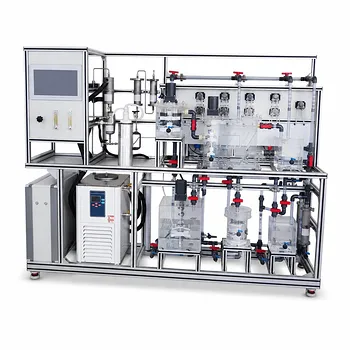
Are you looking to enhance hands-on training and research efficiency? LABPARK provides premium Educational and Vocational Unit Operations Pilot Plants in chemical engineering, bioprocess & biotech, and environmental & water treatment for universities, research institutes, and enterprises. Our pilot systems enable students and researchers to master crucial processes like water analysis, filtration, and chemical dosing in a simulated industrial environment.
Contact LABPARK today to find the ideal pilot plant solution for your facility!
Related Products
People Also Ask
- Lime-Soda vs. Cation Exchange Softening: How Do Effluent Characteristics Compare in Pilot Plants?
- How is iron concentration monitored to evaluate corrosion and filtration efficiency in water treatment pilot plants?
- What are inline fluorescence sensor risks, and how can they be managed? Key Strategies
- How do anodic & cathodic inhibitors protect heat exchangers? Optimize Your Water Treatment Pilot Plant
- How is P, M, and B alkalinity applied in pilot plants? Prevent Boiler Scaling & Corrosion