Flow measurement accuracy is not a one-size-fits-all standard. In industrial process plants and laboratory pilot systems, the acceptable deviation depends entirely on the application. For standard process control loops, the target tolerance is ±2%. For general operational monitoring, it widens to ±5%. However, for custody transfer—where fluid volume directly drives financial transactions—the requirement is virtually ±0%, demanding high-precision meters and rigorous calibration.
While a routine process loop can tolerate a 2% deviation and a monitoring point might allow 5%, custody transfer leaves almost no room for error. Understanding why each application demands a different tolerance is what transforms a technician into a true process professional.
Understanding Flow Measurement Tolerance Levels
The Three Tiers of Accuracy
Flow measurement applications fall into three distinct accuracy tiers.
The most demanding is custody transfer, where a target tolerance of ±0% is the norm. This is not a literal absolute zero, but rather a requirement for the highest achievable precision with provable, traceable accuracy.
Next is process control, where deviations must stay within ±2%. This tolerance keeps the process stable without requiring the extreme cost of custody-grade instruments.
Finally, general operational monitoring accepts a wider ±5% window. Here the measurement is for trending and overall health checks, not for tight control or billing.
Why Tolerance Ranges Vary by Application
The tolerance is not an arbitrary number; it is directly linked to the consequence of the error.
A 5% error on a cooling water flow indication may simply mean a pump is degrading slowly. But a 2% error on a reactor feed rate can shift product quality. And a fraction of a percent error in oil custody transfer can translate into millions of dollars in disputed revenue. The tighter the financial or safety consequence, the narrower the acceptable tolerance.
The Business and Safety Impact of Measurement Error
Process Control: The ±2% Balance
A 2% tolerance represents the point where stability and cost intersect.
A control loop that operates outside this window can induce oscillations, trigger false alarms, or cause the process to drift away from optimal conditions. In a pilot plant, this directly damages the learning value of the experiment. Students must learn to verify that a control meter performs within this 2% band, otherwise they are not seeing true process dynamics—they are seeing measurement artifacts.
Operational Monitoring: The ±5% Leeway
General monitoring tolerances are looser because the stakes are lower.
Here, a ±5% reading is sufficient to answer the question: “Is fluid actually flowing at roughly the expected rate?” It provides an overall health check without the maintenance burden of tighter calibration. In a training context, these meters are often the baseline tools students encounter first, helping them understand that not every sensor needs laboratory-grade precision.
Custody Transfer: The ±0% Imperative
Custody transfer is unique because the measurement itself is the product.
For pipelines, tanker loading, or utility steam contracts, the flow reading determines the invoice. The target of ±0% forces a culture of continuous provable performance. This is achieved through redundant meters, master-meter provers, and frequent on-line calibration. For students training on pilot plants, developing a zero-error mindset here builds a profound respect for calibration procedures—a habit that raises the bar across all other measurement activities.
Understanding the Trade-offs
Higher Accuracy Comes at a Price
The pursuit of tighter tolerance brings escalating costs.
A custody-transfer-grade Coriolis meter with ±0.1% actual accuracy can cost ten times more than a standard orifice plate with a differential pressure transmitter. In a pilot plant, that budget difference matters. Trainers must teach that selecting a meter is not about picking the “best” spec, but about matching the tolerance to the economic reality of the application. Over-specifying a monitoring meter wastes capital; under-specifying a control meter introduces process risk.
The Calibration Burden
Tighter tolerances don’t just cost more upfront. They demand continuous attention.
A meter calibrated to hold ±0.5% will drift out of tolerance far sooner than one aimed at ±5%. That means more frequent calibration runs, more calibration standards, and more skilled technician time. In training, students must learn that the acceptance of a tighter tolerance is a promise to provide the maintenance infrastructure to support it.
Practical Training for Pilot Plant Operators
Translating Standards into Hands-On Drills
Pilot plant training must go beyond theory. Students should be given a “tolerance budget” for each loop.
An effective exercise is to provide a flowmeter with a known offset and ask the student to determine which application it can serve. If the error is 3%, can it be used for process control? No—it fails the 2% limit. But it could still serve for monitoring. This diagnostic thinking forces students to internalize the numbers.
Developing a Diagnostic Mindset
Mastering tolerance levels means adopting a diagnostic mindset.
When a control loop behaves strangely, the student’s first suspicion should not be the valve or the pump. It should be the measurement. A simple check against a calibrated reference can reveal whether the error falls within the 2% control tolerance. If it does not, calibration—not process tuning—is the first corrective action. This is the core instinct a pilot plant course must build.
Making the Right Choice for Your Training Goal
Aligning flow measurement tolerance with training objectives ensures students graduate with an instinct for appropriate precision.
- If your primary focus is process control acumen: Emphasize the ±2% standard relentlessly. Teach students to be suspicious of any loop where the flow measurement uncertainty approaches this limit.
- If your primary focus is custody transfer integrity: Build the course around the idea of provable zero-error performance. Invest in a master meter and make frequent calibration a daily ritual, not an afterthought.
- If your primary focus is broad plant familiarization: Use the ±5% monitoring threshold as a starting point, then progressively tighten the requirements as students advance, showing them why different applications demand different levels of rigor.
The right tolerance isn’t a single number—it’s a matching exercise between measurement confidence and the process need. Training that instills this hierarchy turns a simple meter reading into a professional judgment call.
Summary Table:
| Application Tier | Target Tolerance | Key Purpose / Consequence |
|---|---|---|
| Custody Transfer | ~±0% (High Precision) | Financial transactions, billing, and contract verification |
| Process Control | ±2% | Loop stability, chemical reaction feed rates, and product quality |
| Operational Monitoring | ±5% | General health checks, overall flow presence, and trend monitoring |
Elevate Your Process Control & Fluid Transport Training
To prepare the next generation of engineers and technicians, universities, research institutes, and enterprises need hands-on systems that accurately reflect industrial realities.
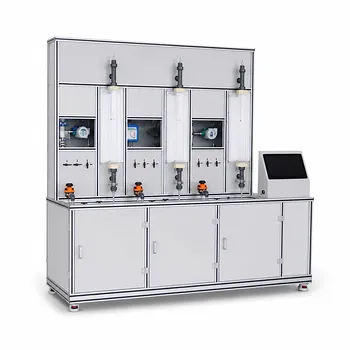
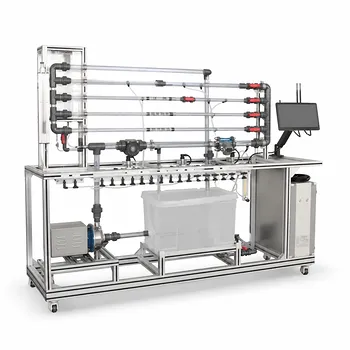
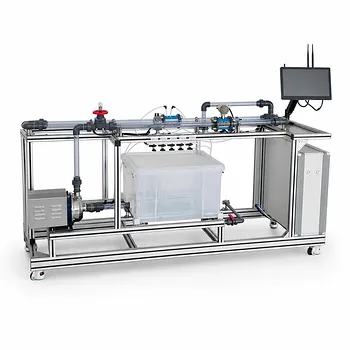
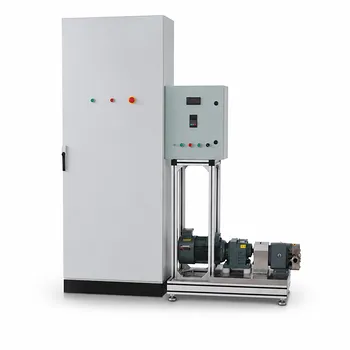
LABPARK provides high-quality Educational and Vocational Unit Operations Pilot Plants in chemical engineering, bioprocess & biotech, and environmental & water treatment. Our systems help students master real-world calibration, tolerance levels, and diagnostic workflows.
Ready to upgrade your lab? Contact LABPARK today to discover the ideal pilot plant solution for your training needs!
Related Products
- Two Phase Flow Pattern Velocity Resistance Measurement Educational Pilot Plant
- Fluid Friction Resistance Determination Educational Unit Operations Pilot Plant
- Orifice and Venturi Flowmeter Calibration Educational Pilot Plant for Fluid Mechanics Laboratory
- Quantitative Dosing and Liquid Flow Control Educational Unit Operations Pilot Plant
People Also Ask
- How to update chemometric calibration models in pilot plants? Best practices for process engineers.
- Why Correct Sig Figs & Rounding Matter in Educational Pilot Plants: Ensure Data Accuracy
- How does nuclear yield inefficiency translate to chemical engineering education? Optimize kinetics with pilot plants.
- How can educational pilot plants be used to teach process safety and risk assessment in chemical engineering curricula?
- How to identify two-phase gas-liquid flow patterns? Master fluid dynamics with pilot plants