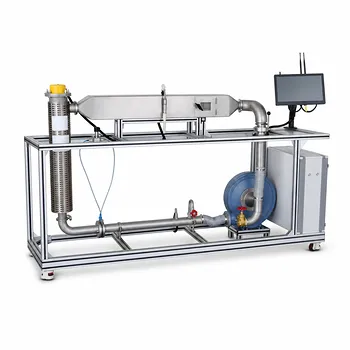
For a pilot-scale spray dryer, atomizer selection is fundamentally a choice driven by your feedstock’s viscosity, its tendency to clog, and the research flexibility you need. A centrifugal (rotary disc) atomizer excels with high-viscosity pastes and slurries, a pressure atomizer offers the lowest energy footprint for clean, thin liquids, while a pneumatic (two-fluid) atomizer emerges as the universal solution for academic labs where future projects are unpredictable. This guide unpacks the physics and trade-offs, so you can match the right technology to your core research goal.
The researcher’s compass is the feed itself: fragile emulsions and variable slurries demand a pneumatic atomizer’s clog‑free versatility, while demanding high‑viscosity suspensions require the robust power of a rotary disc. Choose the atomizer that preserves your experiment’s integrity, not one that forces your materials to adapt.
The Three Factors That Dictate Atomizer Choice
Before you ever look at a specification sheet, you must profile the liquid you intend to spray. The decision rests on three interconnected properties.
Feed Viscosity and Suspended Solids
Viscosity is the single most deterministic variable. Above about 1 Pa·s, pressure atomizers lose their ability to form a consistent spray, while beyond 2–3 Pa·s, a pneumatic atomizer can still break the feed into droplets if enough air is supplied. Rotary discs, however, easily handle liquids with viscosities up to 9 Pa·s, and they are inherently tolerant of suspended solids or abrasive crystals. If your research includes fermented broths, nanocellulose dispersions, or ceramic slurries, the centrifugal path is often the only viable one.
Tolerance for Clogging and Wear
Laboratory environments are defined by small‑scale trials and frequent formulation changes. Pressure atomizers, especially those with small orifice diameters (0.5–1.5 mm), are extremely prone to clogging if your sample contains even trace agglomerates or fibers. They also suffer from orifice erosion, widening over time and shifting your particle size distribution. A pneumatic nozzle, with its relatively large liquid passage and external air‑stream shearing, virtually eliminates clogging, making it ideal for samples that are filtered at 50 μm or less. A rotary disc, spinning at 10,000–20,000 r/min, simply flings the feed outward—there is no orifice to block.
Operational Flexibility for Research
A pilot plant is an instrument of discovery, not a fixed production line. You need to vary feed rate, concentration, and formulation. A centrifugal atomizer allows you to swing feed rates by ±25% with almost no change in droplet size, thanks to its disengagement mechanism. A two‑fluid nozzle achieves similar flexibility by adjusting the air‑to‑liquid ratio. In contrast, a pressure nozzle has a narrow sweet spot: change the feed pressure even moderately and you alter the droplet size dramatically, limiting your operating window. For curricula that demand students explore cause‑and‑effect, pneumatic and rotary discs provide a far richer experimental playground.
A Deep Dive into Each Atomizer Type
Understanding the mechanics behind each type reveals why one fits your unit operations plant better than another.
Centrifugal (Rotary Disc) Atomizers – The High‑Viscosity Specialist
A rotary disc atomizer uses centrifugal force to accelerate the feed across a carefully machined disc, creating fine ligaments that break into droplets. Its primary advantage is its ability to process thick, paste‑like feeds and materials with significant solid content. It never clogs because there is no positive restriction. The trade‑off? The disc must be manufactured with extreme precision and balanced for high‑speed rotation; a slight imbalance at 15,000 r/min leads to vibration, bearing failure, and irreproducible sprays. In a pilot plant, the disc’s size and speed are adjusted to match the desired droplet size, but such modifications require mechanical intervention, making it less “instant” than the other two.
Pressure Atomizers – The Energy‑Efficient, But Limited, Choice
Pressure nozzles (or swirl‑chamber nozzles) force the feed through a small orifice under high pressure (up to 70 bar), converting pressure energy into liquid kinetic energy. They consume the least power per kilogram of dried product, which is their one clear advantage. For a well‑filtered, low‑viscosity solution—like a pure sucrose or milk replacer—they can produce a narrow particle size distribution efficiently. However, their extreme sensitivity to feed properties and limited turn‑down ratio makes them a risky choice for a research‑grade pilot plant, where recipes change daily and cleaning is frequent.
Pneumatic (Two‑Fluid) Atomizers – The Versatile Workhorse for Research
These atomizers use a stream of compressed air (typically 100–700 kPa) to shatter a slow‑moving liquid filament or sheet. The air‑to‑liquid ratio is the master control, giving the operator instant, precise command over droplet size without altering the liquid feed pump. Because the liquid passage is large and the atomization happens externally, you can spray abrasive slurries, fibrous biologics, or sticky extracts with minimal risk of fouling. The cost of this versatility is energy: you need 0.4 to 0.8 kg of compressed air for every kilogram of feed. For a laboratory unit processing 1–5 kg/h, this is an acceptable utility trade‑off for unparalleled reliability and day‑to‑day research adaptability.
Understanding the Trade‑offs
No atomizer is perfect. Exposing the weaknesses ensures you don’t design an experiment around a device that will fail you.
- Energy and Utilities: Pneumatic atomizers require a reliable, oil‑free compressed air supply, adding a hidden infrastructure cost. Pressure and centrifugal systems are far more energy‑efficient for pure liquids, often a factor of three less.
- Mechanical Complexity: A rotary disc demands a high‑speed spindle and precision bearings, which require skilled maintenance and vibration monitoring. A pressure nozzle is mechanically simple but must be replaced frequently as it wears.
- Particle Size Control: While pneumatic nozzles offer exquisite control via the air‑to‑liquid ratio, they often produce a wider particle size distribution (span) than a properly tuned pressure nozzle or rotary disc. If you need a very narrow size cut for encapsulation validation, this must be weighed against the risk of clogging.
- Scale‑Up Fidelity: Pressure nozzles exhibit the most predictable scale‑up behavior (from pilot to production) because their atomization mechanism is fundamentally driven by a single parameter, ΔP. If your plant’s purpose is to mimic a large‑scale tower, a pressure nozzle may be required not despite its constraints, but because of their later industrial relevance.
Making the Right Choice for Your Research Goal
Your unit operations plant—whether for a pharmaceutical lab, a food science pilot, or a chemical engineering teaching platform—has a primary mission. Match the atomizer to that mission.
- If your primary focus is handling high‑viscosity pastes, slurries, or feeds with suspended particles: Select a centrifugal (rotary disc) atomizer. Its clog‑free design and ability to process liquids up to 9 Pa·s makes it the only device that will work reliably when your research pushes formulation boundaries.
- If your primary focus is demonstrating energy‑efficient spray drying on a well‑defined, clean, low‑viscosity solution: A pressure atomizer will deliver the lowest power consumption and a narrow particle size span, provided you accept limited flexibility and the need for precise filtration.
- If your primary focus is versatility for an academic or contract research laboratory where the next project is unknown: Choose a pneumatic (two‑fluid) atomizer. It handles everything from watery extracts to abrasive ceramics, allows instant flow ratio adjustments, and will not clog, keeping your experimental schedules intact.
The atomizer is not a peripheral accessory; it is the heart of the spray‑drying process. Align its strengths with the demands of your research, and you transform your pilot plant into a truly universal teaching and development platform.
Summary Table:
| Atomizer Type | Max Viscosity | Clogging Risk | Best Research Application |
|---|---|---|---|
| Centrifugal (Rotary) | High (Up to 9 Pa·s) | Very Low | High-viscosity pastes, slurries, and suspensions |
| Pressure | Low (< 1 Pa·s) | High | Clean, thin liquids; energy-efficient scaling |
| Pneumatic (Two-Fluid) | Medium (Up to 3 Pa·s) | Low | Multi-purpose R&D; variable formulations |
Optimize your research and teaching configurations with the right spray drying setup. LABPARK provides high-quality Educational and Vocational Unit Operations Pilot Plants in chemical engineering, bioprocess & biotech, and environmental & water treatment for universities, research institutes, and enterprises. Contact our experts today to customize your pilot plant with the ideal atomizer configuration for your research goals.
Related Products
- Multi-Functional Drying Educational Unit Operations Pilot Plant
- Circulating Wind Tunnel Drying and Convective Heat Transfer Coefficient Determination Educational Pilot Plant
People Also Ask
- Vacuum vs. Atmospheric Drying: How to Choose the Right Pilot Plant Configuration for Your Lab
- How do seasonal changes affect drying pilot plant blower requirements? Key sizing tips.
- Why is dry-basis moisture content preferred over wet-basis? Simplify your drying pilot plant balances.
- Why Use PTFE & Hastelloy in Chemical Pilot Plants? Prevent Corrosion & Ensure Safety
- How to study gasification in pilot plants? Compare exit gas composition & efficiency