Automated flow injection systems handle calibration by executing pre-programmed, multi-standard calibration cycles that build a dynamic calibration model, and they validate data through automated replicate measurements with statistical analysis.
This dual approach removes human intervention from the analytical loop while ensuring continuous bioprocess monitoring delivers high-integrity data. Periodically or on‑demand, the system aspirates known standards to refresh its calibration, then performs techniques like triple sampling and standard‑deviation checks to confirm stability before any result is trusted for real‑time process decisions.
The heart of reliable online bioprocess monitoring lies in embedding calibration and statistical validation directly into the automated analytical loop. Flow injection systems achieve this by cycling standards to update the response model and by auto‑measuring replicates to gate every data point, transforming raw biosensor signals into PAT‑ready information without manual oversight.
The Calibration Engine: How Automated Systems Establish and Maintain Accuracy
Pre‑Run Multi‑Standard Modeling
Prior to a measurement run, the system aspirates a set of known calibration standards.
It records the detector response (e.g., fluorimeter or spectrophotometer output) for each standard and constructs a calibration model—typically a linear regression relating signal to analyte concentration.
This model becomes the translation layer for all subsequent unknown samples.
On‑Demand and Periodic Recalibration
Biosensor drift or matrix changes can degrade accuracy over a long cultivation.
To compensate, calibration cycles can be programmed to run at fixed intervals or triggered manually without stopping the process.
Each refresh re‑models the response, ensuring the concentration values reported hours into a run remain as valid as those from the first injection.
Automated Baseline as a Calibration Foundation
Long‑term signal stability starts with a clean baseline.
Timing‑controlled solid‑state relays automatically pause pumps, record the baseline signal, and then resume flow for injection.
This automated baseline acquisition is part of the calibration‑validation rhythm, removing drift that would otherwise corrupt the model.
Ensuring Data Integrity Through Automated Validation
Replicate Measurements as a Statistical Gatekeeper
Instead of injecting a sample once and hoping for the best, the system can perform replicate injections (commonly triple sampling) for each measurement point.
It then calculates the standard deviation of the detector responses to quantify injection‑to‑injection consistency.
Standard Deviation as a Real‑Time Quality Flag
A low standard deviation confirms that the measurement is stable and the reported concentration is reliable for process control.
If the deviation exceeds a set threshold, the software can automatically flag the data, repeat the measurement, or alert an operator—replacing the post‑hoc quality checks typical of offline assays.
From Analog Millivolt Signal to Validated Digital Data
The biosensor’s analog millivolt output flows to an analog‑to‑digital converter, turning the voltage into digital values the computer can process.
The control software then applies the current calibration model, calculates the concentration, and logs the result together with its validation statistics, closing the analytical loop without a spreadsheet in sight.
The Architectural Backbone: Automation of the Full Analytical Cycle
Timing‑Controlled Pneumatic Actuation and Multi‑Way Valves
A timing‑controlled pneumatic actuator drives a multi‑way injection valve, ensuring precise, reproducible sample introduction into the carrier stream.
This hardware replaces manual injection syringes, eliminating human variability at the most critical step.
Sequencing Pumps, Valves, and Rinses with Solid‑State Relays
Solid‑state relays commanded by the computer interface orchestrate the entire sequence: baseline recording, sample injection, signal acquisition, and system rinsing.
Peristaltic pumps and valves fire in exact order, enabling continuous operation without an analyst’s hand.
Integrated Detection and Data Processing
The analyte—mixed with reagents or purified on‑line via a solid‑phase extraction column—passes through the detector.
The resulting signal is digitized, calibrated, and validated inside the same software environment that drives the automation, providing a total‑system solution for continuous monitoring.
Why This Matters: From Offline ELISA to Real‑Time PAT
The Labor Bottleneck of Traditional ELISA
Manual ELISA assays are labor‑intensive, time‑consuming, and deliver results hours after sampling.
With a typical relative error around 7%, they are poorly suited for dynamic process control where decisions must be immediate.
The FIA/FIIA Advantage in Numbers
An automated Flow Injection Immunoanalysis (FIIA) system paired with regression modeling can achieve an average relative error of 2.9–6.2% and a standard deviation of only 3.6–4.5%.
These metrics rival or surpass ELISA while delivering data in minutes, making the system a natural demonstration platform for Process Analytical Technology (PAT) in modern bioprocessing.
Built for Training and Scalable Knowledge
For vocational and educational settings, the transparent loop—pumps, valves, detector, calibration model—provides a tangible demonstration of how smart automation replaces manual wet chemistry.
It shows trainees that real‑time quality is not magic but engineered into every timed injection and validated data point.
Understanding the Trade‑offs and Limitations
Upfront Complexity and Maintenance Burden
While an automated system reduces daily manual work, it introduces fluidic complexity.
Pump tubing, valves, and columns require regular inspection and replacement to prevent leaks or carryover that could invalidate a calibration model.
Matrix Interference and Model Drift
Even with periodic recalibration, a changing fermentation matrix can shift the biosensor’s response in ways a simple multi‑standard curve does not capture.
In such cases, additional validation spikes or a more sophisticated chemometric model may be needed.
Data Density vs. System Load
Replicate measurements raise data confidence but consume more sample volume and increase cycle time.
A balance must be struck between validation rigor (e.g., triple replicates) and the measurement frequency required to follow a fast‑changing bioprocess parameter.
Making the Right Choice for Your Bioprocess Monitoring Goal
- If your primary focus is achieving real‑time PAT compliance: Prioritize systems that offer programmable multi‑standard calibration and automatic standard deviation calculation; these features ensure the data stream meets regulatory expectations for accuracy and repeatability.
- If your primary focus is reducing manual labor in a pilot plant: An automated FIA/FIIA loop will eliminate time‑consuming ELISA assays, freeing staff for higher‑value process optimization.
- If your primary focus is vocational training in automation: The transparent loop architecture—combining hardware actuation, signal digitization, and statistical validation—provides a hands‑on lesson in the principles that underpin modern bioprocess analytics.
By understanding how automated flow injection systems embed calibration and validation directly into the measurement stream, you can confidently deploy them as the real‑time analytical backbone of any modern bioprocess.
Summary Table:
| Feature / Aspect | Implementation Mechanism | Key Benefit for Bioprocessing |
|---|---|---|
| Dynamic Calibration | Pre-programmed multi-standard cycles & periodic refreshes | Eliminates biosensor drift & maintains measurement accuracy |
| Data Validation | Replicate sampling (typically triple) & standard deviation checks | Automatically flags/filters unstable data in real time |
| Full Automation | Timing-controlled pneumatic valves & solid-state relays | Replaces labor-intensive manual ELISA with continuous PAT |
| Accuracy (Error Rate) | FIIA with regression modeling reduces relative error to 2.9–6.2% | Delivers reliable, control-ready data within minutes |
Elevate Your Bioprocess Training and Research with LABPARK
Transitioning from manual laboratory assays to automated, real-time Process Analytical Technology (PAT) requires hands-on experience with industrial-grade equipment. LABPARK provides state-of-the-art Educational and Vocational Unit Operations Pilot Plants in chemical engineering, bioprocess & biotech, and environmental & water treatment.
Tailored for universities, research institutes, and enterprises, our pilot systems help students and researchers master automated calibration, flow injection systems, and process control.
Contact LABPARK today to find the perfect pilot plant solution for your facility!
Related Products
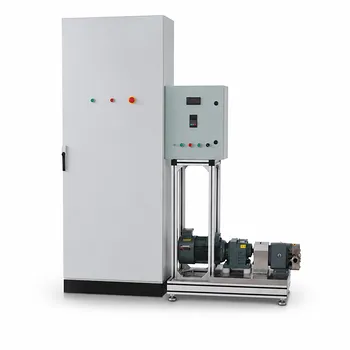
- Quantitative Dosing and Liquid Flow Control Educational Unit Operations Pilot Plant
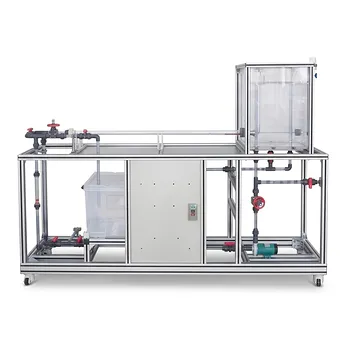
- Fluid Transport and Piping Dynamics Practical Training Unit Operations Pilot Plant
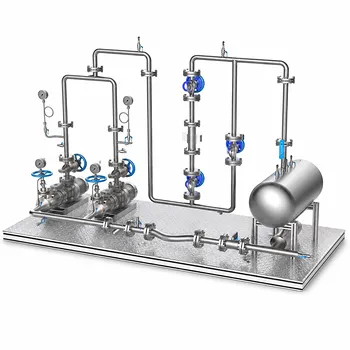
- Fluid Reynolds Number Demonstration Educational Unit Operations Pilot Plant
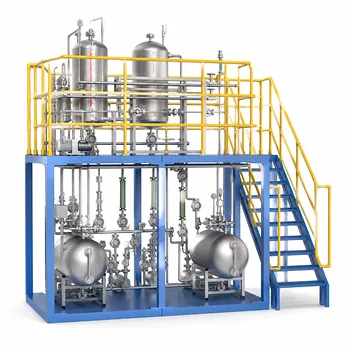
- Chemical Pipeline Assembly and Fluid Transport Practical Training Unit Operations Pilot Plant
People Also Ask
- How do educational unit operations pilot plants bridge theory and design? Bridge the Engineering Gap
- How do educational unit operations pilot plants address safety and waste management when scaling up?
- Why is the attenuation path length (lA) critical when positioning pressure sensors in a fluid flow unit operations pilot plant?
- How do conservation equations guide fluid flow pilot plants? Key Scale-Up Principles
- What are the key differences in process analytics requirements from R&D to production?