Accurate aluminum quantification in boiler feedwater is a cornerstone of pilot plant performance assessment. When students face chemical interferences during the Aluminon colorimetric method, the path to reliable data hinges on two specific interventions. Sulfite interference is resolved by blowing air through the sample or adding dilute hydrogen peroxide, while polyphosphate bleaching requires acidifying the sample with hydrochloric acid and evaporating it to dryness. These targeted steps neutralize the masking agents, allowing the true aluminum concentration to be measured.
The key insight is that interferences are not random errors but chemical signals pointing to the sample’s reactive species. By systematically eliminating sulfite and polyphosphate—two common culprits in boiler water—students transform a potential analytical failure into a robust verification of water quality and plant control. Mastering these corrective actions builds confidence in pilot plant mass balances and long-term operational decisions.
The Aluminon Method and Its Common Interferents
Colorimetric aluminum determination relies on the Aluminon reagent, which forms a colored complex with aluminum ions. In boiler feedwater, reducing agents and scale inhibitors frequently disturb this reaction, making interference management a core competency for student engineers.
Sulfite Interference: A Consuming Reaction with the Color Developer
Sulfite is routinely dosed as an oxygen scavenger in low-pressure boilers. It directly reduces the Aluminon complex or competes for the oxidizing color developer, causing falsely low or suppressed color.
The remedy is to oxidize sulfite before analysis. Two options work:
- Blowing air through the sample at room temperature converts sulfite to sulfate, which is inert toward the reagent.
- Adding a few drops of dilute hydrogen peroxide rapidly accomplishes the same oxidation without air-purging apparatus.
Polyphosphate Bleaching: When the Color Complex Disappears
Polyphosphates, used to control scale, can bleach the aluminum–Aluminon color product. This leads to erroneously low readings that do not mirror the actual aluminum loading.
The interference is eliminated by acid hydrolysis. The sample is acidified with hydrochloric acid and then evaporated to dryness on a hot plate. This step breaks down polyphosphate chains into simple orthophosphate, which does not attack the developed color. The residue is redissolved before proceeding with the color development, restoring accuracy.
The Step-by-Step Resolution Protocol
Students should follow a logical sequence in the pilot plant lab:
- Test for sulfite using a rapid indicator strip if the sample is a boiler blowdown.
- If sulfite is present, either aerate the sample for 5–10 minutes or add 2–3 drops of 3% hydrogen peroxide, mix, and wait 2 minutes.
- Check for polyphosphate interference by comparing a standard aluminum addition to the untreated sample. If recovery drops below 90%, proceed to acid hydrolysis.
- Acidify ~50 mL of sample with 0.5 mL of concentrated HCl, evaporate to dryness on a steam bath, cool, and reconstitute with deionized water.
- Develop color with the Aluminon reagent and read absorbance promptly.
The Deeper Lesson: Interference Management as a Core Laboratory Competency
Aluminum determination is just one front in the broader challenge of reliable water analysis. The same systematic mindset applies across all pilot plant analytical methods, reinforcing why students must learn the “why” behind each step.
Hardness Titrations and Carbonate Precipitation
When measuring water hardness in pilot effluents, high bicarbonate concentrations (>250 ppm as CaCO3) cause premature CaCO3 precipitation, blurring titration endpoints. Adding a small amount of HCl before the pH buffer eliminates this interference—a direct parallel to acidifying aluminum samples to destroy polyphosphates.
Orthophosphate Analysis: Nitrite and Chromate Challenges
In the molybdenum blue method for phosphate, nitrite corrodes the color formation. Adding sulfamic acid to the molybdate reagent decomposes the nitrite, much like peroxide eliminates sulfite. If chromate is present, it consumes the reducing agent; here, dropwise addition of sulfite until the yellow chromate color disappears solves the problem—mirroring the “excess oxidant removal” principle.
Gravimetric and Volumetric Interferences: pH and Redox Control
Not all interferences are corrected with simple oxidants or acid treatments. In gravimetric sulfate analysis, co-precipitation of barium chromate is prevented by reducing chromate with hydroxylamine hydrochloride in a boiling solution. For volumetric titrations using THQ indicator, pH must be precisely 4.0–4.5 to avoid phosphate interference and loss of endpoint—achieved by pre-neutralizing with bromcresol green indicator and HCl.
These examples collectively teach that interference resolution stems from understanding the underlying chemical equilibrium, not from memorizing a cookbook.
Understanding the Trade-offs and Limitations
While the prescribed steps are effective, blind application without recognizing their side effects can introduce new errors. Students must weigh method choices against the demands of their pilot plant study.
Air Blowing vs. Peroxide: Selectivity and Speed
- Air blowing is gentle and introduces no chemicals, but it is slow and may drive off volatile organic constituents if present.
- Peroxide is rapid and convenient, yet excess peroxide can potentially oxidize other sample components or linger and interfere in the color development. Always test a reagent blank.
Acid Evaporation Pitfalls
Evaporating to dryness with HCl:
- Time-consuming, making it unsuitable for high-throughput monitoring.
- Concentrates all non-volatile species, so other interferences (like iron or colloidal silica) may be magnified.
- If overheating occurs, aluminum can be lost through volatilization or by forming insoluble oxides; gentle steam-bath drying is essential.
The Hidden Assumption: Known Interferences Only
The protocol assumes sulfite and polyphosphate are the only significant interferents. In real boiler waters, complex mixtures of dispersants, metals, and organic contaminants may coexist. Students should always validate recovery by spiking known aluminum concentrations into the treated matrix. Poor recovery signals an unaccounted interferent.
From Protocol to Engineering Judgment
The ultimate goal is not just to remove interferences but to interpret what they reveal about the pilot plant’s chemistry. This shifts the student’s role from technician to process engineer.
- If your primary focus is rapid, routine boiler monitoring: Use the peroxide pretreatment for sulfite and monitor polyphosphate levels separately to decide when acid hydrolysis is needed. Keep a log of interference trends to anticipate when interferences will appear.
- If your primary focus is maximum data accuracy for a research-grade mass balance: Always perform the full acid hydrolysis step if any scale inhibitor is known to be dosed, and verify with standard addition on each sample set. Pair this with a thorough cation/anion balance to catch unexpected ions.
- If your primary focus is teaching fundamental lab skills: Have students purposely introduce sulfite and polyphosphate into a clean standard, observe the diminished color, and then apply the corrections. Let them see that the “fixed” sample then matches the original standard, cementing the cause-and-effect relationship.
- If your primary focus is troubleshooting a drifting boiler chemistry: Use the interference correction process diagnostically. A sudden need for more peroxide suggests increased sulfite feed; a persistent polyphosphate correction indicates potential carryover or overfeed. Link the analytical step directly to the plant’s operational parameters.
Understanding and resolving chemical interferences turns a routine colorimetric test into a window on the entire water-steam cycle, empowering students to move beyond button-pressing and into genuine problem-solving.
Summary Table:
| Interferent | Effect on Aluminon Method | Corrective Action |
|---|---|---|
| Sulfite | Suppresses color development | Aerate the sample for 5–10 minutes OR add 3% hydrogen peroxide |
| Polyphosphate | Bleaches the aluminum-Aluminon complex | Acidify with HCl, evaporate to dryness, and reconstitute with DI water |
Train the Next Generation of Process Engineers with LABPARK
Mastering complex chemical analysis requires hands-on experience with industry-grade systems. LABPARK provides advanced Educational and Vocational Unit Operations Pilot Plants across chemical engineering, bioprocess & biotech, and environmental & water treatment.
Specially designed for universities, research institutes, and enterprises, our pilot plants empower students to build real-world troubleshooting skills, manage chemical processes, and master analytical validation.
Contact LABPARK today to discover how our pilot plant solutions can elevate your laboratory curriculum!
Related Products
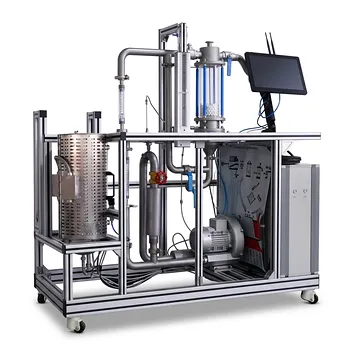
- Solid Spherical Heat Transfer Coefficient Determination Educational Chemical Engineering Pilot Plant
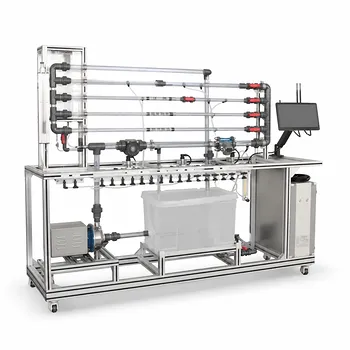
- Fluid Friction Resistance Determination Educational Unit Operations Pilot Plant
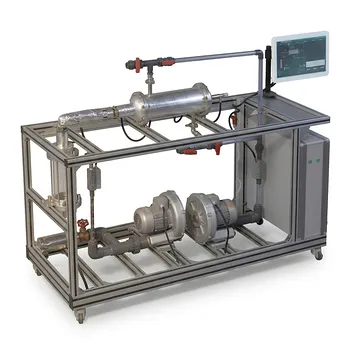
- Shell and Tube Heat Exchanger Heat Transfer Coefficient Determination Educational Pilot Plant
People Also Ask
- How are steady-state and unsteady-state heat transfer processes demonstrated practically using chemical engineering pilot plants?
- How Pilot Plants Show Natural vs. Forced Convection Heat Transfer
- Why is the prevention of scale formation on heat exchanger surfaces a critical learning objective? Key Lessons
- How do unit conversions affect pilot plant calibration? Avoid errors in heat transfer data analysis
- How is the thermal resistance of a thick-walled hollow cylinder calculated? Key Equations