Precision is not optional—it's the foundation of every successful pilot plant experiment.
Volumetric and gravimetric calibration training ensures that students can move far beyond simply reading a pump’s display. It teaches them how to convert a nominal volume into an exact mass by accounting for temperature-induced density shifts, air buoyancy, and the thermal expansion of glassware. In bioprocess and water treatment pilot plants, where fluid dosing controls everything from nutrient feed to chemical oxidation, this skill is what separates a reproducible scientific result from a failed, untraceable batch.
Calibration training transforms a student from a button-pusher into a scientist who understands that a liter is never just a liter. It instills the critical correction factors that make the difference between a dead fermentation and a reliable bioprocess. Without this skill, mass balances crumble, reaction kinetics become guesswork, and even identical pilot plants produce contradictory data.
The Unseen Variables in Every Volume Measurement
Every piece of glassware and every flow meter provides a volume reading. But what students often overlook is that the mass of fluid—the quantity that truly governs chemical and biological reactions—fluctuates with the environment. Gravimetric calibration training forces them to confront these hidden variables head-on.
Temperature: The Invisible Hand in Fluid Density
The density of water and aqueous solutions changes significantly with temperature. A volumetric measurement of 1.000 L of water at 30 °C contains less mass than the same volume at 15 °C. Without calibration training, a student might unknowingly under-dose a critical substrate simply because the lab warmed up overnight. The gravimetric method teaches them to measure the temperature and apply the correct density factor, turning sloppy volume into precise mass.
Air Buoyancy: The Weight of the Atmosphere
When you weigh a vessel of water on a balance, the buoyant force exerted by the surrounding air slightly reduces the apparent mass. This effect is small for liquids but critical when calibrating high-precision dosing pumps or analytical flow meters. Students learn that failing to correct for air buoyancy introduces a systematic error that compounds over hours of continuous operation, silently sabotaging a pilot plant’s mass balance.
Glass Expansion: When the Instrument Itself Changes
Volumetric flasks, burettes, and the internal chambers of some flow meters are made of borosilicate glass. That glass expands when heated. A volumetric device calibrated at 20 °C will deliver a slightly different true volume if the fluid or the lab is at 25 °C. Training shows students how to apply the coefficient of thermal expansion for glass, ensuring that even the instrument’s own dimensional change is not a source of error.
The Gravimetric Method: From Volume to True Mass
Why a Scale Beats a Cylinder
A graduated cylinder might show you a meniscus position, but only a calibrated balance gives you the actual mass of fluid that was transferred. By collecting fluid from a pump or a flow meter into a tared container on a precision scale, students can calculate the delivered mass with full correction for temperature, buoyancy, and glass expansion. This direct, traceable method becomes their gold standard for verifying all other instrumentation in the pilot plant.
Correcting for Real-World Conditions
The gravimetric approach doesn’t just produce a number; it produces a defensible, audit-ready data point. Students learn to record room temperature, fluid temperature, barometric pressure, and even the evaporation rate during long collection times. They then use standard water-density tables and buoyancy equations to compute the true mass flow rate. This rigorous mindset carries over into every aspect of pilot plant operation, from calibrating nutrient feed pumps to verifying the flow through membrane filtration units.
How This Training Transforms Pilot Plant Work
Reproducibility in Bioprocesses
Microbial and cell culture processes are exquisitely sensitive to substrate concentration. A 2% dosing error caused by an uncalibrated pump might drop the specific growth rate enough to completely alter metabolic pathway expression. When students routinely calibrate with the gravimetric method, they eliminate this silent variable, making it possible to reproduce a high-yield fermentation weeks later on a different shift—or even on a different pilot plant unit.
Trustworthy Mass Balances in Water Treatment
Adsorption columns, chemical precipitation reactors, and membrane systems all rely on precise mass balances to prove contaminant removal. If the incoming flow meter is off by 5% due to uncorrected volumetric readings, the calculated removal efficiency becomes meaningless. Calibration-trained students can verify every flow into and out of the system, ensuring that pilot plant data is credible enough to scale up to real treatment plants.
Consistent Data Across Multiple Pilot Units
Universities often deploy multiple identical pilot plants across labs or campuses. Manufacturing tolerances, aging components, and subtle differences in flow cells mean each unit’s raw readings will vary slightly. While advanced techniques like calibration transfer can align spectral analyzers later, that process is useless if the fundamental flow rate is wrong. Gravimetric calibration establishes a common, true mass-flow baseline across all units. This ensures that when a student moves a protocol from the “master” pilot plant to a “slave” unit, the measured doses remain identical, standardizing experimental outcomes and slashing troubleshooting time.
Understanding the Trade-off: Time vs. Accuracy
The Labor Cost of Gravimetric Calibration
Performing a full gravimetric calibration on every pump and flow meter takes time. Students must stop the process, set up balances, collect timed samples, and run through correction calculations. In a fast-paced lab session, the temptation is strong to skip this step and trust the manufacturer’s nominal calibration. Training forces them to accept this upfront labor as a non-negotiable investment.
The Hidden Risk of Skipping It
The trade-off becomes stark when viewed through the lens of failure cost. A single ruined fed-batch experiment can waste weeks of preparation, expensive media, and precious cell stocks—all because the glucose feed pump was off by a few milliliters per hour. In water treatment pilot work, ignoring buoyancy and temperature corrections might lead to an incorrect Fe2+ catalyst dosage, causing a Fenton oxidation trial to fail and sending follow-up projects down the wrong path. The few extra minutes spent on gravimetric calibration are an insurance policy against catastrophic, silent errors that erode trust in all pilot plant results.
Making Calibration a Core Competence
To embed this skill in student training, tailor the emphasis to the primary goal:
- If your primary focus is mastering fundamental measurement science: Use calibration exercises to teach error propagation, systematic vs. random errors, and traceability. Let students discover first-hand why a “1 L/min” pump label is meaningless without density correction calculations.
- If your primary focus is ensuring reproducible experimental results: Mandate gravimetric calibration as part of every standard operating procedure. Build it into the pre-run checklist so that no fermentation, column test, or fouling trial begins without verified mass flows.
- If your primary focus is preparing students for industrial operations: Frame calibration as a key transferable practice. Show them how the same gravimetric method is used in pharmaceutical GMP facilities and municipal water plants to meet regulatory requirements, and how their lab notebook with correction factors mirrors a professional calibration log.
The moment a student internalizes that every volume must be weighed and corrected before it can be trusted, they stop being a passive operator and start thinking like an engineer who can diagnose, correct, and safeguard any fluid-based process.
Summary Table:
| Variable | Impact on Pilot Plant Operations | Calibration Resolution |
|---|---|---|
| Temperature Shift | Alters fluid density, causing incorrect mass dosing | Apply density correction tables |
| Air Buoyancy | Introduces systematic errors in mass balance over time | Apply air buoyancy equation to scale data |
| Glass Expansion | Volumetric glassware volume changes at varying temps | Apply glass coefficient of thermal expansion |
| Pump Tolerance | Nominal readings deviate from actual delivered volume | Implement gravimetric flow verification |
Elevate Your Lab’s Practical Training with LABPARK
Teaching precision starts with the right equipment. LABPARK provides state-of-the-art Educational and Vocational Unit Operations Pilot Plants in chemical engineering, bioprocess & biotech, and environmental & water treatment. Designed specifically for universities, research institutes, and enterprises, our systems empower students to master critical physical variables—from gravimetric calibration to complex mass balances.
Prepare your students for real-world engineering challenges. Contact LABPARK today to request a quote or customize your pilot plant setup!
Related Products
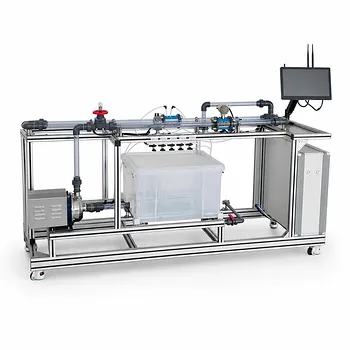
- Orifice and Venturi Flowmeter Calibration Educational Pilot Plant for Fluid Mechanics Laboratory
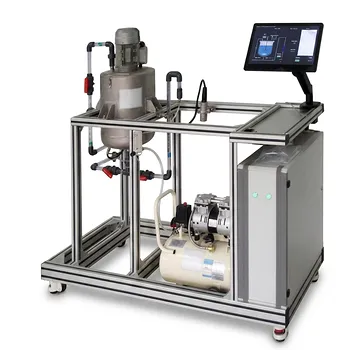
- Agitation and Mixing Educational Unit Operations Pilot Plant
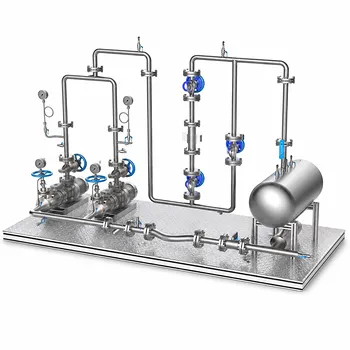
- Chemical Pipeline Assembly and Fluid Transport Practical Training Unit Operations Pilot Plant
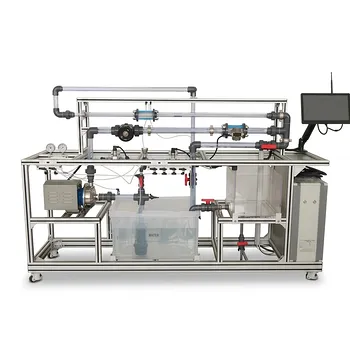
- Centrifugal Pump Performance and Orifice Flowmeter Calibration Educational Pilot Plant
- Quantitative Dosing and Liquid Flow Control Educational Unit Operations Pilot Plant
People Also Ask
- What is the difference between static and stagnation pressure? Master Pilot Plant Flow Measurement
- How do pilot plants demonstrate siphon pressure variations? Visualizing Bernoulli's Energy Balance
- How do fluid mechanics training pilot plants facilitate the visualization and calculation of laminar and turbulent flows?
- How to update chemometric calibration models in pilot plants? Best practices for process engineers.
- Why are the laws of similitude critical in fluid flow pilot plants? Scale Up Safely