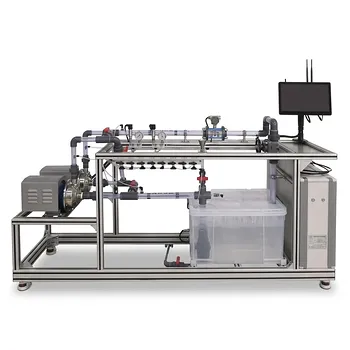
The answer lies in a single, unavoidable design reality. In a centrifugal pump, the spinning shaft must pass through the stationary casing. This penetration inherently creates a leak path, and shaft sealing is the critical engineered solution that closes that gap. It performs three essential functions: it prevents hazardous process fluids from escaping, stops external contaminants from entering, and blocks the release of dangerous vapors, ensuring pilot plant safety and process integrity.
Pilot plant centrifugal pumps depend on shaft seals as the primary defense at the point where the rotating shaft meets the stationary casing. These seals don’t just stop leaks—they simultaneously protect operator safety, preserve expensive chemical mixtures, and prevent laboratory-scale accidents from escalating.
The Unavoidable Leak Path in Every Centrifugal Pump
Why the Shaft Penetration is a Fundamental Design Challenge
A centrifugal pump works by spinning an impeller inside a sealed casing. To spin the impeller, a drive shaft from the motor must cross through the casing wall. This crossing point is a clearance gap—without a seal, fluid will always leak from the high-pressure interior to the surroundings. In pilot plants that often handle aggressive, pure, or volatile substances, even a slow drip becomes a safety hazard, distorts research data, or contaminates a precious sample.
The Consequences of Uncontrolled Leakage
Unlike large-scale industrial installations, pilot plants operate in close proximity to students, researchers, and sensitive measurement instruments. An unsealed pump can release toxic fumes into the lab, allow oxygen or moisture to poison a catalytic reaction, or spray a corrosive acid onto nearby electronics. These aren’t just operational annoyances; they are direct threats to human health and experimental validity.
The Three Vital Functions of a Shaft Seal in a Pilot Plant
Containing Hazardous and High-Value Fluids
The seal’s first job is to keep the process fluid where it belongs—inside the pump and piping. Whether the pump is transferring a carcinogenic organic solvent, a biologically active enzyme solution, or an expensive proprietary catalyst, any loss is unacceptable. A reliable shaft seal prevents chemical exposure to lab personnel and stops the direct economic loss of materials that may be worth thousands of dollars per liter.
Protecting Process Integrity from External Contaminants
A pilot plant often tests reactions under strictly controlled conditions. A shaft seal must also block external air, humidity, or cleaning fluids from being drawn into the pump along the shaft. If ambient oxygen leaks into a polymerization reaction, it can kill the catalyst. If moisture enters a water-sensitive synthesis, the entire batch is ruined. The seal thus acts as a one-way gatekeeper that defends the purity of the experiment.
Ensuring a Safe Laboratory and Learning Environment
Safety in an educational or environmental pilot plant is non-negotiable. Many process fluids are flammable, volatile, or acutely toxic. The shaft seal prevents the invisible escape of vapors that could create an explosive atmosphere or accumulate to harmful concentrations. For academic settings, this third function transforms the pump from a potential hazard into a safe, hands-on learning tool.
Understanding the Trade-offs and Failure Modes
Shaft seals are precision components that wear out. In pilot plants, where pumps may run intermittently, handle a wide pH range, or switch from one chemical to another, seal failure rates can spike. A seal that works flawlessly with water may swell, crack, or corrode when exposed to an aggressive solvent. Mechanical seals offer superior containment but are sensitive to solids and operate with a thin fluid film that can flash off under high temperatures. Packing seals are more tolerant of particulates but demand a controlled leakage rate for cooling and lubrication, which is often unacceptable with toxic media.
Ignoring these trade-offs leads to frequent downtime, ruined experiments, or hidden long-term health risks. The smart approach is to treat seal selection as a chemical compatibility and operational decision—not a generic hardware choice.
Making the Right Choice for Your Pilot Plant
Your pump’s shaft sealing strategy must align with the specific risks of your process. Use these goal-based guidelines to narrow your choices.
- If your primary focus is absolute personnel safety with highly hazardous fluids: Prioritize a double mechanical seal with a barrier fluid system, and install vapor detection sensors around the pump.
- If your primary focus is preserving reaction purity and excluding moisture or air: Select a mechanical seal with a clean external flush or a magnetically driven pump that eliminates the shaft penetration entirely.
- If your primary focus is flexibility in a teaching lab with many different chemicals: Invest in a seal material chart mapping your chemical inventory to compatible elastomers and face materials, and train operators to inspect for early wear signs daily.
The shaft seal may be a small component, but it dictates the entire boundary between your experiment and the outside world. When you treat it as the critical safety and quality barrier it is, you turn a potential leak path into a confident, controlled operation.
Summary Table:
| Function / Seal Type | Key Purpose | Best Application / Use Case |
|---|---|---|
| Fluid Containment | Prevents hazardous/valuable fluid leaks | Toxic, volatile, or high-value chemicals |
| Contamination Barrier | Blocks external air and moisture entry | Oxygen/moisture-sensitive reactions |
| Safety & Vent Control | Prevents toxic vapor release to the lab | Flammable or hazardous environments |
| Double Mechanical Seal | Offers maximum safety with barrier fluid | Highly hazardous pilot plant operations |
| Magnetic Drive Pump | Eliminates shaft seal penetration entirely | Zero-leakage & high-purity requirements |
Ensure Safe and Leak-Free Pilot Plant Operations
Are you setting up or upgrading your laboratory? LABPARK provides premium Educational and Vocational Unit Operations Pilot Plants in chemical engineering, bioprocess & biotech, and environmental & water treatment for universities, research institutes, and enterprises. We design our systems with industry-grade pumps and containment technologies to guarantee safety, durability, and reliable research data.
Don't let pump leakage compromise your experiments. Contact our technical experts today to find the perfect pilot plant solution tailored to your curriculum or research needs!
Related Products
- Chemical Pipeline Assembly and Fluid Transport Practical Training Unit Operations Pilot Plant
- Centrifugal Pump Performance and Orifice Flowmeter Calibration Educational Pilot Plant
- Centrifugal Pump Performance Determination Educational Unit Operations Pilot Plant
People Also Ask
- Why distinguish Newtonian & non-Newtonian fluids in pilot plants? Prevent design errors.
- Gear vs Centrifugal Pumps in Pilot Plants: How do operating characteristics and power requirements differ?
- How is shaft work (We) used to determine pump specifications? Optimize pilot plant fluid transport design.
- What are the primary methods for regulating flow rate in pilot plants? VFD vs. Throttle
- How does Reynolds number affect viscous sublayer thickness? Optimize pilot-plant flow, friction, and scale-up