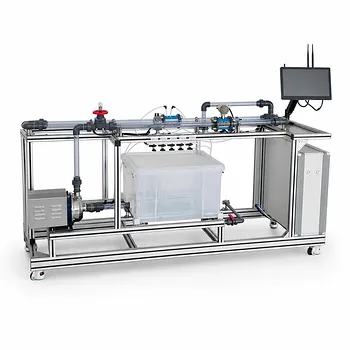
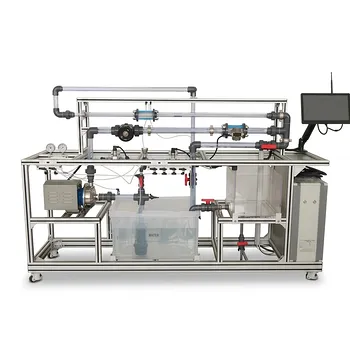
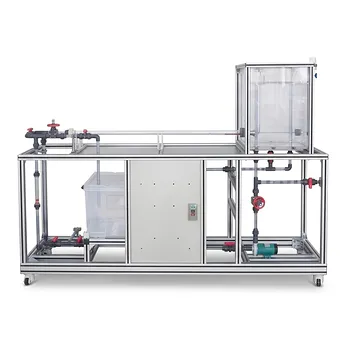
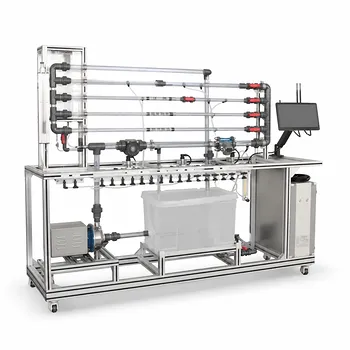
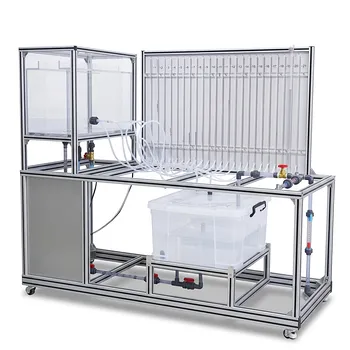
In a training pilot plant, the primary trade-off is a direct inversion of efficiency and simplicity. An orifice meter is the easiest and cheapest to install between pipe flanges, but it causes the highest permanent pressure loss. A Venturi tube minimizes that energy loss through its streamlined design, yet it is physically large, expensive to manufacture, and demanding to install. The flow nozzle sits squarely in the middle—simpler than a Venturi, more efficient than an orifice. In an educational setting, selecting among them means choosing between demonstrating brutal real-world energy waste and showing engineering elegance, while managing your lab’s physical space and budget.
For an educational unit operations pilot plant, the ideal scenario is to install all three meters in series. If you must choose a single device, the flow nozzle delivers the best compromise—easy flange mounting with moderate permanent pressure drop. The orifice meter is unbeatable for illustrating the harsh penalties of poor fluid dynamics, while the Venturi tube remains the low-loss benchmark, sacrificed only when cost and footprint are non-negotiable constraints.
Why Pressure Loss Matters in a Training Pilot Plant
In a chemical engineering unit operations lab, flow measurement is never just about getting a number. It is about teaching students to think like plant designers. Permanent pressure loss translates directly into higher pump work, larger energy bills, and oversized motors—precisely the kind of systemic thinking a pilot plant must instill.
The True Cost of Permanent Pressure Drop
When fluid flows through a restriction, kinetic energy spikes and static pressure falls. Some of that pressure is recovered downstream, but a portion is lost forever to turbulence, friction, and vortex formation. This permanent pressure loss represents wasted mechanical energy.
In an orifice meter, the fluid jets through a sharp-edged hole and violently expands. Severe contraction and a large vena contracta destroy pressure recovery, making the energy penalty the worst of any head-type meter. A flow nozzle guides the fluid more gently, so the permanent loss is lower. A Venturi tube’s gradual cone diffuser recovers the vast majority of the pressure, leaving only a few percent as loss.
Educational Value of Direct Comparison
A pilot plant that includes all three meter types side-by-side lets students measure the same flow rate while watching manometer readings tell a dramatic story. They see the orifice’s huge differential collapse into a tiny recovered pressure. They witness the Venturi’s gentle dip and near-full recovery. That visceral, hands-on comparison turns dry theory into an unforgettable lesson on energy efficiency.
Installation Complexity: Space, Fitting, and Cost
The bench-top reality of a pilot plant often imposes hard limits. Pipe runs are short, budgets are finite, and students must safely assemble and modify equipment. How each meter lands in that physical world matters as much as its fluid mechanics.
Orifice Meter: The Simplest to Install
An orifice plate slips directly between standard pipe flanges. No special welding, no long upstream straight runs beyond the usual requirements. It is inherently low-cost and mechanically foolproof—a thin plate with a concentric hole.
This simplicity makes it the favorite for quick demonstrations. Students can inspect the plate, feel its sharp edge, and understand instantly how it works. From an installation standpoint, it is the clear winner when space is tight and budgets are minimal.
Flow Nozzle: A Flange-Mounted Compromise
A flow nozzle also mounts between flanges, but its contoured inlet requires a thicker, more solid component. It is easier to install than a Venturi because it does not demand a long, precisely machined diverging cone welded into the pipe. It sits as a single cross-sectional insert.
In a pilot plant, you can swap a flow nozzle into the same flange gap that holds an orifice plate, though the nozzle’s heavier weight and bulkier profile demand proper support. Its installation effort is only slightly higher than an orifice’s, but its pressure loss is significantly lower—a practical middle ground.
Venturi Tube: Precision at a Price
A Venturi tube is not an insert. It is a machined pipe section with a gradual converging inlet, a cylindrical throat, and a long diverging outlet cone. This full-body geometry demands a dedicated straight run of piping and often permanent welding or flanged connections at both ends.
The Venturi’s sheer physical size and weight force you to design the pilot plant layout around it. Its precision throat and cone angles require tight manufacturing tolerances, driving up cost. Installation is more complex, but once in place, it delivers the best pressure recovery and the lowest permanent loss. For a pilot plant focused on teaching energy-conscious design, that effort can be a valuable investment.
Understanding the Trade-offs
Every choice brings a hidden cost. In a teaching environment, those costs become the curriculum itself.
Pressure Loss vs. Installation Simplicity
The relationship is nearly linear. Orifice meters maximize pressure loss and minimize installation complexity. Venturi meters minimize pressure loss and maximize installation complexity. Flow nozzles split the difference, offering a sweet spot where the permanent head loss is moderate and the flange-mounted assembly remains straightforward.
Cost and Long-Term Durability
The orifice plate is cheap and easy to replace when its sharp edge wears. A Venturi’s machined interior is expensive to fabricate and cannot be easily refreshed. However, the Venturi’s smooth surfaces resist erosion and scale buildup better over time, maintaining a stable discharge coefficient. A flow nozzle’s cost falls in between, and its inlet profile can be more durable than an orifice’s sharp edge.
Calibration and Accuracy in a Student Lab
All three meters require calibration—determining the discharge coefficient experimentally. Orifice coefficients typically range from 0.59 to 0.68 and vary with wear. Venturi coefficients sit at 0.97–0.99 but can drift if scale roughens the throat. These calibration exercises teach students that no meter is perfect.
For installation, one practical requirement ties them together: the pressure-sensing lines to the manometer must be free of air bubbles and properly tapped. This matters equally whether you are using a simple U-tube or a digital transducer. Ensuring a clean, bubble-free impulse line is a universal installation challenge that reinforces good laboratory technique.
Making the Right Choice for Your Pilot Plant
How you decide depends on what you want your students to learn most.
- If your primary focus is teaching the brutal reality of energy waste: Install the orifice meter. Let students measure the severe, unrecovered pressure drop and calculate the direct increase in pump power. It is a lesson that sticks.
- If your primary focus is demonstrating how good design minimizes energy loss: Choose the Venturi tube. Students will see near-complete pressure recovery and grasp why engineers pay a premium for streamlined profiles in high-flow applications.
- If your primary focus is balancing installation simplicity with meaningful comparative data: Use the flow nozzle. It mounts like an orifice but teaches a much gentler pressure-loss curve, making it the most versatile instrument for labs with limited floor space.
- If you can afford the ultimate educational setup: Install all three in series. Let students take simultaneous readings, plot the pressure profiles, and directly compare the permanent power losses. This side-by-side benchmark is the gold standard for unit operations training.
The meter you choose is never just a component; it is the teaching assistant that whispers the real cost of every piping decision.
Summary Table:
| Flow Meter | Permanent Pressure Loss | Installation Complexity | Relative Cost | Primary Educational Value |
|---|---|---|---|---|
| Orifice Meter | High (Severe) | Low (Flange plate) | Low | Demonstrates real-world energy waste |
| Flow Nozzle | Moderate | Medium (Thicker flange) | Medium | Offers a practical, space-saving compromise |
| Venturi Tube | Low (Excellent recovery) | High (Long machined body) | High | Teaches aerodynamic efficiency & high-end design |
Elevate Your Engineering Lab with LABPARK
Selecting the right process components is key to teaching practical engineering principles. LABPARK designs and manufactures premium Educational and Vocational Unit Operations Pilot Plants in chemical engineering, bioprocess & biotech, and environmental & water treatment.
We help universities, research institutes, and enterprises worldwide configure robust, flexible systems that bridge classroom theory and industrial reality.
Ready to optimize your training facilities? Contact LABPARK today to discuss your pilot plant requirements with our engineering team!
Related Products
- Orifice and Venturi Flowmeter Calibration Educational Pilot Plant for Fluid Mechanics Laboratory
- Centrifugal Pump Performance and Orifice Flowmeter Calibration Educational Pilot Plant
- Quantitative Dosing and Liquid Flow Control Educational Unit Operations Pilot Plant
- Two Phase Flow Pattern Velocity Resistance Measurement Educational Pilot Plant
- Fluid Reynolds Number Demonstration Educational Unit Operations Pilot Plant
People Also Ask
- How does nozzle geometry affect energy efficiency and jet performance in fluid mechanics laboratory demonstration units?
- How to demonstrate head, friction, & pump energy in pilot plants? Master fluid mechanics.
- What is the difference between static and stagnation pressure? Master Pilot Plant Flow Measurement
- Why are the laws of similitude critical in fluid flow pilot plants? Scale Up Safely
- What is the physical significance of the vena contracta? Master Fluid Flow Calibration