Here's the direct answer: three key environmental factors—water density variation, air buoyancy, and glass thermal expansion—must all be corrected for using a temperature-dependent K(t) factor. In parallel, the physical condition of the glassware must be controlled: “in” vessels (like volumetric flasks) must be dry, while “ex-delivery” vessels (like pipettes) only need to be rinsed clean.
Calibrating volumetric instruments for a chemical or bioprocess training plant is fundamentally a gravimetric exercise. Neglecting the interplay between water temperature, air buoyancy, and glass expansion introduces systemic errors that cascade into every reagent concentration and process yield calculation. The correction factor K(t) converts a weighed mass of water into a true volume at the standard 20°C reference, while the cleanliness state of the glassware defines whether the contained or delivered volume is meaningful.
The Physics That Governs Volumetric Calibration
A gravimetric calibration measures the mass of water delivered or contained. Three temperature-driven phenomena blur the direct mass-to-volume relationship. All must be controlled or mathematically corrected.
1. Water Density Changes with Temperature
Water’s density is not constant; it peaks near 4°C and declines as temperature rises.
At 25°C, a litre of water weighs less than at 20°C, so the same mass corresponds to a larger volume.
Ignoring this drift directly miscomputes the true capacity of a pipette or flask.
2. Air Buoyancy Offsets the Weighed Mass
The balance measures mass in air, not in a vacuum. Air exerts an upward buoyant force on both the water and the calibration weights.
Warmer, less dense air reduces buoyancy, altering the apparent mass.
The correction accounts for the density of air, the density of the calibration weights, and the density of water at the measurement temperature.
3. The Glass Vessel Expands or Contracts
Borosilicate glass expands as temperature rises. A volumetric flask calibrated to contain a true litre at 20°C will hold slightly more volume at 25°C.
Conversely, a pipette that delivers a set volume at 20°C may deliver a different absolute amount when the glass is warmer or colder.
The K(t) factor bundles this cubic expansion coefficient of the glass with the density and buoyancy corrections.
The K(t) Factor Converts Mass to Standard Volume
The combined correction is expressed as a single factor K(t) at the measured water temperature.
Multiplying the weighed mass (in grams) by K(t) gives the volume the vessel would contain or deliver at the reference temperature of 20°C.
This standardisation is essential in training plants where calibration to a common baseline makes results comparable and reproducible.
The Overlooked Variable: Glassware Cleanliness
Beyond temperature, the physical state of the glassware is an environmental condition that must be actively controlled before any mass measurement.
“In” Vessels Must Be Thoroughly Dry
Volumetric flasks and graduated cylinders are calibrated to contain a specified volume.
Any residual water film inside adds non‑representative mass, causing a false positive volume reading.
Therefore, these vessels are dried completely before calibration.
“Ex‑Delivery” Vessels Need Only Clean Rinsing
Pipettes and burettes deliver a volume by wetting the internal surface and then dispensing.
They must be chemically clean so that the liquid film drains uniformly, but they are never dried—drying would alter the thin film that the calibration already accounts for.
Rinsing with the test liquid (typically distilled water) conditions the glass surface to the same state assumed during standard calibration.
Understanding the Trade-offs
These corrections are precise, but their application comes with practical constraints in a training environment.
- Temperature measurement accuracy: The K(t) factor is only as good as the thermometer. A 0.5°C error in water temperature can introduce a volume error of roughly 0.01%, which matters when verifying Class A glassware.
- Air buoyancy assumptions: The standard calculation uses nominal values for air density and balance weights. In a humid plant with atmospheric pressure fluctuations, the true buoyancy may deviate, though the impact on routine reagent prep is usually negligible.
- Time and skill: Manual reading of K(t) tables and precise temperature control demand a level of operator discipline. A training plant must balance educational realism with the need for reproducible results.
Making the Right Choice for Your Training Plant
Apply the correction protocol based on the level of accuracy required for your reagent preparation workflows.
- If your primary focus is on teaching gravimetric calibration fundamentals: Always require students to measure water temperature to ±0.1°C, apply the full K(t) computation, and justify the cleanliness steps. This builds deep understanding of the physical corrections.
- If your primary focus is on rapid reagent preparation with acceptable tolerance: Pre‑compute K(t) values for the plant’s ambient temperature range and post them. Train operators to use these values directly, while maintaining strict cleanliness rules.
- If your primary focus is on bioprocess safety and reproducibility: Combine the K(t) correction with a documented environmental log (temperature, humidity). A single uncorrected pipette can shift a nutrient concentration enough to alter cell growth curves, making the calibration discipline a non‑negotiable part of GMP-like training.
Controlling temperature and glassware condition is the gateway to volumetric trust. Apply the K(t) correction with rigour, and you build an unshakeable foundation for every reagent concentration that leaves your training plant.
Summary Table:
| Factor / Condition | Impact on Measurement | Correction / Control Method |
|---|---|---|
| Water Density | Density varies with temperature, changing mass-to-volume ratio | Apply temperature-dependent K(t) factor |
| Air Buoyancy | Ambient air exerts upward buoyant force on water and weights | Apply temperature-dependent K(t) factor |
| Glass Expansion | Borosilicate glass volume expands or contracts with temperature | Apply temperature-dependent K(t) factor |
| "In" Vessels (Flasks) | Residual liquid adds non-representative mass | Dry completely before calibration |
| "Ex" Vessels (Pipettes) | Liquid film must drain uniformly to deliver set volume | Rinse clean with test liquid; do not dry |
Elevate Your Training Plant's Precision with LABPARK
Building a reliable chemical or bioprocess training program requires standard-compliant, highly precise equipment. LABPARK provides advanced Educational and Vocational Unit Operations Pilot Plants in chemical engineering, bioprocess & biotech, and environmental & water treatment for universities, research institutes, and enterprises.
Ready to upgrade your laboratory's training capabilities? Contact our experts today to find the perfect pilot plant solution for your institution!
Related Products
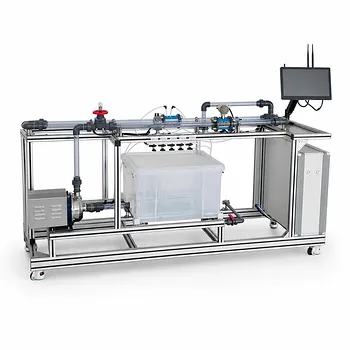
- Orifice and Venturi Flowmeter Calibration Educational Pilot Plant for Fluid Mechanics Laboratory
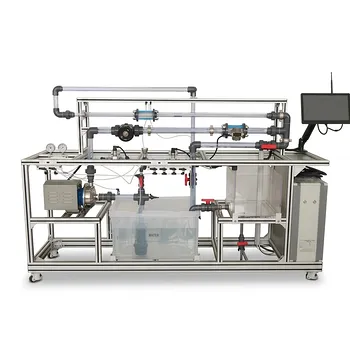
- Centrifugal Pump Performance and Orifice Flowmeter Calibration Educational Pilot Plant
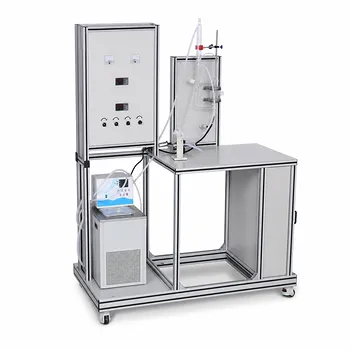
- Binary System Vapor Liquid Equilibrium Data Determination Educational Unit Operations Pilot Plant
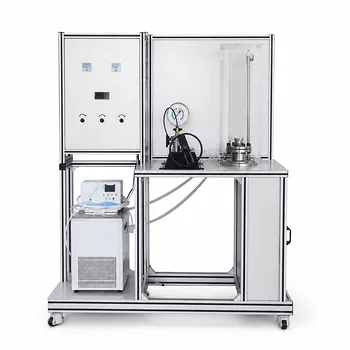
- Carbon Dioxide PVT Curve Determination Educational Unit Operations Pilot Plant
- Bernoulli Equation Demonstration Unit Operations Pilot Plant
People Also Ask
- What is the difference between static and stagnation pressure? Master Pilot Plant Flow Measurement
- How do pilot plants demonstrate siphon pressure variations? Visualizing Bernoulli's Energy Balance
- How do fluid mechanics training pilot plants facilitate the visualization and calculation of laminar and turbulent flows?
- How to update chemometric calibration models in pilot plants? Best practices for process engineers.
- Why are the laws of similitude critical in fluid flow pilot plants? Scale Up Safely