Effective waste liquid management in a pilot plant is a safety-critical operation, not an afterthought. For non-toxic inorganic acidic and alkaline wastewater, the standard protocol is neutralization to a pH range of 6–10 before discharge. Wastewater containing heavy metals, however, must never enter the drain—it requires separate collection in dedicated containers filled to no more than 75% capacity, followed by professional treatment or on‑site precipitation and sludge handling.
The fundamental line is between harmless inorganic streams that can be safely neutralized and discharged, and hazardous streams—heavy metals, organics, reactive chemicals—that demand strict segregation, containerization, and disposal outside the sewer system. This distinction protects both personnel and the environment while teaching the workflows used in full-scale industrial treatment.
The Core Protocol: Neutralization for Inorganic Acids and Alkalis
Non-toxic inorganic acidic and alkaline wastewater is the only liquid waste stream from a pilot plant that may be discharged down the drain. The process must bring the pH into a safe window before release.
Why the pH 6–10 Window Matters
Discharging outside this range can corrode plumbing, harm biological treatment systems, and violate environmental regulations. A pH of 6–10 ensures the effluent is neither aggressively acidic nor caustic. Pilot plants must verify this with real‑time pH sensors, never guess.
The Neutralization Process in a Pilot Plant
Neutralization simulates industrial effluent treatment. Acidic waste is dosed with alkaline agents such as lime (calcium hydroxide), sodium hydroxide, or even alkaline waste residues. Alkaline waste is treated with acid waste or sparged with carbon dioxide to form milder carbonate species. Automated control loops adjust the dosing pump speed based on live pH readings, allowing students and researchers to study reaction kinetics, mixing dynamics, and sensor dead‑time.
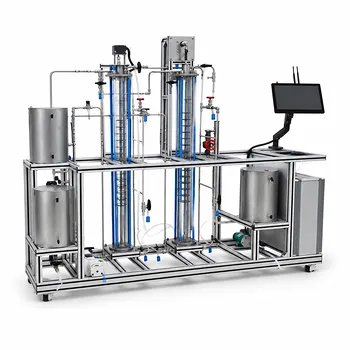
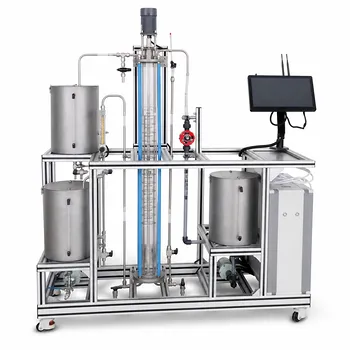
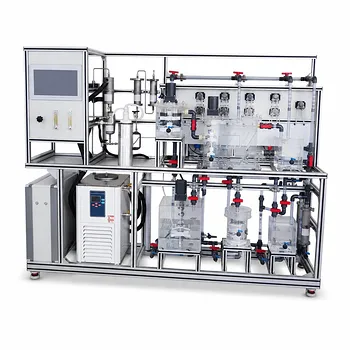
This process is often integrated into a multi‑stage pilot plant that includes neutralization reactors, mixing tanks, and clarifiers. The goal is not just pH correction but demonstrating the full treatment train—neutralization, flocculation, settling, and sometimes solids dewatering—that turns a hazardous liquid into a dischargeable effluent.
The Critical Difference: Handling Heavy Metal Wastewater
Wastewater containing heavy metals shifts from a simple neutralization problem to a containment and treatment operation. The primary protocol is zero discharge to the sewer.
No-Drain Policy and Segregation
The moment heavy metals are detected in a waste stream, the drain is off‑limits. This includes dissolved copper, lead, cadmium, chromium, arsenic, and similar ions, even in dilute form. These streams must be segregated from all other waste categories—acids, alkalis, organics, and biological waste—to prevent dangerous cross‑reactions and contamination.
Collection and Containerization
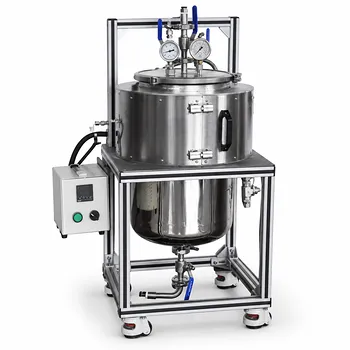
Dedicated, clearly labeled containers are used. Fill level must never exceed 75% capacity to allow for thermal expansion, safe handling, and the addition of treatment chemicals later. Containers are selected for chemical compatibility (e.g., high‑density polyethylene for acidic heavy‑metal solutions) and stored in secondary containment to catch leaks. They are then managed as hazardous waste, sent for professional off‑site disposal or treated on‑site.
The Role of Precipitation and Sludge Management
In advanced pilot plant setups, heavy metal waste is treated on‑site through precipitation. By raising the pH with lime or sodium hydroxide, metal ions form insoluble hydroxides or compounds like calcium arsenate. The pilot plant integrates rapid mixing for reagent dosing, flocculation basins, and sedimentation clarifiers. Sludge is then dewatered using vacuum filters or centrifuges. This closed‑loop demonstration teaches the full precipitation‑dewatering chain, turning a liquid waste problem into a solid sludge that can pass environmental leaching tests.
Beyond Heavy Metals: Organic Solvents and Highly Active Chemicals
While the question focuses on acids, alkalis, and metals, a complete protocol must also address the other hazardous streams common in pilot plants.
Organic Waste Liquids
All organic solvents and oil‑containing water must be segregated at the source. These are never discharged, even after pH adjustment. They require dedicated collection containers, labeled by solvent type, and are sent for professional incineration or recycling.
Managing Reactive Substances
Highly active chemicals—strong oxidizers, reducing agents, explosive precursors, and alkali metals like sodium or potassium—demand extreme isolation. They must be stored in separate, purpose‑built containers, under inert gas blanketing where necessary. Fire suppression systems must be dry‑powder or sand‑based; water is forbidden. Reactors handling such reactions include pressure‑relief valves and explosion disks, and all feeding systems prevent moisture ingress.
Understanding the Trade‑offs and Pitfalls
Even the best protocol can fail if the underlying assumptions are ignored.
- Neutralization Only Works for Non‑toxic Inorganics: Treating a stream that contains hidden heavy metals as “acidic wastewater” and neutralizing it will still release toxic ions. Always verify the waste composition, not just the pH.
- The 75% Rule Is Not Arbitrary: Overfilled containers become unmanageable heavy, make mixing treatment chemicals impossible, and risk overflow during transport. Ignoring it creates a real spill hazard.
- Segregation Demands Discipline: A single mistake—pouring a heavy‑metal rinse into an acid neutralization carboy—contaminates the entire batch. Workflow checklists and dedicated waste lines at each pilot unit are essential.
- On‑Site Precipitation Generates Sludge: The sludge itself is a hazardous waste that must be tested, dewatered, and disposed of properly. The process reduces liquid volume but does not eliminate the disposal burden.
- Cost vs. Educational Value: Automated neutralization and precipitation trains are capital‑intensive. For small operations, professional waste collection may be more practical, but you lose the hands‑on control‑loop and mass‑transfer learning.
How to Apply These Protocols in Your Pilot Plant
The right approach depends on your primary objective—education, process development, or simple compliance.
- If your primary focus is safe discharge compliance: Implement a strict neutralization station with pH‑controlled dosing and an interlock that prevents discharge outside the 6–10 window.
- If your primary focus is simulating industrial heavy‑metal treatment: Design an integrated precipitation‑clarification‑filtration line, but also maintain segregated collection for streams that cannot be treated in‑house.
- If your primary focus is handling reactive chemicals: Engineer every vessel with inert blanketing, burst protection, and dry fire suppression; never let these substances mix with general waste.
- If your primary focus is training future operators: Use the pilot plant to enforce the three‑stream segregation—neutralizable inorganics, heavy‑metal‑bearing, and organic/reactive—so the protocol becomes instinct.
Ultimately, the protocols are simple to state but profound in their implications: neutralise only what is safe, segregate everything hazardous, and containerise with headspace. Build your pilot plant workflows around these three rules, and you'll protect people, the environment, and the integrity of your research.
Summary Table:
| Waste Type | Key Protocol | Disposal Method / Target |
|---|---|---|
| Acidic & Alkaline (Non-toxic) | Neutralize to pH 6–10 using automated dosing | Drain discharge (verified by pH sensors) |
| Heavy Metal Wastewater | Segregate at source; containerize (max 75% capacity) | On-site precipitation/dewatering or off-site disposal |
| Organic Solvents & Oils | Strict segregation at source; avoid drains | Professional incineration or recycling |
| Reactive Chemicals | Isolate under inert gas; use dry fire suppression | Dedicated hazardous waste handling |
Equip Your Facility for Advanced Waste Treatment and Process Engineering
Ready to implement safe, compliant, and hands-on waste treatment systems in your facility? LABPARK provides premium Educational and Vocational Unit Operations Pilot Plants in chemical engineering, bioprocess & biotech, and environmental & water treatment.
We help universities, research institutes, and enterprises train the next generation of operators and researchers on crucial workflows like automated neutralization, precipitation, and sludge dewatering.
Contact us today to discuss how our pilot plants can meet your educational and process development goals!
Related Products
- Comprehensive Liquid-Liquid Extraction Pilot Plant for Engineering Education
- Educational Rotary Disc Liquid-Liquid Extraction Pilot Plant
- Hot Filtration Educational Unit Operations Pilot Plant Laboratory System
- Thermal Desorption Exhaust Gas and Tail Water Treatment Educational Pilot Plant
People Also Ask
- How do pilot plants differentiate physical vs chemical extraction? Enhance Chemical Engineering Training
- How to Validate BIPs for LLE Pilot Plants? Steps to Align Simulations with Reality
- In a liquid-liquid extraction pilot plant, how is a ternary-phase diagram utilized to determine solvent feed requirements?
- How are ternary phase diagrams and LLE data applied in extraction experiments? Optimize Pilot Plant Scale-up
- How Do Selectivity & Distribution Coefficients Influence LLE Pilot Plant Solvent Choice?