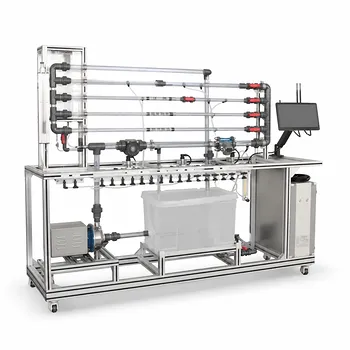
Stop wrestling with sterilizing your sensors. Ex-situ analysis, especially when using Flow Injection Analysis (FIA), solves the core problem that plagues in-situ biosensors in pilot plants: it completely separates the sensitive measurement hardware from the hostile, non-sterile, and constantly shifting environment inside the bioreactor. This decoupling allows you to sterilize the vessel independently, condition the sample for perfect sensor conditions, and automatically recalibrate for drift, all while keeping your process closed and sterile.
While in-situ biosensors promise simplicity, their intolerance of standard sterilization, narrow analytical windows, and fouling issues make them operationally fragile. Ex-situ FIA systems turn these weaknesses into strengths by bringing the sample to a protected, perfectly conditioned analytical loop—but they introduce new design challenges around cell stress and contamination risk that must be actively managed.
The Key Advantages of Ex-Situ FIA Over In-Situ Biosensors
The primary driver for switching to an ex-situ approach is to move the biosensor out of the bioreactor. This fundamental change eliminates the harsh trade-offs that make in-situ monitoring so difficult in a pilot plant.
Overcoming Sterilization and Environmental Limitations
In-situ biosensors rarely survive autoclaving or harsh Clean-in-Place chemicals. You are forced to use chemical sterilants that add risk or find workarounds that compromise sterility.
Ex-situ sensors sit entirely outside the vessel. This lets you sterilize the bioreactor using standard, validated protocols without any concern for the delicate biological recognition element on the sensor. The sensor is installed in a separate, protected analytical loop downstream.
Automated Sample Preconditioning and Calibration
The optimal pH, temperature, and buffer capacity for a biosensor are rarely identical to those of your fermentation broth. In-situ sensors must cope with the medium as-is, leading to signal drift and inaccuracy.
An FIA system can automatically adjust the sample. It can mix the withdrawn broth with a buffer to set the correct pH, dilute the sample to fall within the sensor’s linear range, and even remove interfering substances. The system can also inject a calibration standard between every real sample, automatically correcting for any loss of enzyme activity over time.
Enhanced Sensor Longevity and Maintenance
The biological component of a biosensor—an enzyme or antibody—will eventually deactivate. In an in-situ probe, replacement means breaking sterility, stopping the batch, and physically removing the probe.
Ex-situ maintenance requires no bioreactor intervention. You simply stop the analytical loop, replace a miniature enzyme reactor or an electrode in a flow cell, and restart analysis. This can happen in minutes without ever threatening the main culture.
High Throughput and Wide Dynamic Range
The combination of FIA and automatic dilution gives the system an enormous analytical window. It can measure substrate concentrations from 0.2 g/L all the way to 50 g/L by automatically adjusting the dilution factor.
Analysis times are also rapid. A typical cycle can be completed in around two minutes, providing near-real-time data without the long delays of traditional on-line HPLC. The flow-through design also avoids common probe pitfalls like air bubble entrapment or membrane clogging, which plague static sensor tips.
Critical Design Considerations for Ex-Situ Monitoring
The very act of withdrawing a sample from the bioreactor creates a new set of engineering problems. Ignoring them will hurt cell health and data integrity.
Managing Shear Stress and Cell Viability
The recirculation pump is a danger to your cells. Ex-situ sampling loops require high cross-flow velocities across a membrane to obtain a clear filtrate. This subjects cells to mechanical shear as they pass through the pump head and tubing, which can rupture cells and reduce viability.
You must carefully select low-shear pumps, use smooth-bore tubing, and minimize the loop length to keep shear below the threshold that damages your specific cell line.
Preventing Starvation and Metabolic Perturbation
The moment cells leave the controlled bioreactor environment, their metabolism changes. In the external loop, cells may experience dissolved oxygen and nutrient gradients—especially in the long, narrow tubing where oxygen transfer is poor. This can trigger unwanted stress responses and alter the very metabolite concentrations you are trying to measure.
Design the loop to maintain a low residence time and, where possible, supply oxygen or maintain temperature if the loop is long.
Contamination Risk in Recirculation Loops
Every additional sterile barrier you cross is a potential entry point for contaminants. Ex-situ loops require multiple aseptic connectors, a pump, and often a filter housing, all of which are leak points. A single failed connection can spoil an entire pilot run.
A rigorous design uses steamed or chemically sterilized loop components, aseptic pinch valves, and a clear sterilization-in-place strategy for the entire analysis circuit.
Long-Term Membrane Fouling
Fouling is not eliminated—it is simply relocated. Regardless of whether the filter is inside the vessel (in-situ) or outside (ex-situ), proteins and debris will eventually coat the membrane surface. This reduces permeability and can block larger molecules from reaching the detector.
The design must accommodate periodic cleaning or membrane replacement. An FIA system can include automated backflushing or cleaning agent injection to extend run time, but you must validate that cleaning chemicals do not contaminate the bioreactor.
Understanding the Trade-offs: In-Situ Still Has a Place
An objective assessment must acknowledge that ex-situ systems are not universally superior.
- Unmatched simplicity: An in-situ optical or electrochemical probe with no moving parts is far simpler to install and maintain if your process allows it. There is no pump, no tubing, and no sterility boundary to manage. - Lower cost and footprint: A single disposable optical sensor patch costs a fraction of a full FIA manifold with pumps, valves, and detectors. - No cell stress: Without an external loop, there is zero risk of shear damage or starvation. This is critical for shear-sensitive primary cells or stem cell cultures.
The decision hinges on whether your process can tolerate the in-situ sensor's limitations. If sterilization is not an issue (e.g., single-use bags with gamma-sterilized sensors) and the concentration range is narrow, in-situ remains a robust choice.
Making the Right Choice for Your Bioprocess Pilot Plant
Your selection must start with a brutal assessment of your process's non-negotiables. Use the following goal-based guidance.
- If your primary focus is operational sterility and sensor longevity: Choose an ex-situ FIA system. It allows standard autoclaving and easy sensor replacement without ever compromising the bioreactor.
- If your primary focus is protecting extremely shear-sensitive cells: Re-evaluate the need for an external loop. An in-situ probe, even with its calibration disadvantages, avoids the mechanical damage a pump inflicts.
- If your primary focus is a wide analytical range and automated recalibration: The FIA approach is unmatched. Its automated dilution and standard injection deliver accuracy that a drifting, single-point in-situ probe simply cannot.
- If your primary focus is training and demonstrating automated monitoring: An FIA system physically shows the principles of sampling, conditioning, and detection loops, making it a superior educational tool.
The ultimate goal is not to collect data, but to collect data that accurately represents your culture’s true state without damaging it. Ex-situ FIA hands you the analytical power, but it demands a meticulous engineering approach to tame the very risks it creates.
Summary Table:
| Feature | Ex-Situ FIA (Flow Injection Analysis) | In-Situ Biosensors |
|---|---|---|
| Sterilization | Sensor is external; autoclave vessel safely | Sensor inside; high risk of sterilization damage |
| Calibration | Automated online recalibration and dilution | Manual, prone to drift, difficult to recalibrate |
| Maintenance | Easy replacement without breaking sterility | Requires breaking sterility to replace/service |
| Cell Safety | Risk of shear stress & starvation in loop | No external loop; zero mechanical stress |
| Cost & Complexity | Higher setup cost; complex fluidics | Lower cost; simple installation |
Optimize Your Bioprocess Training & Research with LABPARK
Are you looking to equip your facility with advanced, reliable bioprocess monitoring systems? LABPARK provides cutting-edge Educational and Vocational Unit Operations Pilot Plants in chemical engineering, bioprocess & biotech, and environmental & water treatment.
Tailored for universities, research institutes, and enterprises, our pilot plants deliver hands-on learning and scalable research capabilities. Let us help you implement the ideal ex-situ or in-situ monitoring setup for your unique goals.
Contact LABPARK today to discuss your project requirements and get a customized solution!
Related Products
People Also Ask
- How do pilot plants teach U-tube manometers? Master Differential Pressure Calculations
- How do pilot plants demonstrate siphon pressure variations? Visualizing Bernoulli's Energy Balance
- How does the Navier-Stokes to Stokes flow transition benefit chemical engineering pilot plant students?
- What are the differences between open channel and pipe flow? Pilot Plant Guide
- How to demonstrate laminar entry length, pipe diameter, and Reynolds number in pilot plants? Practical lab steps.