Separating lead from copper in a mixed deposit is a foundational exercise in gravimetric analysis. The procedure begins by co-precipitating both metals as sulfides, then selectively isolating lead as lead sulfate ((PbSO_4)) through careful acid digestion, alcohol addition, and cold filtration. The copper remains dissolved and can be quantified separately by iodometric titration.
The core challenge is overcoming the slight solubility of lead sulfate. The method uses a combination of sulfuric acid, ethanol, and low temperature to drive the precipitation to near-completeness, ensuring a reliable gravimetric result. This rigorous approach teaches essential skills in precipitate handling, interference control, and process safety.
The Chemical Logic Behind the Separation
Why Sulfide Co-Precipitation Comes First
Both lead and copper form highly insoluble sulfides in acidic solution when hydrogen sulfide ((H_2S)) is bubbled through. This step quantitatively captures both metals in a single solid mass, eliminating any soluble matrix interference.
The acidic environment prevents the precipitation of other metal sulfides (such as zinc or iron) that might be present in a real deposit sample. After filtration, you hold the mixed sulfides as a clean starting material for the oxidation stage.
Converting Sulfides to Sulfates
The collected precipitate is treated with a strong oxidizing mixture of sulfuric, nitric, and perchloric acids. This wet digestion destroys the sulfide matrix and converts the metals to their highest oxidation states, forming soluble sulfates.
Perchloric acid is particularly powerful, breaking down any resistant organic matter or colloidal sulfur that might otherwise occlude lead. The eventual fuming with sulfuric acid drives off the more volatile nitric and perchloric acids, leaving only sulfates behind.
Step-by-Step Gravimetric Procedure
Co-Precipitation and Initial Filtration
- Bubble (H_2S) gas through the acidic sample solution to co-precipitate lead sulfide ((PbS)) and copper sulfide ((CuS)).
- Filter the black precipitate through a medium-porosity filter paper.
- Transfer the entire residue into a beaker for the oxidation step.
Oxidative Digestion and Fuming
Add a measured volume of sulfuric, nitric, and perchloric acids to the precipitate. Heat carefully—first to dissolve, then to evaporate until dense white fumes of sulfuric acid appear. This is the fuming stage.
At this point, all nitrogen oxides and perchlorate vapors are expelled. The solution now contains lead and copper as sulfates in a concentrated sulfuric acid medium.
Precise Precipitation of Lead Sulfate
Allow the fumed solution to cool. Dilute with a controlled amount of distilled water to bring the sulfuric acid concentration to around 1–2 M. Then, add an equal volume of ethanol (alcohol) while stirring.
The alcohol drastically reduces the dielectric constant of the solvent, which lowers the solubility of lead sulfate from roughly 4 mg per 100 mL to near-zero levels. Without this step, significant lead would remain dissolved and escape gravimetric detection.
Chilling and Final Filtration
Place the mixture in an ice bath for at least 30 minutes. The cold temperature further depresses solubility. Then, filter through a tared, medium-porosity sintered-glass crucible using gentle suction.
Wash the white lead sulfate precipitate with a chilled alcohol–sulfuric acid wash solution. This removes any residual copper and excess sulfuric acid without dissolving the lead sulfate. Plain water would cause visible losses.
Drying and Weighing
Dry the crucible and precipitate at 105°C in an oven until constant weight is achieved (typically 1–2 hours). After cooling in a desiccator, weigh the crucible. The mass difference gives you the mass of anhydrous (PbSO_4). Convert to lead content using the gravimetric factor ((Pb/PbSO_4 \approx 0.6832)).
Copper remains in the filtrate and washings. It can be determined later by iodometric titration, a classic redox method involving potassium iodide and standardized thiosulfate.
Why Alcohol and Ice Are Non-Negotiable
The Solubility Trap
Lead sulfate is sparingly soluble in water—around 42 mg/L at 20°C. While this seems tiny, in a typical 200 mL precipitation volume you could lose over 8 mg of lead, a massive error for a sample containing only 100 mg total.
Adding ethanol drops the solubility by a factor of 10 or more. Chilling to near 0°C cuts it even further. Together, they ensure that the amount of lead remaining in solution is below the analytical balance’s detection limit.
The Washing Dilemma
Using pure water to wash would redissolve PbSO4. The alcohol–sulfuric acid mixture maintains a low-solubility environment while diluting copper contamination. This approach is a textbook example of using a common ion (sulfate) and a non-aqueous solvent simultaneously.
Understanding the Trade-offs
Safety Risks with Hydrogen Sulfide and Perchloric Acid
(H_2S) is highly toxic and flammable. All work must be performed in a fume hood with continuous gas monitoring. Perchloric acid forms explosive mixtures with organic matter; strict protocols (dedicated wash-down hoods, no contact with rubber or organic solvents) are mandatory. This procedure is not suitable for an unsupervised environment.
Potential for Incomplete Precipitation
If the sulfuric acid concentration after fuming is too high (above about 2.5 M), the solubility of lead sulfate can actually increase due to the formation of bisulfate complexes. Precise dilution is critical. Additionally, insufficient alcohol volume or a rushed chilling step will leave lead in solution.
Time Demand
From sulfide precipitation to constant-weight drying, the full protocol can take 6–8 hours, spread across two laboratory sessions. It teaches patience and meticulous planning, but it is impractical for rapid field analysis.
Cross-Contamination and Crucible Handling
Sintered-glass crucibles must be scrupulously clean and pre-dried to constant weight. Any residual moisture from the wash step will lead to prolonged drying times and potentially inaccurate tare masses. The precipitate must not be exposed to reducing flames or overheating, which could decompose the sulfate.
How to Apply This Procedure in Your Training
Focus on what you need to learn most. Here are targeted paths:
- If your primary focus is mastering classical gravimetric technique: Follow every detail of precipitation, digestion, and filtration. Note how crystal size, wash solution composition, and drying temperature affect final mass.
- If your primary focus is understanding solubility equilibria: Calculate the theoretical loss of lead at each stage and compare it with your experimental error. This makes the alcohol/ice logic tangible.
- If your primary focus is safe handling of hazardous reagents: Prioritize the H2S generator setup, perchloric acid fume hood checks, and waste disposal routes. Let the instructor guide you stepwise.
- If your primary focus is a complete separation scheme: Then complete the copper determination by collecting the filtrate, adjusting pH, and performing the iodometric titration. This ties the whole analytical cycle together.
This procedure is more than a recipe—it’s a controlled lesson in chemical equilibrium, safety, and quantitative precision. Treat each step as a deliberate engineering choice, and you will come away with a skill set that applies to far more complex separations.
Summary Table:
| Step | Reagents & Conditions | Key Purpose & Chemical Logic |
|---|---|---|
| 1. Co-Precipitation | Hydrogen Sulfide ($H_2S$) gas | Quantitatively precipitates Pb and Cu as sulfides ($PbS$, $CuS$) to eliminate matrix interference. |
| 2. Oxidative Digestion | Sulfuric, nitric, and perchloric acids; heating | Destroys the sulfide matrix, oxidizes metals to soluble sulfates, and fumes off volatile acids. |
| 3. Selective Precipitation | Ethanol (alcohol) & Ice Bath (0-5°C) | Lowers the dielectric constant and temperature to minimize $PbSO_4$ solubility for complete recovery. |
| 4. Filtration & Washing | Chilled alcohol-sulfuric acid wash | Removes residual copper and excess acid without dissolving the $PbSO_4$ precipitate. |
| 5. Drying & Weighing | Oven drying at 105°C | Dries the anhydrous $PbSO_4$ to a constant weight for gravimetric calculation (factor $\approx 0.6832$). |
Elevate Your Chemical Engineering Laboratory Training with LABPARK
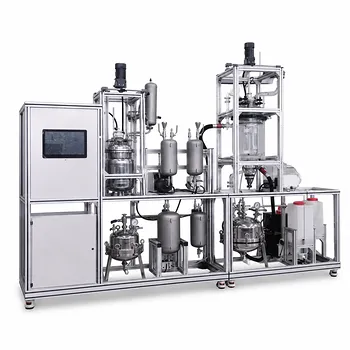
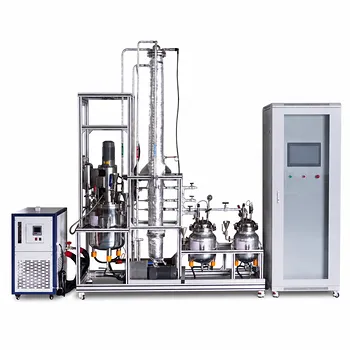
Translating complex analytical chemistry and separation principles into practical skills requires robust, hands-on training systems. LABPARK provides premium Educational and Vocational Unit Operations Pilot Plants in chemical engineering, bioprocess & biotech, and environmental & water treatment designed specifically for universities, research institutes, and enterprises.
Why choose LABPARK for your chemical engineering laboratories?
- Real-World Experience: Bridge the gap between textbook theory and industrial practice with safe, scaled-down pilot plants.
- Robust Curriculum Support: Enable students and researchers to master filtration, precipitation, distillation, and other critical unit operations.
- Uncompromised Quality & Safety: Engineered to meet rigorous laboratory safety standards for hazard control and process reliability.
Ready to transform your laboratory training program? Contact our technical experts today to find the perfect pilot plant solution for your institution!
Related Products
- Gallium and Indium Selective Extraction Educational Pilot Plant
- Carbon Material Thermal Pretreatment Multiphase Separation Educational Pilot Plant
People Also Ask
- How do pilot plants differentiate physical vs chemical extraction? Enhance Chemical Engineering Training
- What is the significance of the isopycnic line in liquid-liquid extraction? Avoid Column Flooding
- How do droplet motion states affect kD in extraction pilot plants? Optimize Mass Transfer
- Why is predicting multicomponent LLE from binary data more challenging than VLE? Master your pilot plant design.
- How are ternary phase diagrams and LLE data applied in extraction experiments? Optimize Pilot Plant Scale-up