Instructors can turn a routine analytical chemistry lab into a compelling diagnostic mission by linking every precipitate and titration to real pilot plant fouling events. The core of this guidance involves first ensuring students properly sample and, if necessary, acid-digest the scale deposit. For calcium, they precipitate calcium oxalate at 60°C in a carefully neutralized solution and quantify it through permanganate titration. For magnesium, they precipitate magnesium hydroxyquinolate (using 8-hydroxyquinoline) and use gravimetric drying at 100–105°C or 130–140°C to calculate MgO content. The most effective instruction, however, does not stop at the procedural recipe—it embeds quality control, interference management, and the urgent “why” behind industrial water treatment directly into the workflow.
The deepest pedagogical value comes from helping students see these two classical wet methods not as isolated titrations but as forensic tools. Instructors should frame every pH adjustment and every wash step as critical for diagnosing heat exchanger inefficiency or evaluating a chemical anti-scalant program, turning the pilot plant into a living laboratory where analytical accuracy directly informs operational decisions.
Framing the Analysis as a Diagnostic Investigation
Before a single beaker is filled, students must understand that scale is a message from the process. Instructors should start by linking the observed scale location (e.g., boiler tubes, membrane surfaces) to expected chemical species.
Connecting Scale Composition to Plant Operation
Hardness-based scales are predominantly calcium and magnesium carbonates, sulfates, or silicates.
Guide students to hypothesize what they will find based on the water source and the type of pilot plant they are running.
A cooling tower blowdown deposit will differ radically from a boiler scale. Anchoring the analysis to these differences immediately elevates student engagement.
The Value of Pilot Plant-Scale Sampling
Unlike a pre-packaged lab unknown, a pilot plant sample is inherently messy and non-homogeneous.
Instructors should teach a systematic grinding and quartering approach to obtain a representative sample. This tangible encounter with real-world sample preparation is a pivotal engineering lesson in itself, bridging bench-top chemistry and industrial reality.
Mastering the Calcium Quantification Workflow
The classical oxalate-permanganate method remains a foundational teaching tool, not just for its chemistry but for the discipline it instills. The primary reference outlines a bulletproof sequence that instructors can use to build student confidence.
Step-by-Step Precipitation of Calcium Oxalate
Students begin by acidifying the sample aliquot to keep the calcium in solution. They then add a saturated ammonium oxalate solution, and the critical step follows: neutralization.
The methyl red indicator’s color change from red to yellow is not just a visual cue; it is the gatekeeper of a pure precipitate. Neutralizing with ammonium hydroxide must be done dropwise at 60°C. This slow, thermal precipitation promotes the formation of coarse, easily filterable calcium oxalate monohydrate crystals.
Critical Control Points: pH, Temperature, and Digestion
Instructors must hammer home three process parameters. Temperature at 60°C minimizes magnesium co-precipitation. pH near the neutral point prevents premature precipitation or redissolution. Digestion time allows crystals to grow, which prevents them from clogging the filter paper later.
These are not arbitrary numbers; they are industrial truths. Pilot plant precipitation units operate on these same principles of controlled supersaturation, and students who learn to manipulate them here can carry that intuition directly to a plant floor.
From Titration to Meaningful Data
After filtration and thorough washing, the precipitate is dissolved in hot 1:1 sulfuric acid. The liberated oxalic acid is titrated with standardized 0.1 N potassium permanganate at 80°C until a stable pink end point.
The endpoint is self-indicating, but students must swirl patiently. Instructors should ask them to calculate the calcium content, then zoom out and correlate that mass to the scale’s overall hardness contribution.
Guiding Students Through Magnesium Gravimetric Analysis
While calcium is quantified by titration, the direct magnesium determination relies on the elegant specificity of an organic precipitant. This teaches students the power of selective chemical reagents.
The Magnesium Hydroxyquinolate Method
Magnesium is precipitated from a neutralized solution (using a phenolphthalein indicator to avoid excess alkali) with an 8-hydroxyquinoline (oxine) solution at 60°C.
The result is a crystalline magnesium hydroxyquinolate complex. This step starkly illustrates the concept of chelation and selectivity—the oxine agent is carefully chosen to avoid precipitating calcium or alkali metals under controlled conditions.
Drying and Gravimetric Calculation Precision
The precipitate is collected in a pre-weighed sintered-glass crucible. Instructors must teach the nuanced choice of drying temperature: 100–105°C for the dihydrate form, or 130–140°C for the anhydrous form, which directly yields MgO upon calculation.
Weighing to constant mass teaches patience and the rigorous reality of gravimetric analysis. That final, stable number on the balance is a direct contribution to the overall scale mass balance.
Navigating Common Analytical Pitfalls
An honest, unbiased guide for instructors must address where this classical scheme can fail. Acknowledging these pitfalls is what turns a recipe follower into a critical thinker.
The Risk of Co-Precipitation
Magnesium oxalate contamination is the most common gremlin in the calcium determination. Rapid neutralization or insufficient oxalate control can trap magnesium ions in the calcium precipitate, giving false highs for calcium.
The solution, as the supplementary references note, is a double precipitation: redissolving the first precipitate and repeating the procedure. Instructors who demonstrate this failure and its fix give students a lifelong diagnostic skill.
Iron and Aluminum Interferences
Boiler scales often contain iron and aluminum oxides. These ions interfere with both calcium and magnesium precipitation by consuming precipitant or forming gelatinous hydroxides.
The instructor’s pre-lab should discuss sample pre-treatment, such as an initial carbonate fusion or an ammonium hydroxide precipitation to remove these heavy metals before the hardness analysis begins. This demonstrates integrated, sequential analysis rather than isolated tests.
When to Pre-Treat the Scale Sample
Acid-insoluble residues (silicates) and organic matter foul deposits. Instructors must guide students to decide when a simple acid dissolution suffices and when a more aggressive fusion is required.
This decision tree—dissolution versus fusion—is at the heart of process chemical engineering. It mirrors the choices engineers make when cleaning a real heat exchanger chemically versus mechanically.
Embedding the Lesson in Engineering Practice
The final layer of guidance is helping students treat their final numbers as operating data, not just a grade.
Using Pilot Plant Data to Evaluate Anti-Scalant Performance
Instructors can take scale from a heat exchanger run with a known anti-scalant and without one. Students then quantify calcium and magnesium in both.
The numerical drop in scale mass becomes a direct measure of chemical program efficiency. This transforms the lab from a pure chemistry exercise into a process optimization experiment.
Transforming Lab Results into Operational Recommendations
A complete instructional cycle includes a formal reporting component. Students should not only report %Ca and %Mg but also propose if a water softening unit is performing below its design spec or if a phosphonate inhibitor is losing efficacy.
When a student can say, “Based on the 15% magnesium hydroxyquinolate precipitate, our ion exchange softener bypass is leaking,” they are thinking like a plant technologist. That’s the ultimate goal of the guidance.
How to Tailor These Methods to Your Learning Objectives
Your instructional emphasis will depend on whether you are teaching pure chemistry, process engineering, or industrial troubleshooting. Choose the focus that best serves your students.
- If your primary focus is foundational analytical technique: Emphasize replicate trials, statistical evaluation of the permanganate titer, and accuracy using standard calcium and magnesium solutions.
- If your primary focus is industrial troubleshooting: Source real, inhomogeneous pilot plant deposits and require students to pre-treat, remove interferences, and present a full diagnostic report linking chemistry to plant upsets.
- If your primary focus is process optimization: Have students vary a single parameter—like softener brine draw rate or anti-scalant dosage—and then quantify how scale calcium and magnesium concentrations shift, teaching them to measure mitigation effectiveness quantitatively.
By treating every dried crucible and every drop of permanganate as a data point in a larger plant story, instructors empower students not just to analyze scale, but to understand and prevent it.
Summary Table:
| Analyte | Analytical Method | Key Reagents | Critical Control Points |
|---|---|---|---|
| Calcium (Ca) | Oxalate precipitation & Permanganate titration | Ammonium oxalate, Potassium permanganate | Neutralize dropwise at 60°C (methyl red indicator); titrate at 80°C |
| Magnesium (Mg) | Gravimetric analysis (Oxine method) | 8-hydroxyquinoline | Precipitate at 60°C; dry at 130–140°C for anhydrous MgO calculation |
Elevate Your Engineering Curriculum with LABPARK Pilot Plants
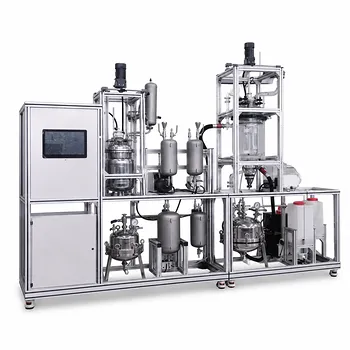
Bridge the gap between classroom chemistry and industrial reality. LABPARK provides premium Educational and Vocational Unit Operations Pilot Plants in chemical engineering, bioprocess & biotech, and environmental & water treatment.
Designed specifically for universities, research institutes, and enterprises, our systems offer students hands-on experience with real-world process challenges—such as scaling, fouling, and chemical dosing control. Enhance your lab's training capabilities, boost student engagement, and prepare the next generation of process engineers.
Contact LABPARK today to explore our customizable pilot plant solutions and request a quotation!
Related Products
People Also Ask
- How do pilot plants differentiate physical vs chemical extraction? Enhance Chemical Engineering Training
- Why is predicting multicomponent LLE from binary data more challenging than VLE? Master your pilot plant design.
- What is the significance of the isopycnic line in liquid-liquid extraction? Avoid Column Flooding
- How do droplet motion states affect kD in extraction pilot plants? Optimize Mass Transfer
- In a liquid-liquid extraction pilot plant, how is a ternary-phase diagram utilized to determine solvent feed requirements?