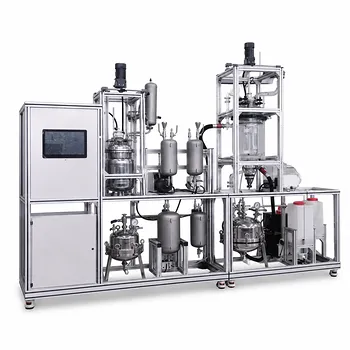
The simplest, most effective way to prevent galvanic corrosion between dissimilar metals in a pilot plant fluid system is to break the electrical circuit. You can do this by installing electrical insulation—non‑conductive gaskets, isolating washers, or dielectric pipe unions—at every metal‑to‑metal joint. If that’s not possible, you can either limit the galvanic potential difference between the materials, install a sacrificial anode, or design the more anodic part with extra wall thickness as a corrosion allowance.
Core takeaway: Prevention boils down to interrupting the electrical path that allows current to flow between two different metals in an electrolyte. Electrical isolation is the most direct and reliable defense, but pilot‑plant realities—pressure, temperature, chemical compatibility, maintenance—often demand a mix of strategies. Understanding the trade‑offs of each method is what separates a robust, long‑lived fluid system from one that prematurely leaks or fails.
Why Galvanic Corrosion Attacks Your Pilot Plant
The Science in Seconds
Galvanic corrosion is a battery-like reaction. When two metals with different electrochemical potentials are connected both electrically and by an electrolyte (your process fluid), a current flows. The more active metal (the anode) corrodes rapidly, while the more noble metal (the cathode) is protected.
In a pilot‑plant electrolyte system, the fluid is often highly conductive, which makes the mechanism especially aggressive. Even small potential differences can drive significant localized attack.
Where It Strikes in a Fluid System
The danger zones are joints, instrument fittings, and valve connections. A stainless‑steel instrument threaded into a carbon‑steel pipe, a copper gasket against a steel flange, or a brass ball valve between aluminum tubing—all become tiny galvanic cells the moment electrolyte wets the interface.
Because pilot plants are compact and often reused in different configurations, these mixed‑metal junctions are common. Unprotected, they can develop deep pitting, cracks, or full‑wall perforation in just a few weeks.
Proven Methods to Break the Corrosion Circuit
1. Electrical Isolation – The Primary Defense
Break the metallic path. The most reliable way to stop galvanic corrosion is to remove the electrical connection between the dissimilar metals while they are wetted by the electrolyte.
Practical isolation techniques include:
- Non‑conductive gaskets (PTFE, EPDM, fiber‑reinforced mica) inserted between flanges.
- Isolating sleeves and washers on bolted connections, ensuring the bolt itself does not bridge the two metals.
- Dielectric unions that separate pipe runs with a non‑conducting plastic or ceramic barrier.
When done properly, isolation eliminates the current loop and the galvanic attack ceases altogether.
2. Mind the Material Matchup
Where isolation is impractical, limit the potential difference between the connected metals. The galvanic series ranks materials from active (anodic) to noble (cathodic). Pairs that are close together in a given electrolyte will experience much less driving force than pairs far apart.
For example, connecting 304 stainless steel to 316 stainless is usually safe, while coupling 304 stainless directly to aluminum or carbon steel almost guarantees trouble. This approach requires careful material selection during design and may force trade‑offs with process compatibility.
3. Sacrificial Anodes – Let Something Else Corrode
A sacrificial anode is a piece of highly active metal (zinc, magnesium, or aluminum) deliberately added to the system and electrically bonded to the structure. Because it has a more negative potential than either of the dissimilar metals you want to protect, it corrodes first, sparing the critical components.
This method works well for large, complex assemblies where isolating every joint is impossible. It is common in marine environments and can be adapted to pilot plants, but it introduces maintenance demands—the anode slowly dissolves and must be replaced on a schedule.
4. Design for Corrosion – The Thick-Skin Approach
If you can’t stop the galvanic attack, you can buy time. By increasing the wall thickness of the anodic component beyond the normal structural requirement, you create a corrosion allowance that accommodates the expected metal loss over a defined operating period.
This is not corrosion prevention; it is fatigue‑life management. It works for vessels and straight pipe sections where internal inspection and thickness monitoring are straightforward, but it can mask gradual deterioration until a sudden failure occurs.
Understanding the Trade-offs
Isolation vs. Pressure and Temperature Limits
Non‑metallic gaskets and dielectric fittings often have lower pressure‑temperature ratings than the metals they separate. A PTFE gasket that works perfectly at ambient conditions can cold‑flow or extrude under high bolt loads and elevated temperatures. In pilot‑plant loops subject to steam cleaning or thermal cycling, isolation components must be validated for the entire operating envelope.
Sacrificial Anodes: Maintenance and Contamination
Every sacrificial anode adds dissolved metal ions to your electrolyte. This may be harmless—or it can poison catalysts, foul membranes, or alter fluid properties in sensitive applications. Anodes also need periodic inspection and replacement; a forgotten anode eventually stops protecting and leaves the system vulnerable.
Material Compatibility vs. Process Requirements
Sometimes the process dictates the metal. You might need a specific alloy for its corrosion resistance to the fluid itself, leaving few choices for a galvanically matched partner. In those cases, isolation or active cathodic protection become essential because material selection alone cannot solve the problem.
The Corrosion Allowance Illusion
Designing with extra thickness feels safe but can lead to a false sense of security. The corrosion is often highly localized—pitting under a gasket or at a crevice—not uniform thinning. A thickness measurement far from the joint can read normal while the sealing surface has already been breached. Use this approach only as a supplementary short‑term tactic, not a primary defense.
Making the Right Choice for Your Pilot Plant
Every prevention method involves a set of compromises. Select the approach that aligns with what matters most in your campaign.
- If your primary focus is long‑term reliability with minimal upkeep: Prioritize electrical isolation using carefully selected non‑conductive gaskets, sleeves, and dielectric unions. Validate materials against your full temperature and pressure range.
- If your system faces extreme process conditions that rule out polymer‑based isolation: Focus on minimizing the galvanic potential difference by upgrading components to more noble alloys, or use a sacrificial anode system with a rigorous replacement schedule.
- If you are running a short‑term proof‑of‑concept: A corrosion allowance on the anodic parts can keep costs down, but document baseline thickness measurements and inspect joints after every run.
- If fluid purity is non‑negotiable: Avoid sacrificial anodes entirely; rely on complete metallic isolation with high‑purity insulating barriers like fluoropolymer gaskets and sleeves, and consider fully welded, same‑alloy systems where possible.
By deliberately managing the electrical pathway and material pairings, you can keep your pilot plant flowing reliably without unscheduled corrosion failures.
Summary Table:
| Prevention Method | Key Mechanism | Main Limitations & Trade-offs |
|---|---|---|
| Electrical Isolation | Breaks the metallic path using non-conductive gaskets or dielectric unions | Gaskets have lower temperature and pressure limits |
| Material Selection | Uses metals with close galvanic potentials to reduce driving force | May compromise required process fluid compatibility |
| Sacrificial Anodes | Adds a highly active metal to corrode first, protecting components | Requires replacement; risks process fluid contamination |
| Corrosion Allowance | Increases wall thickness to budget for expected metal loss | Localized pitting can still cause sudden, undetected leaks |
Build a Reliable, Corrosion-Free Pilot Plant with LABPARK
Designing pilot plants with mixed-metal systems requires careful material engineering to prevent premature failures. LABPARK provides premium Educational and Vocational Unit Operations Pilot Plants in chemical engineering, bioprocess & biotech, and environmental & water treatment designed specifically for universities, research institutes, and enterprises.
Our expert-engineered systems ensure maximum safety, longevity, and process purity. Ready to set up your next-generation pilot plant?
👉 Contact LABPARK today to get tailored technical support and solutions for your facility.
Related Products
People Also Ask
- How do pilot plants differentiate physical vs chemical extraction? Enhance Chemical Engineering Training
- What is the significance of the isopycnic line in liquid-liquid extraction? Avoid Column Flooding
- How do droplet motion states affect kD in extraction pilot plants? Optimize Mass Transfer
- Why is predicting multicomponent LLE from binary data more challenging than VLE? Master your pilot plant design.
- How are ternary phase diagrams and LLE data applied in extraction experiments? Optimize Pilot Plant Scale-up