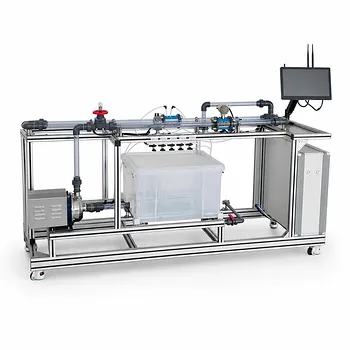
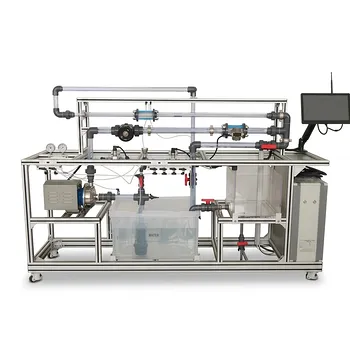
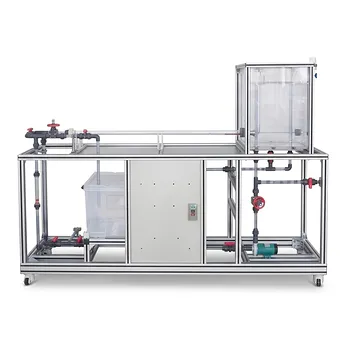
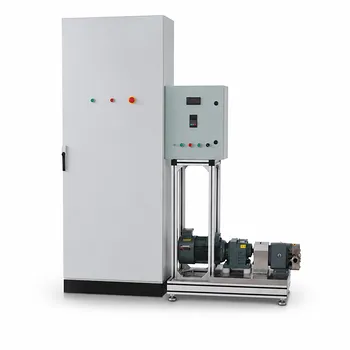
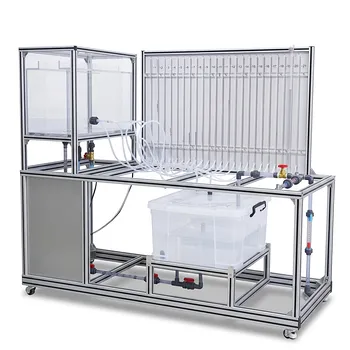
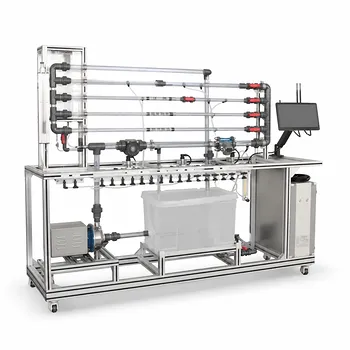
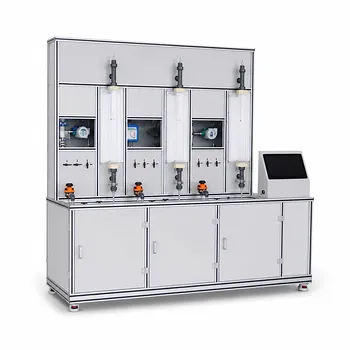
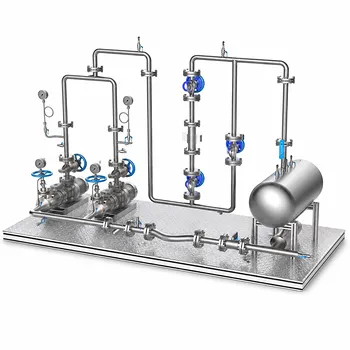
Operating principle is the fundamental distinction: A rotameter is a variable-area flowmeter that maintains a constant pressure drop, while a differential-pressure (DP) flowmeter is a variable-head device operating at a fixed flow area. In vocational pilot plants, this means a rotameter gives you direct, local visual flow indication—perfect for clean fluids and simple calibration exercises. A DP flowmeter, by contrast, becomes the backbone for teaching industrial transmitter integration, square‑root extraction, and closed‑loop PID flow control.
For vocational process control pilot plants, the choice hinges on what you need to teach: select a rotameter when your goal is immediate, visual flow observation and fundamental fluid mechanics, and choose a DP flowmeter when the curriculum demands hands‑on experience with real‑world industrial measurement loops and signal processing.
How Each Flowmeter Operates
The two meters differ in what stays constant and what changes to determine flow. Understanding this deepens your plant’s educational value far beyond a simple technology comparison.
The Rotameter: Constant Pressure Drop, Variable Area
A rotameter’s float reaches equilibrium when its weight, buoyancy, and the drag force from the fluid balance. This equilibrium maintains a constant pressure difference across the float.
As flow increases, the float rises and expands the annular flow area, restoring the pressure drop to its equilibrium value. The flow rate is read directly off the float’s height on a graduated scale.
Because the pressure drop is constant, the rotameter’s scale is nearly linear—making it extremely intuitive for students and operators to read.
The DP Flowmeter: Constant Area, Variable Pressure Drop
A DP flowmeter, such as an orifice plate or Venturi tube, forces fluid through a fixed flow area. A restriction creates a pressure drop that varies with the flow rate.
Higher flow creates a larger differential pressure. The relationship is quadratic: flow rate is proportional to the square root of the measured differential pressure.
This means raw transmitter output must be linearized—introducing the critical industrial concept of square‑root extraction that is central to control system training.
Application Differences in Vocational Pilot Plants
The operational distinctions translate directly into what you can teach and how effectively you can demonstrate process control principles.
Why Rotameters Excel for Visual Monitoring and Calibration
Rotameters provide an immediate, visible flow indication without any power or transmitter required. This makes them ideal for:
- Quick sanity checks during loop tuning or troubleshooting.
- Calibration exercises, where a stable, self‑contained reference is invaluable.
- Demonstrating basic fluid mechanics, such as Reynolds number effects or float dynamics, in a tangible way.
Their simplicity ensures that students grasp the link between physical phenomena and measured values before introducing electronics.
Why DP Flowmeters Are Essential for Industrial Control Training
A DP flowmeter is not just a sensor; it is a complete measurement system. It requires a differential-pressure transmitter, impulse lines, and a programmable logic controller or distributed control system to extract flow.
This makes it the go‑to tool for teaching:
- 4–20 mA transmitter configuration and scaling.
- Square‑root extraction in the control system—a foundational skill for any instrument technician.
- Closed‑loop PID flow control, where the DP signal becomes the process variable for cascaded loops.
Pilot plants equipped with DP flowmeters mirror the exact signal chain found in real refineries and chemical plants.
Understanding the Trade‑offs and Limitations
Using one meter type does not automatically disqualify the other. The key is to align the meter’s limitations with your teaching objectives.
Rotameter Drawbacks: Fluids, Orientation, and Output
Rotameters are fluid‑ and orientation‑sensitive. They must be mounted vertically, and the float material must be matched to the fluid’s density and viscosity.
They only provide local indication—no remote transmission. This means you cannot easily log data or integrate them into automated control loops without adding external sensors.
Additionally, dirty or opaque fluids can foul the float or make the scale unreadable, limiting them to clean, transparent liquids or gases in most pilot plant settings.
DP Flowmeter Complexities: Square‑Root Extraction and Signal Noise
DP meters introduce permanent pressure loss and are susceptible to impulse line plugging. Their accuracy at low flow rates degrades due to the square‑root relationship, where small pressure differences yield large flow errors.
But the greatest pedagogical challenge—and opportunity—is the square‑root extraction. Students must understand why it’s needed and how to implement it correctly. Failure to do so mimics a common real‑world commissioning pitfall, making it a powerful teaching moment.
Making the Right Choice for Your Training Goal
Your decision should be driven by what you want your students to internalize first. Align the meter with the lesson, not just the loop.
- If your primary focus is basic flow visualization and sensor principles: Start with a rotameter. Its direct, no‑electronics operation builds intuition for what flow “looks like” and how mechanical equilibrium governs measurement.
- If your primary focus is industrial transmitter integration and closed‑loop control: Install a DP flowmeter. It forces students to work with 4–20 mA signals, scaling, square‑root extraction, and PID tuning—exactly as they will in the field.
A well‑designed pilot plant often uses both strategically, letting students compare a rotameter’s local verification against a DP loop’s transmitted signal, thereby cementing the entire measurement hierarchy.
Summary Table:
| Feature | Rotameter (Variable-Area) | Differential Pressure (DP) Flowmeter |
|---|---|---|
| Operating Principle | Constant pressure drop, variable flow area | Variable pressure drop, fixed flow area |
| Signal Output | Visual, local indication (no power needed) | 4–20 mA electronic signal (requires transmitter) |
| Signal Processing | Linear scale (no extraction required) | Quadratic relationship (requires square-root extraction) |
| Best Educational Use | Fluid mechanics visualization & local calibration | Industrial transmitter integration & closed-loop PID control |
| System Complexity | Low (simple mechanical setup) | High (requires impulse lines, PLCs/DCS, and scaling) |
Build the Perfect Process Control Lab with LABPARK
Choosing the right instrumentation is critical to preparing students for real-world industrial environments. LABPARK designs and manufactures high-quality Educational and Vocational Unit Operations Pilot Plants in chemical engineering, bioprocess & biotech, and environmental & water treatment for universities, research institutes, and enterprises worldwide.
Whether you need to teach fundamental fluid mechanics or advanced closed-loop industrial control, we customize our pilot plants to align perfectly with your curriculum and training goals.
Contact LABPARK today to discuss your project requirements and receive a detailed technical proposal!
Related Products
- Orifice and Venturi Flowmeter Calibration Educational Pilot Plant for Fluid Mechanics Laboratory
- Centrifugal Pump Performance and Orifice Flowmeter Calibration Educational Pilot Plant
- Fluid Reynolds Number Demonstration Educational Unit Operations Pilot Plant
- Quantitative Dosing and Liquid Flow Control Educational Unit Operations Pilot Plant
- Bernoulli Equation Demonstration Unit Operations Pilot Plant
People Also Ask
- What is the difference between static and stagnation pressure? Master Pilot Plant Flow Measurement
- How do pilot plants demonstrate siphon pressure variations? Visualizing Bernoulli's Energy Balance
- How do fluid mechanics training pilot plants facilitate the visualization and calculation of laminar and turbulent flows?
- How to update chemometric calibration models in pilot plants? Best practices for process engineers.
- Why are the laws of similitude critical in fluid flow pilot plants? Scale Up Safely