If your centrifugal pump refuses to discharge liquid, despite a roaring motor and a spinning impeller, you are likely experiencing an air lock known as air binding. This phenomenon is caused by starting the pump with air trapped inside the casing and suction line instead of the process liquid. Because air has a much lower density than water (roughly 800 times less), the rotating impeller cannot generate enough centrifugal force to create a low-pressure suction zone. Without that pressure differential, the pump simply cannot draw liquid from the reservoir.
The root cause of air binding is the presence of air in the pump casing, which robs the centrifugal impeller of its ability to pull liquid. Prevention is entirely procedural: always completely fill the pump and suction line with liquid before startup, and use a bottom check valve to hold the prime between runs.
The Physics of Air Binding: Why Your Pump Stops Pumping
Seeing a pump spin but deliver no flow is a classic lab frustration. Understanding the simple physics behind it turns that frustration into a solvable problem.
Density Dictates the Centrifugal Force
A centrifugal pump works by spinning an impeller inside a casing, throwing liquid outward under centrifugal force. This action creates a low-pressure zone at the impeller’s center, which continuously draws in more fluid from the suction line.
The pressure difference you can build depends directly on the density of the fluid being spun. Liquid water is dense enough that even a small pump can generate a significant suction lift. Air, however, is so lightweight that the same impeller speed produces a negligible pressure drop. The impeller just spins in a cloud of air, unable to create the vacuum needed to lift liquid.
The Missing Siphon: How Air Breaks the Column
After a shutdown, liquid can drain out of the pump casing and suction pipe if a check isn’t in place. What replaces that liquid is air. When you restart, the impeller is surrounded by air rather than liquid, and the pump never re-establishes a liquid column. You get air binding — a stalled hydraulic condition where the pump churns but nothing moves.
Preventing Air Binding in the Lab: A Student’s Checklist
Prevention is entirely a matter of preparation. There is no hardware fix that can substitute for following the correct startup sequence.
The Golden Rule: Prime Before You Start
Before you even touch the power switch, the pump casing and the entire suction pipeline must be completely filled with the process liquid. In pilot plants, this is typically done by opening a top vent plug or priming port and pouring in liquid until all air bubbles are displaced.
If you skip this step — even partially — you leave air pockets near the impeller eye. The pump will not self‑prime unless it is specifically designed as a self‑priming unit, which most standard lab centrifugal pumps are not.
The Role of the Foot Valve (Bottom Check Valve)
Many unit ops rigs have a bottom check valve (also called a foot valve) installed at the inlet of the suction pipe, inside the source tank. This simple device allows liquid to flow up when the pump is running but closes under gravity when it stops.
By trapping the liquid in the suction line, the foot valve holds the prime between runs. This means you don’t have to re‑prime before every single restart — a major time‑saver in a lab session. However, the foot valve is not magic. It only works if the initial prime was done correctly and if the valve itself isn’t leaking. A slow leak will gradually drain the line and reintroduce air overnight.
Understanding the Trade-offs and Common Pitfalls
Even a perfectly primed pump can give a false sense of security if you ignore system limitations or other operating rules that interact with air binding.
Why Closing the Discharge Valve Matters (but Doesn’t Prevent Air Binding)
A separate safety rule — starting the pump with the discharge valve closed — reduces the motor’s startup current and prevents water hammer. It does not prevent air binding. A closed discharge valve can actually mask the problem temporarily: the motor sounds normal, but the pump is still running dry and overheating. Always confirm that liquid is actually present in the pump before starting, regardless of valve position.
When Priming Alone Cannot Save You
If the vertical distance from the liquid surface in the tank to the pump inlet (the static suction lift) exceeds the pump’s rated suction capability, even a fully primed pump may cavitate, leading to similar symptoms. Air binding is about air in the casing; cavitation is about vapor bubbles forming due to low pressure. Students can confuse the two. Check the pump’s NPSH requirements against your setup. Air binding requires re‑priming; cavitation requires either lowering the pump or reducing suction line losses.
Leaky Check Valves and False Security
A foot valve that doesn’t seal completely is a common hidden culprit. Students may prime the pump, start a run successfully, and then find the pump air‑bound again the next morning. Regularly inspect the foot valve’s seating surfaces and rubber flapper for debris or wear. A small leak is all it takes to lose prime gradually.
Making the Right Choice for Your Lab Goal
Your prevention strategy depends on whether you are troubleshooting a stubborn pump or designing a reliable setup for a long experiment.
- If your primary focus is getting a pump working right now: Open the vent plug, fill the casing and suction line with liquid until no air escapes, then start. Never run the pump dry while you figure it out.
- If your primary focus is avoiding repeat air‑binding across multiple runs: Install a proper foot valve at the suction inlet and verify it holds liquid after shutdown. Even with a foot valve, always double‑check the prime visually before you start.
- If your primary focus is designing a foolproof educational experiment: Choose a flooded suction arrangement (tank above the pump) so gravity keeps the inlet full. This eliminates the priming problem altogether and lets students focus on the pump curve rather than fighting air.
When you treat priming as an unskippable part of the standard operating procedure, air binding becomes a thing of the past — and every lab session moves from frustration to flowing liquid without a hitch.
Summary Table:
| Aspect | Root Cause / Impact | Prevention & Action |
|---|---|---|
| Root Cause | Air trapped in the pump casing and suction line. | Completely fill (prime) the pump and line before starting. |
| Physics | Air density is too low to generate suction force. | Displace all air pockets with the process liquid. |
| Hardware | Fluid drains out of the pump during shutdown. | Install and maintain a bottom check valve (foot valve). |
| System Design | Excessive suction lift leads to cavitation. | Use a flooded suction design (source tank above the pump). |
Equip Your Lab with Reliable Unit Operations Solutions
Avoid lab disruptions and teach fluid mechanics effectively with robust equipment. LABPARK provides premium Educational and Vocational Unit Operations Pilot Plants in chemical engineering, bioprocess & biotech, and environmental & water treatment.
Specially designed for universities, research institutes, and enterprises, our pilot plants help students master practical engineering concepts without the hardware headaches.
Ready to upgrade your laboratory? Contact LABPARK today to find the perfect system for your curriculum!
Related Products
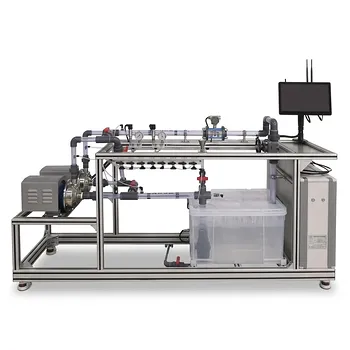
- Centrifugal Pump Performance Determination Educational Unit Operations Pilot Plant
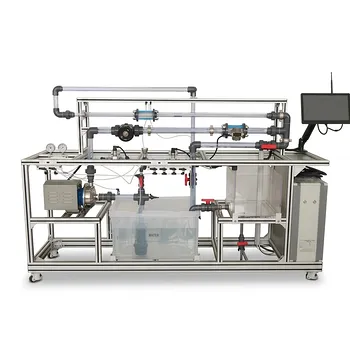
- Centrifugal Pump Performance and Orifice Flowmeter Calibration Educational Pilot Plant
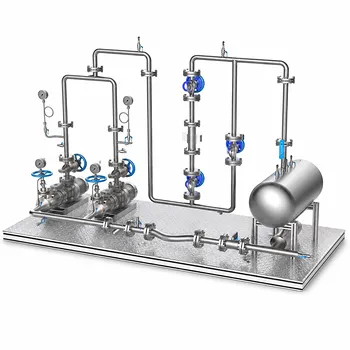
- Chemical Pipeline Assembly and Fluid Transport Practical Training Unit Operations Pilot Plant
People Also Ask
- Why start a centrifugal pump with a closed outlet valve? Protect your pilot plant motors.
- How can cavitation and slurry erosion be studied and mitigated using fluid transport and centrifugal pump pilot plants?
- How does fluid density affect pump head and pressure? Avoid Pilot Plant Motor Overload
- How does fluid viscosity affect centrifugal pump performance? Key pilot plant correction methods.
- How does fluid density affect centrifugal pump performance & motor safety in pilot plants?