Here’s the strategic heart of it: The primary objectives are to build a calibration set that spans the entire expected operating envelope and to deliberately capture any non-linearity in how the analyzer responds. Variable selection then becomes a high-stakes balancing act—you must include enough chemistry and physics drivers to avoid ghost errors, but not so many that the physical workload of preparing calibration samples becomes unmanageable.
A successful DOE for analyzer calibration is a deliberate compromise: you trade the thoroughness of exploring every possible variable against the real-world cost and time of generating physical samples. The core objective isn’t just data collection—it’s building a robust, predictive model with the fewest, most informative runs.
Why the Calibration Space Defines Your Objective
Covering the Full Range Is Non-Negotiable
A calibration model is only as good as the space it was trained on. If your DOE doesn’t push component concentrations, temperature, and pressure to the limits you’ll see during real-time operation, the model will be forced to extrapolate.
Extrapolation in analytical calibration is inherently dangerous. It turns a precise instrument into a guessing machine, often without warning. Your primary objective, therefore, is to generate data that envelops all expected process conditions—from the leanest broth to the most concentrated harvest.
Proactively Modeling Non-Linearity
Many analyzers exhibit perfectly linear behavior in a clean, narrow range—but break down when pushed into realistic bioprocess matrices. Complex media, high cell densities, or fluctuating pH can introduce subtle, non-linear shifts.
Your experimental objective must move beyond simple linearity checks. Design your DOE to deliberately stress the system with combinations of extremes (high temperature, high analyte, low pH) so the resulting model can learn the curvature. A central composite or Box-Behnken design isn’t just a statistical checkbox; it’s a deliberate tool to capture response surfaces that would otherwise hide in routine checks.
The Art of Selecting Design Variables
Start with Process Physics, Not Wish Lists
Every variable you consider adding must earn its place. Begin by listing the known physico-chemical drivers: the analyte of interest, primary matrix components (salts, antifoam, metabolites), and operating parameters like temperature and pressure.
If a variable can’t change the refractive index, fluorescence, or whatever principle your analyzer uses, it’s likely a distraction. Focus on factors with a clear, mechanistic link to the measurement. This drastically reduces the candidate list before you ever run a sample.
The High Cost of Over-Inclusion
There’s a seductive trap: “Let’s just include pH, temperature, dissolved oxygen, and all 12 media components to be safe.” That mindset explodes the number of required calibration samples exponentially.
Preparing authentic, gravimetrically accurate calibration samples in a pilot plant is slow, expensive, and error-prone. Each extra variable doubles or triples the workload. A full factorial for 5 variables at 2 levels is 32 runs; add 2 more, and you’re at 128. The logistical burden can overwhelm your team and degrade sample quality as fatigue sets in.
The Danger of Under-Inclusion (The Hidden Variable)
On the flip side, leaving out a critical interferent means your beautifully constructed model will be systematically biased in production. The analyzer might read perfectly in a clean buffer but drift badly when a co-eluting impurity spikes.
The consequence is not just inaccuracy; it’s a false sense of security. Users will make process decisions on flawed data. In early exploratory phases, when you truly don’t know which variables dominate, a screening design (fractional factorial) is your safety net—it lets you cost-effectively identify the top two or three troublemakers before committing to a rich optimization design.
Understanding the Trade-offs
Resolution vs. Runtime
A design like a Box-Behnken is elegant and efficient for modeling non-linearity, but it assumes you already know the critical variables. If you’re guessing, you risk building a precise model for the wrong factors.
A screening design, conversely, is fast and broad but can’t model complex curvature. The trade-off is stark: you can quickly find what matters, or you can meticulously model how it matters—but rarely both in a single, first-pass experiment.
When “Practical” Becomes the Dominant Variable
No statistical plan survives contact with the wet lab. You might have a perfect central composite design on paper, but if one factor (like temperature) takes six hours to stabilize, you’ve lost the ability to randomize efficiently.
Practical constraints—sample stability, instrument equilibration time, operator shifts—must be treated as de facto variables. They dictate the block structure of your experiment and can force you to sacrifice some statistical elegance for real-world executability.
Making the Right Choice for Your Application
The “right” DOE strategy is not a fixed template; it’s a response to your confidence level and process complexity. Here’s how to steer your decision:
- If your primary focus is exploratory calibration in a poorly understood matrix: Start with a screening design. Sacrifice precision modeling of curvature to quickly identify the two or three factors that most influence the analyzer’s response. This prevents you from wasting effort on high-resolution models for irrelevant variables.
- If your primary focus is creating a robust, deployable model for a well-characterized process: Use an optimal design (like a central composite or Box-Behnken) built around the known critical variables. Accept the higher sample count as the price for reliable non-linearity modeling across your full operating range.
- If your primary focus is minimizing sample preparation burden while still capturing main effects: Consider a D-optimal design that custom-fits the model to your constraints. This lets you force-include mandatory points (like pure component standards) while intelligently filling the design space with the fewest additional runs.
A disciplined DOE begins and ends with brutal honesty about what your analyzer truly sees in the process matrix; everything else is just a well-engineered guess.
Summary Table:
| DOE Design | Best Use Case | Key Advantage | Main Trade-off |
|---|---|---|---|
| Screening Design | Exploratory calibration (poorly understood matrix) | Fast; quickly identifies key factors | Cannot model complex curvature |
| Central Composite / Box-Behnken | Deploying models for well-characterized processes | Meticulously captures non-linear curvature | High sample count and runtime |
| D-Optimal Design | Minimizing sample preparation under tight constraints | Custom-fits model to user constraints | Requires prior process understanding |
Accelerate Your Bioprocess & Chemical Engineering Workflows
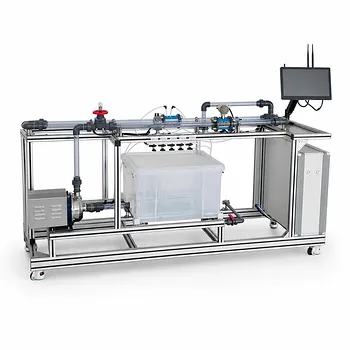
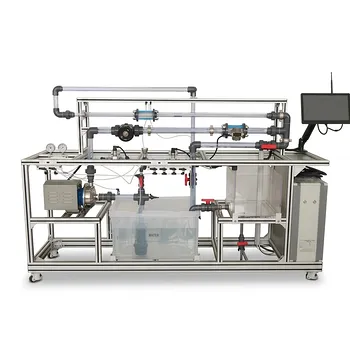
Are you looking to optimize analyzer calibration and master Design of Experiments (DOE) in a real-world setting? LABPARK provides state-of-the-art Educational and Vocational Unit Operations Pilot Plants in chemical engineering, bioprocess & biotech, and environmental & water treatment.
Tailored for universities, research institutes, and enterprises, our pilot plants deliver the hands-on control and data accuracy needed to build robust predictive models.
👉 Contact LABPARK today to discuss your pilot plant needs and get a custom quote!
Related Products
- Orifice and Venturi Flowmeter Calibration Educational Pilot Plant for Fluid Mechanics Laboratory
- Centrifugal Pump Performance and Orifice Flowmeter Calibration Educational Pilot Plant
People Also Ask
- What is the difference between static and stagnation pressure? Master Pilot Plant Flow Measurement
- How do pilot plants demonstrate siphon pressure variations? Visualizing Bernoulli's Energy Balance
- How do fluid mechanics training pilot plants facilitate the visualization and calculation of laminar and turbulent flows?
- How to update chemometric calibration models in pilot plants? Best practices for process engineers.
- Why are the laws of similitude critical in fluid flow pilot plants? Scale Up Safely