Selecting the right centrifugal pump in a chemical engineering pilot plant starts with matching the pump’s hydraulic design and materials of construction to the specific fluid properties and process duty. For clean, water-like liquids, standard single‑ or multi‑stage pumps suffice. Corrosive acids and bases demand corrosion‑resistant (F‑type) pumps with specialized mechanical seals. High‑temperature oils require oil (Y‑type) pumps with cooling jackets. Slurries and solids‑laden streams are best served by impurity (P‑type) pumps with open or semi‑open impellers. And for toxic, volatile, or flammable fluids, sealless magnetic‑drive (C‑type) pumps eliminate leakage risk entirely.
Your choice of centrifugal pump type is dictated first by the fluid’s corrosiveness, temperature, solid content, and hazard level; once those are met, you then fine‑tune the selection by matching the pump’s characteristic curve to your pilot plant’s required head and flow range.
The Fluid‑Dictated Centrifugal Pump Classification
In a pilot plant, a single pump may see many different fluids over its life, but each experiment demands a pump that can safely and reliably handle the specific liquid. The five primary categories align directly with fluid risks.
Clean Water & Similar Liquids
For water, dilute aqueous solutions, or solvents with physical properties close to water, standard clean‑water pumps are the workhorse.
They use closed impellers and simple packing or mechanical seals, offering high efficiency and low maintenance.
When higher head is needed, you simply stack stages (multi‑stage); for very large flow rates, a double‑suction design balances hydraulic forces.
Corrosive Chemicals (Acids & Bases)
Acids, caustics, and other aggressive media attack ordinary pump casings and seals.
F‑type corrosion‑resistant pumps are built from alloys or high‑performance polymers and employ heavily engineered mechanical seals—often with corrosion‑resistant faces and secondary sealing elements.
Choosing the right wetted materials prevents catastrophic failure and maintains experimental reproducibility when handling chemical reactants.
Oils & High‑Temperature Fluids
Pumping hot oils, heat‑transfer fluids, or liquids above 200°C creates two problems: thermal expansion and seal degradation.
Y‑type oil pumps incorporate cooling jackets around the bearing housing and seal chamber, keeping seals below their temperature limit.
The pump casing is also designed to manage differential thermal expansion, so alignment is maintained even during start‑up and cool‑down cycles.
Slurries & Suspended Solids
When the fluid carries catalyst particles, crystals, or waste solids, a standard closed impeller would quickly clog or erode.
P‑type impurity pumps use open or semi‑open impellers and enlarged internal clearances, allowing solids to pass without lodging.
Wear plates and hardfaced materials extend service life, and the open impeller design makes cleaning between pilot batches practical.
Toxic, Volatile, or Flammable Fluids
If a single drop of process fluid escaping from a seal poses a safety or environmental risk, a traditional sealed pump is unacceptable.
C‑type sealless magnetic‑drive pumps transmit torque through a containment shell via magnetic coupling, completely eliminating the shaft seal.
This “zero‑leakage” design is mandatory for low‑boiling‑point organics, hydrogen‑containing streams, or highly toxic intermediates in pilot‑scale studies.
Matching Pump Hydraulics to Pilot Plant Requirements
Selecting the correct pump category solves the material compatibility problem; next, you must verify that the pump can deliver the head and flow rate your unit operation demands.
Understanding the Pump and System Curves
Every centrifugal pump has a head‑flow (H‑Q) curve that drops as flow increases, a shaft‑power curve that rises with flow, and an efficiency curve that peaks at the design point.
Your pilot plant’s piping, fittings, and equipment create a system curve: static lift plus dynamic losses that scale with the square of the flow.
The actual operating point is the intersection of the pump curve and the system curve—this determines your real flow rate, head, and power consumption.
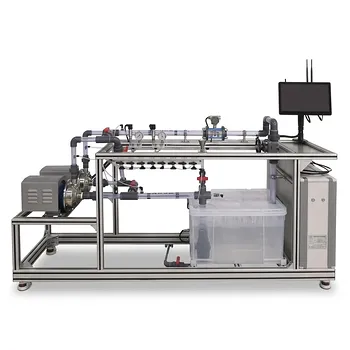
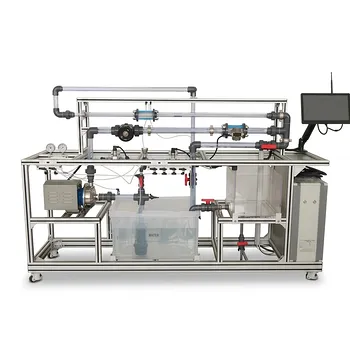
In educational and research pilot plants, plotting these curves experimentally lets students and researchers see exactly how throttling a valve or changing a vessel height shifts the operating point.
Always start a centrifugal pump with the discharge valve closed, because shaft power is at its minimum at zero flow, protecting the motor from overload during start‑up.
Sizing for the Pilot Plant’s Operating Envelope
Pilot plants rarely run at a single fixed duty; they explore multiple process conditions.
When selecting a pump, confirm that the required flow and head for your intended experiments lie comfortably within the pump’s best efficiency region—generally within 70–120 % of its design flow.
If your system head varies widely, consider whether a variable‑speed drive can keep the pump on its efficiency plateau, although this adds control complexity that must be weighed against the benefit.
Material and Cost Considerations in a Pilot Plant
Once the pump category is set, material selection directly affects both capital cost and service life.
Cost Adjustment Factors
In unit‑operations pilot work, pump base costs are estimated from the hydraulic duty (capacity index = flow in gpm × differential head in psi).
For fluids that require construction beyond cast iron, a material factor (F_m) is applied: cast steel (1.85) or stainless steel (2.45) are common upgrades for corrosion resistance or sanitary bioprocess conditions.
If the pump will see suction pressures above 150 psig, an additional pressure factor (F_p = 1.50) is added to account for a reinforced casing.
These multipliers ensure your budget accounts for the real cost of a chemically compatible and pressure‑safe pump, rather than underestimating by pricing a standard water unit.
Common Pitfalls to Avoid
Overlooking critical fluid details or misinterpreting pilot‑scale demands can turn a well‑intentioned pump choice into a data‑quality or safety problem.
- Using a sealed pump for a hazardous fluid: Even a high‑end mechanical seal will eventually leak to atmosphere; magnetic‑drive pumps are the only guaranteed leak‑tight option.
- Selecting a closed impeller for a slurry line: Solids will pack into the impeller vanes, causing imbalance, rapid wear, and premature failure—always switch to an open or semi‑open impeller.
- Ignoring temperature effects: A pump rated for cold oil will fail prematurely if you run it at 250°C without a cooling jacket; thermal expansion will seize the internal clearances.
- Forgetting the system curve: A pump selected on pump‑curve head alone, without accounting for dynamic friction losses, will operate far from its design point, wasting energy and generating excess vibration.
- Neglecting the pilot plant’s teaching function: When the pilot plant serves as an educational tool, choose pumps with clear characteristic curves and easy‑to‑instrument ports so students can measure H‑Q, N‑Q, and efficiency firsthand.
Making the Right Choice for Your Fluid and Goals
Every pilot‑scale fluid transport task can be matched to a centrifugal pump category, provided you prioritize explicitly.
- If your primary focus is handling aggressive chemicals: Use F‑type corrosion‑resistant pumps with advanced mechanical seals, and factor in a stainless‑steel material cost multiplier.
- If your primary focus is zero‑leakage safety for toxic or volatile fluids: Choose C‑type sealless magnetic‑drive pumps; accept the trade‑off that they cannot handle solids‑laden streams.
- If your primary focus is pumping slurries or particle‑laden process liquids: Select P‑type impurity pumps with open impellers and wear‑resistant internals.
- If your primary focus is heat‑transfer oils or high‑temperature streams: Use Y‑type oil pumps with integral cooling jackets to protect bearings and seals.
- If your primary focus is standard water‑like liquids at moderate head: Standard single‑ or multi‑stage clean‑water pumps offer the simplest, most cost‑effective solution.
- If your primary focus is demonstrating pump fundamentals or operating‑point analysis: Ensure the chosen pump has stable H‑Q and efficiency curves and that your pilot plant’s piping allows easy installation of pressure gauges and flow meters.
By first classifying the fluid, then verifying the hydraulic fit against your system curve, you turn pump selection from a catalog guess into a deliberate, safe, and educationally valuable engineering decision.
Summary Table:
| Pump Type | Suitable Fluid/Application | Key Features & Design |
|---|---|---|
| Standard | Clean water, dilute solutions | Closed impeller, high efficiency |
| F-Type | Acids, bases, corrosive chemicals | Corrosion-resistant alloys/polymers |
| Y-Type | Hot oils & high-temp fluids (>200°C) | Cooling jackets, thermal expansion design |
| P-Type | Slurries & suspended solids | Open/semi-open impellers, wear plates |
| C-Type | Toxic, volatile, or flammable fluids | Sealless magnetic-drive, zero-leakage |
Upgrade Your Chemical Engineering Lab with LABPARK
Selecting the right fluid transport system is critical for safety and precision. LABPARK provides premium Educational and Vocational Unit Operations Pilot Plants across chemical engineering, bioprocess & biotech, and environmental & water treatment.
We help universities, research institutes, and enterprises equip their labs with reliable, industry-standard equipment. Contact us today to find the ideal pilot plant solution for your training and research goals!
Related Products
- Centrifugal Pump Performance Determination Educational Unit Operations Pilot Plant
- Centrifugal Pump Performance and Orifice Flowmeter Calibration Educational Pilot Plant
- Chemical Pipeline Assembly and Fluid Transport Practical Training Unit Operations Pilot Plant
People Also Ask
- Why start a centrifugal pump with a closed outlet valve? Protect your pilot plant motors.
- How can cavitation and slurry erosion be studied and mitigated using fluid transport and centrifugal pump pilot plants?
- How does fluid density affect pump head and pressure? Avoid Pilot Plant Motor Overload
- How does fluid viscosity affect centrifugal pump performance? Key pilot plant correction methods.
- How does fluid density affect centrifugal pump performance & motor safety in pilot plants?