When it comes to teaching process control in a lab, the choice is deceptively simple but the implications are vast. The three primary control schemes used to regulate centrifugal pump flow rates in chemical engineering pilot plants are outlet valve throttling, variable speed control (using a VFD), and bypass regulation. While valve throttling is the most common due to its low upfront cost and simplicity, it is highly energy-inefficient. Variable speed control is the definitive choice for energy efficiency, as it eliminates throttling losses, whereas bypass regulation stands as the least efficient method, primarily reserved for teaching specific dynamics rather than pure flow control.
When building or teaching with a pilot plant, you must look beyond the "what" of flow control to the "why." The control scheme you choose is not just about moving fluid—it's a fundamental lesson in energy economics. Throttling valves teach the cost of resistance, VFDs teach the elegance of matching power to demand, and bypass lines teach system protection at a price. The core insight is that the most efficient method, variable speed control, directly shifts the pump's performance to meet the process need without wasting energy, aligning with modern green engineering principles.
The Three Pillars of Flow Control in a Pilot Plant
Outlet Valve Throttling: The Classic, High-Cost Lesson
This method places a control valve on the pump’s discharge line. By partially closing the valve, you increase the system’s resistance and shift the system curve upwards, moving the operating point.
This is the most intuitive and lowest-cost scheme to install. In a pilot plant, it perfectly demonstrates a basic feedback control loop where a flow transmitter signals a controller to adjust a pneumatic or electric valve.
However, the educational takeaway is its hidden cost. The pump must generate extra head just to be dissipated across the throttled valve. This turns electrical energy into wasted frictional heat, a powerful visual that forms the bedrock of understanding why efficiency matters.
Variable Speed Control (VFD): The Modern Standard
This scheme uses a Variable Frequency Drive (VFD) to alter the rotational speed of the motor. Instead of fighting resistance, you change the pump's own characteristic curve, moving the operating point by reducing both flow and developed head.
This is the most energy-efficient method, a principle governed by the affinity laws. Since power is proportional to the cube of the speed (P ∝ N³), a small reduction in speed yields a massive reduction in energy consumption.
From a laboratory pedagogy standpoint, a VFD-equipped pump is essential for any curriculum focusing on green engineering and process optimization. It allows students to measure and contrast the electrical power input against a throttling valve setup, turning energy conservation from a textbook concept into a quantifiable experiment.
Bypass Regulation: The Protective but Wasteful Route
This configuration recirculates a portion of the pump’s discharge flow back to the supply tank through a bypass line. The total pump output remains high, but the net forward flow to the process decreases.
Its efficiency is the lowest of all three schemes. The pump continuously performs full work on the total fluid volume, with the recycled portion’s energy being completely lost to the tank. It's like running an engine at full throttle while only using a fraction of the power.
In a pilot plant, the bypass line is rarely a primary continuous control strategy. Instead, it is a critical teaching tool for understanding pump protection and system dynamics, showing what happens at low process demand and how to prevent a pump from running at dangerously low, zero-flow conditions.
Understanding the Trade-offs and Curriculum Design
The Risk of Misapplying Efficiency
An all-VFD approach is not a universal solution without nuance. While highly efficient, a VFD can fail to teach fundamental concepts of system resistance if used in isolation. A student may never fully grasp how piping configuration, static head, and friction losses shape an operating point without manually manipulating a throttle valve and seeing the pressure drop.
Similarly, framing bypass control as purely "bad" misses its purpose. It is the correct protective mechanism for certain pumps that cannot tolerate low flow rates. The curriculum must clarify that efficiency is just one part of the decision matrix; system safety and equipment longevity can override it.
The Cost of Instrumentation
Accurate comparative teaching requires the right instruments. Throttling and bypass setups need reliable flow meters and differential pressure transmitters across the valve to visualize energy loss. VFD studies require power analyzers on the motor input. If the plant lacks these, the quantitative difference between methods remains an abstract story. The deep need of the lab—to turn data into wisdom—is lost without a proper measurement backbone.
Avoiding Common Pitfalls in Pilot Plant Exercises
When integrating multiple schemes in one plant, a common mistake is to design piping that imposes excessive base-level friction. If the base system curve is already too steep, the relative energy savings of a VFD over a throttle valve can look artificially small, undermining the intended lesson. The system must be sized to showcase the dramatic difference that the affinity laws promise.
Another pitfall is overlooking cavitation risks. When a VFD slows the pump, the decrease in suction pressure must still stay above the liquid’s vapor pressure. The pilot plant design must account for this, turning a technical limitation into another rich learning objective about Net Positive Suction Head (NPSH).
Configuring the Plant for True Comparison
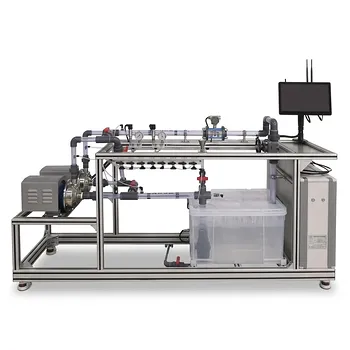
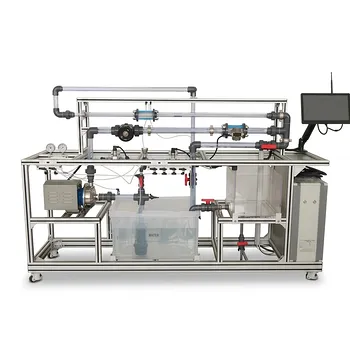
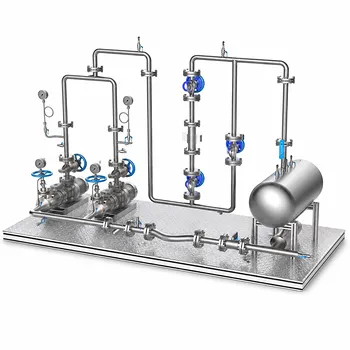
The most effective educational plants integrate all three methods with a common pump and flow loop. Using a manifold of valves, students can route flow through a throttling valve, a bypass line, or switch the pump motor over to a VFD. This side-by-side operational capability lets them measure power consumption, flow rate, and pressure drops across identical set points, generating comparative curves that cement the economic and physical realities of each scheme.
Making the Right Choice for Your Educational Goal
When configuring (or teaching with) a pilot plant, your control scheme selection should map directly to your learning objectives. Use this outcome-based guide:
- If your primary focus is illustrating fundamental feedback control loops and system resistance: Start with outlet valve throttling. It provides the clearest, most tactile link between valve position, system curve shifts, and flow rate, building core intuition before moving to more advanced methods.
- If your primary focus is demonstrating modern energy efficiency and process optimization: The Variable Speed Drive is non-negotiable. Anchor the curriculum around quantifying power savings using the affinity laws, and position throttling as the inefficient baseline to beat, linking directly to sustainability principles.
- If your primary focus is teaching pump protection, minimum flow requirements, and complex system dynamics: Integrate the bypass line. Use it not as a primary flow controller, but to experimentally demonstrate why certain pumps recirculate flow to avoid overheating or damage at shutoff, highlighting the trade-off between safety and energy cost.
A well-designed pilot plant uses all three schemes not as competing options for the same task, but as sequentially deeper layers of understanding—starting with the simple valve, progressing to the efficient motor, and finally addressing the safety net of the bypass to show that in real chemical processes, flow control is always a balance of physics, economics, and protection.
Summary Table:
| Control Scheme | Energy Efficiency | Primary Educational Value | Equipment Needed |
|---|---|---|---|
| Outlet Valve Throttling | Low (High energy waste) | Basic feedback loops & system resistance | Control valve, flow transmitter |
| Variable Speed (VFD) | High (Matches power to demand) | Green engineering & process optimization | VFD, power analyzer |
| Bypass Regulation | Very Low (Continuous full work) | Pump protection & safety dynamics | Bypass line, valves |
Optimize Your Chemical Engineering Lab with LABPARK
Are you looking to upgrade your laboratory curriculum or research capabilities? LABPARK provides state-of-the-art Educational and Vocational Unit Operations Pilot Plants in chemical engineering, bioprocess & biotech, and environmental & water treatment for universities, research institutes, and enterprises.
Our advanced educational setups allow students to dynamically compare VFD, throttling, and bypass flow control configurations on a single process loop.
Contact LABPARK today to discuss your laboratory requirements and get a custom quote!
Related Products
- Centrifugal Pump Performance Determination Educational Unit Operations Pilot Plant
- Centrifugal Pump Performance and Orifice Flowmeter Calibration Educational Pilot Plant
- Chemical Pipeline Assembly and Fluid Transport Practical Training Unit Operations Pilot Plant
People Also Ask
- Why start a centrifugal pump with a closed outlet valve? Protect your pilot plant motors.
- How can cavitation and slurry erosion be studied and mitigated using fluid transport and centrifugal pump pilot plants?
- How does fluid density affect pump head and pressure? Avoid Pilot Plant Motor Overload
- How does fluid viscosity affect centrifugal pump performance? Key pilot plant correction methods.
- How does fluid density affect centrifugal pump performance & motor safety in pilot plants?