HAZOP guide words are not abstract academic concepts—they are practical tools that transform vague risks into concrete, manageable scenarios.
In heat transfer and fluid flow unit operations, the guide words “More” and “Reverse” allow operators to systematically predict how a system will behave when a process variable deviates from its design intent. By visualizing a “More steam pressure” or “Reverse flow” event, they can map the chain of consequences—from equipment damage to safety hazards—and verify that the right protective measures are in place. This turns troubleshooting from reactive guesswork into a disciplined, pre-planned response.
HAZOP guide words like “More” and “Reverse” function as structured thought experiments. They force operators to ask “what if?” in a disciplined way, exposing hidden interactions in heat exchangers, evaporators, and pumping systems. This transforms operator training and operational vigilance from hoping nothing goes wrong into knowing exactly what could go wrong and why.
The Logic Behind “More” in Heat Transfer and Fluid Flow
From a Single Deviation to a Cascade of Consequences
Applying “More” to a process parameter such as steam pressure, flow rate, or temperature instantly clarifies the domino effect.
In a steam-heated evaporator, “More steam pressure” no longer means simply a higher number on a gauge.
It triggers a sequence: the evaporation rate accelerates, the liquid level begins to drop, and vapor velocity spikes.
This high-velocity vapor can carry liquid droplets into downstream equipment, causing product quality issues or mechanical damage.
If the liquid level falls critically low, the heat transfer surface—now partly exposed—experiences thermal stress and the risk of tube rupture rises sharply.
Identifying Critical Safeguards Before They Fail
The “More” deviation highlights exactly which safeguards are essential.
Operators learn that a robust control loop on steam flow, coupled with a low-level alarm, is not optional—it’s what prevents the cascade from starting.
They also see why pressure relief valves and interlock systems that cut steam on low level must be tested regularly.
This mental model makes it obvious that a stuck-open control valve can transform a minor upset into a full-blown safety incident if those layers of protection are missing or bypassed.
How “Reverse” Exposes Hidden Flow Paths
Backflow Scenarios That Defeat Normal Operation
“Reverse” compels operators to ask: what if the fluid moves backwards?
In a pumping system transferring a hot, corrosive fluid, design intent assumes flow goes from reactor to storage.
If that flow reverses—because of a pump trip, a check valve failure, or a pressure differential shift—the hot acidic gas may travel upstream.
This can corrode feed lines, damage compressor internals, or even breach into areas where operators are present.
Without the “Reverse” guide word, this failure mode might remain invisible until it happens.
Why Check Valves and Non-Return Valves Are Not Just Accessories
Once operators visualize backflow, they understand that a non-return valve (NRV) is a safety-critical component, not a convenient add-on.
They can connect the physical hardware—the check valve—to the catastrophic consequences of omitting it.
That insight changes how they inspect, maintain, and react to alarms related to those valves.
Symptom-based troubleshooting becomes root-cause anticipation; an operator hearing a hammering sound in a check valve now thinks beyond the noise to “possible reverse flow and equipment damage.”
Understanding the Trade‑Offs and Limitations
When HAZOP Alone Isn’t Enough: Pitfalls of Purely Qualitative Analysis
HAZOP guide words are a thinking framework—they are not a substitute for quantitative risk assessment.
A “More flow” analysis might flag a high-pressure scenario but won’t tell you the exact stress load on a pipe or the time to rupture.
The quality of the analysis depends entirely on the team’s experience and the completeness of the process information.
Missing a subtle interaction between level and temperature could lead to an overlooked deviation, giving a false sense of security.
The Risk of Over‑Reliance on a Single Word
Guide words work best when combined with real‑world pragmatism.
“Reverse” may prompt you to install a check valve, but if the fluid contains solids, that valve could seize and fail when needed most.
Similarly, “More” triggers a search for high‑pressure safeguards, but ignoring the possibility of simultaneous deviations—like “More steam” and “Less cooling water”—can leave a gap in your protective envelope.
To manage system deviations effectively, operators must use HAZOP as a starting point, not the final answer, and always verify that protective measures are physically capable of doing their job in real conditions.
Making the Right Choice for Your Operational Safety
Apply these guide words by tailoring the analysis to what matters most in your plant:
- If your primary focus is preventing catastrophic failure: Use “More” on pressure and temperature to drive the specification of relief systems and interlock settings, then test them under realistic conditions.
- If your primary focus is preventing product contamination: Use “Reverse” to identify cross‑connection risks and ensure that check valves or double‑block‑and‑bleed arrangements are in place, especially where process fluids meet utility lines.
- If your primary focus is building operator intuition and troubleshooting speed: Run “What‑if” drills using “More” and “Reverse” during training. Let operators draw the cause–consequence chain themselves so they can recognize early warning signs like fluctuating levels or unusual pump noises.
When guide words move from a HAZOP worksheet into the operator’s mental model, deviations stop being surprises and become events your team is fully prepared to control.
Summary Table:
| Guide Word | Process Deviation | Potential Consequences | Key Safeguards |
|---|---|---|---|
| More | High steam pressure / flow rate | Thermal stress, tube rupture, liquid carryover | Control loops, low-level alarms, pressure relief valves |
| Reverse | Backflow of hot/corrosive fluids | Equipment corrosion, compressor damage, safety hazards | Check valves (NRVs), double-block-and-bleed systems |
Train Your Team on Process Safety with LABPARK
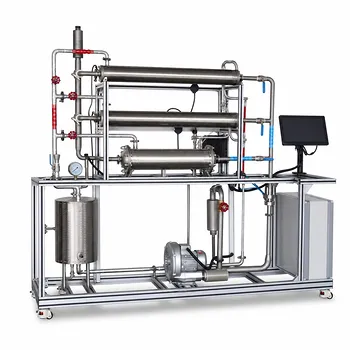
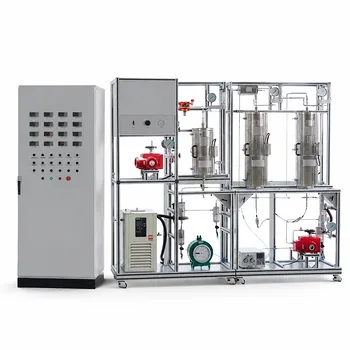
Hands-on training is the most effective way to master HAZOP and manage process deviations safely. LABPARK provides premium Educational and Vocational Unit Operations Pilot Plants in chemical engineering, bioprocess & biotech, and environmental & water treatment.
Designed specifically for universities, research institutes, and enterprises, our pilot plants enable students and operators to safely simulate deviations, test safeguards, and build intuitive troubleshooting skills.
Ready to elevate your training and research capabilities? Contact us today to explore our pilot plant solutions!
Related Products
- Comprehensive Heat Transfer Coefficient Determination Educational Unit Operations Pilot Plant
- Electrolytic Hydrogen Production Educational Unit Operations Pilot Plant
- Continuous Batch Extractive Distillation Educational Pilot Plant
- Rising and Falling Film Evaporation Educational Unit Operations Pilot Plant
- Crude Benzene Hydrogenation Educational Unit Operations Pilot Plant
People Also Ask
- When is ε-NTU preferred over LMTD in pilot plants? Predict heat exchanger performance without iteration.
- How do unit conversions affect pilot plant calibration? Avoid errors in heat transfer data analysis
- Why is the prevention of scale formation on heat exchanger surfaces a critical learning objective? Key Lessons
- How can a heat transfer pilot plant demonstrate waste heat recovery? Learn to optimize industrial thermal systems.
- Why is emissivity critical in heat transfer pilot plants? Bridge the Gap Between Theory & Industrial Design