Higher fluid temperatures dramatically reduce a centrifugal pump's suction capacity. In fluid transport training systems, this is because the liquid’s saturated vapor pressure rises sharply as it heats up, lowering the net positive suction head available (NPSHa). Standard pump parameters, typically quoted for 20°C water, must be corrected for the actual operating temperature. If the calculated allowable vacuum suction height becomes too low or even negative, the training setup must be modified—usually by minimizing suction line losses and repositioning the pump below the liquid source to gain static head.
The core challenge is not just about temperature; it's about preventing cavitation. As the fluid warms, its tendency to vaporize increases. Training systems deliberately exaggerate this effect to teach students how to recalculate safe operating limits and select the right adjustments for any given thermal condition.
How Temperature Impacts Suction Capacity
The Immediate Effect on Performance
When you heat the liquid entering a centrifugal pump, the saturated vapor pressure climbs rapidly.
At the pump inlet, the absolute pressure must stay well above this vapor pressure to prevent bubble formation.
Because atmospheric pressure remains fixed, the net pressure pushing liquid into the pump shrinks.
This immediately reduces the allowable vacuum suction height—the vertical distance the pump can pull liquid up.
Density Changes Play a Secondary, Counterintuitive Role
The primary reference notes that fluid density also decreases with temperature.
In theory, a lower density increases the head equivalent of a given pressure difference.
However, this effect is overwhelmed by the vapor pressure spike, so the net result is always a deterioration of suction performance.
The essential lesson for students: always recalculate NPSHa using the fluid’s actual vapor pressure, not just its density, when working above 20°C.
The Danger of Low or Negative Installation Heights
If the recalculated allowable suction lift drops below the physical height of the pump inlet, the pump will cavitate.
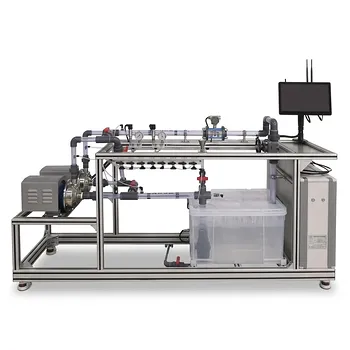
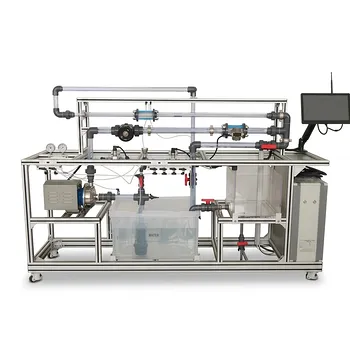
Training systems often simulate this by running hot water through a transparent suction line, making the collapse of vapor bubbles visible and audible.
A calculated negative installation height means the pump must be placed below the liquid supply level to maintain safe suction conditions.
Adjustments That Must Be Made in Training Systems
Recalculate Pump Parameters for the Actual Temperature
Pre-built pump curves assume standard water at 20°C.
You must correct the allowable suction lift by subtracting the increased vapor pressure head and any additional friction losses at the hotter condition.
This teaches users to never blindly trust a manufacturer’s given “maximum suction lift” without a temperature check.
Reduce Suction Line Pressure Drop
The primary defense against a diminished NPSHa is to minimize all losses on the suction side.
Training setups demonstrate this with three concrete steps:
- Use larger diameter piping to slow the fluid and reduce frictional head loss.
- Shorten the suction line as much as possible, eliminating unnecessary pipe runs.
- Remove unnecessary fittings—each valve, elbow, or reducer adds significant resistance.
These modifications can recover enough NPSHa to make a project viable without major pump relocation.
Utilize Positive Static Head
When line modifications are not enough, the pump must be installed below the liquid source level.
This converts the negative suction lift into a positive static head, adding directly to the NPSHa.
Training skids often include adjustable stands or submersible sumps to let students experiment with this principle and observe the immediate reduction in cavitation noise.
Understanding the Trade-offs
Lowering the Pump May Create Other Challenges
Placing the pump in a pit or below a tank can complicate draining, maintenance, and flood risk.
Training exercises often highlight this trade-off: you gain suction safety but must design for potential leaks or fluid accumulation.
The best solution in a real plant is a balance between piping simplicity and static head availability.
Oversizing Suction Pipe Can Impact Control
While larger pipes reduce friction, they also increase the volume of liquid that must be accelerated.
In some control loops, this adds inertia and sluggishness.
For demonstration purposes, this trade-off is often ignored, but advanced courses may introduce it to teach holistic system design.
Temperature Correction Doesn’t Eliminate Cavitation Risk
Even with correct calculations, operating near the boiling point leaves almost no margin.
A small pressure drop from a partially closed valve can trigger cavitation instantly.
Training systems use this sensitivity to drill home the importance of conservative design margins.
How to Apply This to Your Teaching or Design Project
Different goals require different immediate actions. Below are targeted recommendations based on the primary instructional objectives in fluid transport labs.
- If your primary focus is demonstrating cavitation physics: Intentionally heat the fluid above 60°C while maintaining a high suction lift; adjust the lift incrementally to show the exact point of onset, confirming the calculated NPSHa.
- If your primary focus is training system safety and repeatability: Always start by correcting pump suction parameters for your hottest expected operating condition. Combine a permanently lowered pump position with a clean, short suction line to build a bullet‑proof demonstration rig.
- If your primary focus is process design skill building: Have students calculate the required diameter increase to recover a specific NPSHa margin, then test their prediction by physically swapping suction pipes and measuring the difference.
- If your primary focus is energy efficiency education: Contrast the suction‑side modifications with alternative solutions (like a booster pump) to show that installing the pump lower is often the simplest, lowest‑energy fix.
Every successful fluid transport training module starts with respecting the relationship between fluid temperature and suction capacity. Adjust your calculations and your hardware accordingly, and you’ll turn a common pump killer into a reliable, repeatable learning experience.
Summary Table:
| Temperature Effect | Impact on Pump Performance | Recommended System Adjustment |
|---|---|---|
| Increased Saturated Vapor Pressure | Lowers NPSHa; triggers severe cavitation | Lower the pump below the liquid source to gain static head |
| Increased Suction Line Friction | Reduces pressure at the pump inlet | Use larger diameter piping, shorten lines, and remove fittings |
| Decreased Fluid Density | Negligibly increases head (overwhelmed by vapor pressure) | Recalculate safe operating limits using actual temperature curves |
Enhance Your Engineering Lab with LABPARK Pilot Plants
Teaching complex fluid dynamics like cavitation and net positive suction head (NPSH) requires robust, real-world hardware. LABPARK provides premium Educational and Vocational Unit Operations Pilot Plants in chemical engineering, bioprocess & biotech, and environmental & water treatment designed specifically for universities, research institutes, and enterprises.
Our training systems allow students and researchers to safely simulate, analyze, and troubleshoot fluid transport challenges under varying thermal conditions.
Ready to upgrade your laboratory capabilities? Contact LABPARK today to discuss your custom training setup!
Related Products
- Centrifugal Pump Performance Determination Educational Unit Operations Pilot Plant
- Centrifugal Pump Performance and Orifice Flowmeter Calibration Educational Pilot Plant
- Chemical Pipeline Assembly and Fluid Transport Practical Training Unit Operations Pilot Plant
People Also Ask
- Why start a centrifugal pump with a closed outlet valve? Protect your pilot plant motors.
- How can cavitation and slurry erosion be studied and mitigated using fluid transport and centrifugal pump pilot plants?
- How does fluid density affect pump head and pressure? Avoid Pilot Plant Motor Overload
- How does fluid viscosity affect centrifugal pump performance? Key pilot plant correction methods.
- How does fluid density affect centrifugal pump performance & motor safety in pilot plants?